
That growing crack in your wall isn’t just an eyesore, and that sticking window isn’t simply an old-house quirk. They’re often the first signs your home is shifting. This movement, known as foundation settlement, is a common challenge for property owners in Oklahoma due to our active soil. This guide is your complete resource for understanding what’s happening under your home. We’ll discuss root causes and reliable solutions for professional foundation settlement repair, ensuring your home’s security and lasting peace of mind.
Key Takeaways
- Know the warning signs of settlement: Pay attention to clues like cracks in your drywall, sticking doors, and a leaning chimney, as these are often direct indicators that your foundation is moving due to Oklahoma’s shifting soil.
- Prioritize solutions that fix the source: A true foundation repair addresses the root cause of the problem; methods like steel pier systems provide a permanent fix by anchoring your home to stable ground deep beneath the surface.
- Act early and maintain your repair: Addressing foundation issues as soon as you spot them prevents more significant structural damage, and simple post-repair habits like managing water drainage are key to long-term stability.
What Exactly Is Foundation Settlement?
Your home’s foundation is its bedrock, the very thing that supports the entire structure. When the soil underneath it shifts or weakens, the foundation can begin to sink or move. Settlement is normal over time, but differential settlement, where one part of the foundation sinks more than another, can lead to serious structural issues. Understanding what causes this movement is the first step toward protecting your home.
Understanding How a Foundation Settles
Foundation settlement happens when your home’s foundation moves downward, typically because the soil beneath it can no longer support the weight. This isn’t just a minor issue; it places immense stress on your home’s frame, walls, and floors. Ignoring the initial signs can lead to more complex and widespread damage throughout your house. The key is to address the root cause of the settlement to restore stability. A proper foundation repair solution doesn’t just patch the symptoms; it secures your home for the long term.
Why Is My Foundation Settling?
The ground under your home might seem solid, but it’s constantly changing. Several factors can cause the soil to shift, leading to foundation settlement.
- Soil Shrinkage: During dry spells or droughts, the soil around your foundation can lose moisture and shrink. This causes the ground to pull away from the foundation, creating gaps and leaving it unsupported.
- Poor Soil Compaction: If the soil wasn’t properly compacted when your home was built, it can slowly compress under the structure’s weight over the years, causing it to settle.
- Water Oversaturation: Heavy rainfall or poor drainage can oversaturate the soil, which can soften it or even wash it away. This weakens the ground’s ability to support your foundation. Managing water around your home is a critical part of basement waterproofing and foundation health.
Soil and Water Issues
The expansive clay soil common throughout Oklahoma is a major player in foundation settlement. During dry spells, this soil shrinks as it loses moisture, which can cause the ground to pull away from your foundation and create unsupported gaps. On the flip side, heavy rains can oversaturate the soil, weakening its ability to bear the weight of your home. This constant cycle of shrinking and swelling places immense stress on the structure. Managing water and drainage around your property is essential to protect your foundation and maintain ground stability through seasonal changes.
The Impact of Tree Roots
That beautiful, mature tree in your front yard might be contributing to your foundation problems. Large tree roots absorb significant moisture from the soil, especially in dry months, causing it to shrink and create voids beneath your foundation. This uneven support can lead to foundation settling, resulting in cracks and sticking doors. It’s an often-overlooked factor that can have a big impact.
Vibrations from Construction or Traffic
Sometimes, the cause of foundation settlement isn’t natural at all. If your home is located near a busy road, railway, or an area with frequent construction, the constant vibrations can take a toll. These vibrations travel through the ground and can gradually cause the soil particles beneath your home to shift and compact. This slow, steady process reduces the soil’s density and its ability to support your foundation, eventually leading to settlement. While it’s a more subtle cause, the cumulative effect of man-made vibrations can be just as damaging as changes in soil moisture.
How Oklahoma Soil Affects Your Home
Here in Oklahoma, our soil presents a unique challenge. Much of the state has expansive clay soil, which acts like a sponge. When it rains, this clay soil absorbs water and swells, pushing up against your foundation. During dry periods, it shrinks and pulls away. This constant cycle of expansion and contraction puts your foundation under incredible stress, causing it to shift, crack, and settle over time. Because these soil conditions are so specific to our area, it’s important to have a local expert evaluate your home. You can get a clear picture of what’s happening with a free inspection from a professional who understands Oklahoma’s unique geology.
Are You Seeing These Foundation Warning Signs?
Foundation settlement can feel like a big, scary problem, but spotting the signs early is the first step toward a solution. Your home often gives you little clues that something is shifting beneath it. By knowing what to look for, you can catch issues before they become more serious. Think of it as a health check-up for your house. A quick walk around your property, both inside and out, can tell you a lot about your foundation’s condition. Let’s go over the most common red flags that homeowners in Oklahoma see when their
Warning Signs to Look for Indoors
Start by looking at your interior walls and ceilings. Have you noticed cracks spreading across the drywall, especially near door frames or in corners? These aren’t just cosmetic issues; they can be a direct sign of foundation movement. When the foundation shifts, it puts stress on your home’s rigid frame, causing the drywall to crack. Another classic indicator is having doors and windows that suddenly stick or refuse to close properly. If you have to give your bedroom door a hard shove to get it to latch, the frame may be out of square. You should also inspect your floors. Cracks in a concrete slab floor or uneven, sloping floors are clear signals that the ground underneath your home is no longer providing stable support for your foundation.
Cracks in Walls and Ceilings
Those hairline fractures in your drywall or ceiling are easy to dismiss, but they often tell a bigger story. A moving foundation stresses your home’s rigid structure, causing tension. The result is often cracks in the drywall, particularly spreading from the corners of doors and windows. You might also see stair-step cracks running through brick or concrete block walls on the exterior of your home. These are clear signs of foundation movement pulling and twisting your house’s frame.
Cabinets Separating from the Wall
Take a look in your kitchen or bathrooms. Are your cabinets or countertops pulling away from the wall? This is a subtle but significant sign of foundation settlement. A small gap that widens over time suggests the floor is sinking or walls are tilting, indicating structural shifts in your home. If you notice this happening, it’s a good idea to have a professional take a look. A thorough evaluation can determine the cause of the movement and give you a clear path forward. You can get a clear picture of what’s happening with a free inspection from a professional who understands Oklahoma’s unique geology.
Foundation Upheaval
While we often talk about foundations sinking, they can also move in the opposite direction. This is called foundation upheaval, and it happens when your concrete slab foundation is pushed upwards. Here in Oklahoma, the primary cause is our expansive clay soil. When this soil becomes saturated with excess moisture, it swells and expands with incredible force, lifting the slab above it. This can create a dome-like bulge in your floors and cause cracks to appear. Upheaval is a serious issue directly tied to water problems around your home, making proper drainage and waterproofing essential for long-term stability.
Warning Signs to Look for Outdoors
The exterior of your home can be just as revealing. Take a look at your chimney. Is it leaning away from the house? A tilting chimney is a significant warning sign that one side of your foundation has sunk lower than the other, often because it was built on a separate footing. Next, examine any brick or stone walls. Stair-step cracks that follow the mortar lines are a tell-tale sign of settlement. These cracks appear because the mortar is the most flexible point in the wall, and it separates as the foundation shifts unevenly. Also, pay attention to your concrete leveling patios, porches, or walkways connected to the house. If you see them cracking or sinking, it could point to the same soil issues affecting your home’s foundation.
Horizontal Foundation Cracks
While you might see different types of cracks in your foundation walls, horizontal cracks are a major red flag. These cracks often signal that there is intense external pressure pushing against your foundation. In Oklahoma, expansive clay soil swells when wet, exerting significant pressure on walls. Horizontal cracks, unlike thin vertical ones, signal compromised structural integrity. This is a clear sign you need a professional to assess your foundation’s stability and recommend a permanent solution.
A Leaning Chimney
A chimney that is tilting or pulling away from your house is one of the most dramatic signs of foundation settlement. Most chimneys are built on their own separate concrete footing, independent from the main house foundation. When the soil beneath this footing becomes weak or unstable, the heavy chimney structure can begin to sink and lean. This not only creates an unsightly gap but also poses a significant structural risk. The same soil issues causing your chimney to settle could also be affecting your home’s main foundation. It’s a clear indicator that the ground can no longer support the weight it was meant to, and it’s time to have an expert evaluate the situation.
A Damp Crawl Space
Don’t underestimate the problems a damp, musty crawl space can cause. Excess moisture in this area does more than just create a bad smell; it can lead to serious foundation issues. Water softens the soil, reducing its ability to support the weight of your home and leading to settlement. It fosters mold, mildew, and wood rot, threatening your home’s wooden support beams and floor joists. Professional crawl space repair is essential for maintaining your home’s long-term stability.
When to Call a Professional
If you’ve checked off any of the signs above, it’s best not to wait and see if they get worse. Foundation problems don’t fix themselves and typically become more complex over time. The best next step is to have an expert take a look. A professional can accurately diagnose the root cause of the settlement and explain what’s happening with your home’s structure. A thorough evaluation provides clarity on the situation and necessary fixes. Schedule a free inspection for peace of mind, to explore options, and plan to protect your home.
Measuring Crack Severity
Not all cracks indicate a disaster. Tiny hairline cracks, especially in new homes, are often normal settling. Cracks wider than a quarter-inch may signal a bigger issue. Stair-step cracks in brick walls suggest differential settlement, often with symptoms like sticking doors or sloping floors. For certainty, a professional assessment is necessary to measure movement and determine the best repair.
Exploring Your Foundation Settlement Repair Options
When you see signs of foundation settlement, it’s natural to wonder what the fix looks like. The good news is that modern foundation repair methods are incredibly effective and address the root cause of the problem. The right solution for your home depends on the specific issue, from stabilizing the entire structure to leveling a sunken concrete slab. Let’s walk through some of the most trusted approaches to restoring your home’s stability and giving you peace of mind.
Stabilize Your Home with Pier Systems
For significant foundation settlement, a piering system is the most reliable solution. Repair costs depend on the number and depth of piers needed. For details on costs in Oklahoma, refer to our 2026 guide. Piers, like stilts, are steel supports driven into stable soil or bedrock, unaffected by moisture changes. They support your home’s weight, stopping settlement and potentially lifting it back to its original position. This is the gold standard for long-term repair.
Push Piers
Push piers are a go-to solution for homes with significant settlement. These heavy-duty steel pipes use hydraulic power to drive through brackets attached to your foundation. They push deep into the earth, using the weight of your home as resistance, until they reach solid, load-bearing soil or bedrock. This stable stratum lies far below the active Oklahoma soil that causes all the shifting. Once the piers secure in place, they transfer the load of your home from the unstable soil to the piers. This not only permanently stabilizes your foundation but also creates an opportunity to lift the settled parts of your home back toward their original level, providing a lasting foundation repair.
Helical Piers
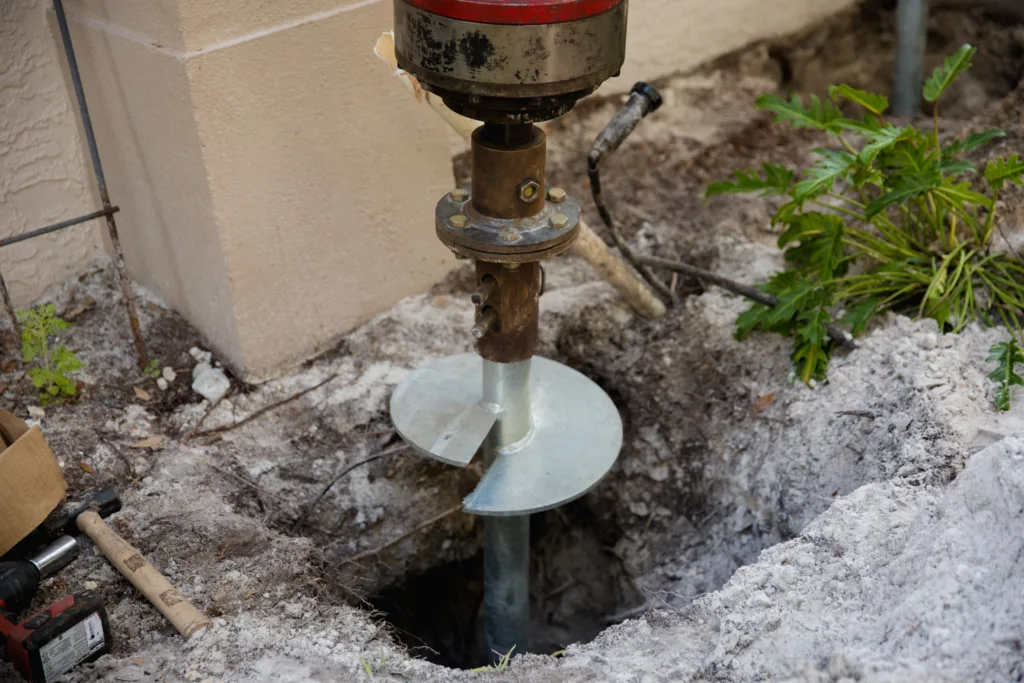
Helical piers function much like push piers, but installers screw them into the ground like a giant corkscrew instead of pushing them. These steel piers have helical plates welded to the shaft, which helps pull the pier into the ground as they rotate it. This method is ideal for stabilizing lighter structures, like porches or additions, or for new construction projects where you want to prevent future settlement. Just like push piers, they are installed until they reach stable soil deep beneath the surface. By anchoring your foundation to this competent ground, helical piers provide a reliable and long-term solution to stop settlement and secure your home’s structural integrity.
Drilled Concrete Piers
Another method used for foundation support involves drilled concrete piers. This process starts by excavating a deep, wide hole—often 10 to 12 feet down—at strategic points beneath the foundation. Steel rebar is placed inside the hole for reinforcement, and then it’s filled with concrete. Often, the bottom of the pier is designed to be wider, creating a bell shape that provides a broad, stable base. Once the concrete cures, it forms a massive, solid support column that anchors the foundation to a more stable soil layer. This method creates a strong, single piece of steel-reinforced concrete that helps distribute the home’s weight and prevent further movement.
Lift and Level Sunken Concrete
Have you noticed a sinking driveway, an uneven patio, or a cracked garage floor? These are often symptoms of the same soil issues that affect your home’s foundation. Instead of tearing out and replacing the entire slab, a process called concrete leveling can restore the surface. This technique involves injecting an expanding structural foam beneath the sunken slab. The material fills any voids in the soil below and gently lifts the concrete back into place. It’s a precise and minimally invasive process that corrects tripping hazards and restores the appearance of your concrete surfaces without the mess and disruption of a total replacement.
Understanding What Concrete Leveling Can and Can’t Do
Concrete leveling is an excellent tool for fixing surface-level issues like a sunken walkway or an uneven patio. It’s a fantastic way to correct tripping hazards and restore the look of your concrete without a major overhaul. However, it’s important to see it for what it is: a solution for the slab itself, not for the foundation supporting your entire home. While it effectively addresses the symptom of sunken concrete, it doesn’t solve the underlying problem if your home’s foundation is actively settling. A proper repair must address the root cause to ensure your home is secure for the long term. If the soil issues are affecting your main foundation, you’ll need a more comprehensive approach to achieve lasting stability.
Secure Your Foundation Walls
The same soil pressure that causes your foundation to settle can also put immense stress on your basement or crawl space walls, causing them to bow, lean, or crack. These issues compromise the structural integrity of your home and should be addressed right away. Specialized wall repair systems are designed to counteract this external pressure and permanently stabilize your foundation walls. These solutions reinforce the wall, halting any inward movement and preventing the problem from worsening over time. Securing your foundation walls is a critical step in protecting the overall structure of your home. A professional can determine the best approach after a thorough free inspection.
Addressing Interior Foundation Settlement
While many signs of settlement appear along the outer walls of your home, issues can also arise directly under the middle of the house. This is known as interior settlement, and it occurs when the soil beneath the center of your slab foundation weakens or shifts. Because this area is much harder to access than the perimeter, addressing interior settlement requires a specialized approach. It’s a clear example of why a thorough, professional evaluation is so critical. An expert can assess the entire footprint of your home to create a comprehensive foundation repair plan that restores stability from every angle, ensuring no part of the problem is overlooked.
Sealing Non-Structural Cracks
Finding a crack in your foundation can be alarming, but not all cracks indicate a major structural failure. Small hairline cracks are often a normal part of a home’s life. However, cracks wider than a quarter-inch typically point to a more significant issue. For minor, non-structural cracks, the primary goal is often to seal them to prevent water from seeping into your basement or crawl space. Using specialized sealants can effectively block moisture and stop the crack from widening due to water intrusion. This is an important step in maintaining a dry and healthy space under your home and is a key component of a complete basement waterproofing strategy.
What to Expect During Foundation Repair
Thinking about foundation repair can feel like a huge undertaking, but the process is more straightforward than you might imagine. A professional team follows a clear, step-by-step approach to diagnose the problem and restore your home’s stability. Understanding these steps can help you feel more confident and prepared. If you are also wondering whether your policy will help, our guide on homeowners insurance and foundation repair explains what is typically covered and what is not. It all starts with a detailed look at your property to figure out exactly what’s going on beneath the surface.
Step 1: Your In-Depth Foundation Assessment
The first step is always a comprehensive evaluation of your home. A foundation specialist will conduct a thorough inspection to pinpoint the root cause and full extent of the settlement. This isn’t just a quick glance; it involves measuring, assessing, and identifying all the affected areas, both inside and out. This detailed assessment is the foundation for a successful repair, as it ensures the solution is designed to fix the specific issues your home is facing. It’s the most important part of getting the job done right.
Step 2: Your Custom Repair Plan
Once the inspection is complete, you’ll receive a custom repair plan. Because every home and soil condition in Oklahoma is unique, a one-size-fits-all solution just doesn’t work. This tailored plan outlines the exact methods and products needed for your property’s foundation repair. It will detail the specific steps the team will take to stabilize your home, whether that involves addressing the foundation itself, the walls, or the surrounding concrete. You’ll have a clear roadmap of the entire project before any work begins.
Step 3: The Day of the Repair
With your approval of the plan, the installation process begins. For a settling foundation, this often involves installing steel piers deep into the ground beneath your home until they reach stable, load-bearing soil. These piers act like stilts, transferring the weight of your house onto solid ground. Once the piers are secure, the team can carefully lift the foundation back toward its original position. This process is designed to provide a permanent solution that secures your home and prevents further settlement, giving you lasting peace of mind.
Why You Shouldn’t Ignore Foundation Settlement
Seeing a crack in your wall or a door that suddenly sticks can be unsettling. It’s easy to hope it’s a minor issue that will resolve itself, but when it comes to your home’s foundation, waiting is rarely the right move. Foundation settlement is a progressive problem, meaning it tends to get worse over time. What starts as a small crack can evolve into a significant structural concern that affects your entire home. Acting quickly not only addresses the root cause but also helps you avoid a cascade of related problems down the road. Taking a proactive approach is the best way to protect your home and your peace of mind.
Prevent Further Structural Damage
A settling foundation puts continuous stress on your home’s entire frame. Initially, you might only notice hairline cracks in the drywall or floors that slope slightly. If left unaddressed, this pressure can lead to more severe issues. Doors and windows may become difficult to open or close, gaps can form around frames, and floors can become noticeably uneven. These aren’t just cosmetic flaws; they are clear indicators that your home’s structural integrity is at risk. Over time, these openings can also become entry points for pests and moisture, creating even more headaches. A professional foundation repair solution is designed to stabilize your home and stop this cycle of damage.
Protect Your Home’s Value
Your home is one of your most significant investments, and its value is directly tied to its structural health. Foundation problems are a major red flag for potential buyers and can significantly decrease your property’s market value. Disclosing a known foundation issue without a professional repair plan can make it difficult to sell your home or force you to accept a much lower price. By addressing settlement issues as soon as they appear, you are taking a crucial step to protect your investment. A stable, secure foundation is essential for maintaining your home’s worth. The best way to understand the extent of the issue is with a professional and free inspection.
Your Legal Duty to Disclose Foundation Issues
When it comes time to sell your home, you can’t just paint over the cracks and hope for the best. In Oklahoma, sellers are legally required to disclose any known defects, and foundation problems are at the top of that list. This disclosure is a major red flag for potential buyers and can significantly impact your property’s market value. Simply noting an unresolved settlement issue can make it difficult to sell your home or force you to accept a much lower price. A proactive approach is far more effective. By investing in a professional foundation repair, you can disclose both the past problem and the permanent solution. This demonstrates to buyers that the issue has been properly handled, turning a potential negative into a testament to the home’s stability and care.
Avoid Water Damage and Other Issues
Foundation settlement often creates cracks and gaps that serve as direct pathways for water to enter your home. During Oklahoma’s heavy rains, poor drainage can cause water to pool around your foundation and seep into your basement or crawl space. This moisture can lead to a host of problems, including wood rot, musty odors, and harmful mold growth that can impact your family’s health. Effective basement waterproofing and crawl space solutions often go hand in hand with foundation repair to keep your home dry and healthy. By fixing the cracks and managing water around your home, you can prevent water damage and the costly repairs that come with it.
Planning for Your Foundation Repair Project
Once you’ve decided to address your home’s foundation issues, taking a moment to plan can make the entire process feel more manageable. Before any work begins, it’s helpful to understand the diagnostic process and what to expect when it comes to logistics like insurance. Getting a clear, expert opinion on the root cause of the settlement is the most critical first step, as it informs the entire repair strategy. Thinking through these details ahead of time will give you the confidence that you’re making the best decisions for your home’s long-term health and stability.
When budgeting for repairs, it helps to understand what Oklahoma homeowners typically pay. Our 2026 foundation repair cost guide for Oklahoma covers average prices for piers, wall repair, crawl space support, and waterproofing so you can plan with realistic numbers.
The Role of an Independent Structural Engineer
For some homeowners, getting an opinion from an independent structural engineer can be a reassuring step. An engineer’s job is to act as an impartial expert, providing a detailed report that diagnoses the cause of the settlement and outlines the necessary repairs from a technical standpoint. Because they aren’t affiliated with a specific repair company, their assessment offers an unbiased perspective on the situation. This can be particularly helpful if you’re dealing with a complex issue. While a professional foundation repair company will conduct its own thorough evaluation to create a specific plan, an engineer’s report can serve as a second opinion that gives you additional peace of mind before moving forward.
Does Homeowner’s Insurance Cover Settlement?
This is one of the first questions many homeowners ask, and it’s important to have clear expectations. Generally, standard homeowner’s insurance policies do not cover damage from foundation settlement that occurs over time due to natural soil movement, like the expansive clay we have in Oklahoma. Insurance typically covers damage from sudden and specific events, or “perils,” such as a burst pipe that washes away soil from under your foundation. Because settlement is often seen as a gradual process, it usually falls outside of standard coverage. The most important takeaway is not to delay action while hoping for coverage. The best course is to address the issue directly to prevent it from worsening. A free inspection can give you a clear understanding of the problem and the necessary steps to fix it.
How to Choose the Right Foundation Repair Expert
Choosing the right contractor to work on your home’s foundation is a big decision. You’re not just hiring someone for a quick fix; you’re trusting them with the structural integrity of your property. The right expert will not only solve the immediate problem but also give you peace of mind for years to come. To make a confident choice, it helps to focus on a few key areas: the contractor’s qualifications, the questions you ask them, and the quality of the warranty they offer. Taking the time to vet your options ensures you partner with a company that is reputable, transparent, and stands firmly behind its work. This process helps you find a true professional who can provide a lasting solution for your home.
What to Look for in a Contractor
When it comes to your home’s foundation, this is one area where you should always hire a professional. Foundation repair is not a do-it-yourself project. Attempting to fix it on your own can create bigger problems, affect your home’s value, and compromise its safety. Look for a local company with a proven track record of working with Oklahoma’s unique soil conditions. A trustworthy contractor should be fully licensed and insured, which protects you throughout the repair process. Before making a decision, check their reputation through online reviews and their rating with the Better Business Bureau. A well-established company will have a history of satisfied customers and a strong presence in the community, showing they are committed to quality work.
Questions to Ask Before You Hire
A thorough inspection is the first step toward a real solution. It’s very important to have a foundation repair expert look at the problem, because they can figure out why it’s happening, not just what you see on the surface. During the consultation, don’t hesitate to ask detailed questions. Start with, “What do you believe is the root cause of the issue?” Follow up by asking about their proposed solution and why it’s the best long-term fix for your specific situation. You should also ask for a clear explanation of the installation process and the timeline. A reliable expert will welcome your questions and provide clear, confident answers. The best way to get this conversation started is to schedule a free inspection with a trained specialist.
Why You Should Get Multiple Quotes
When it comes to a project as important as your home’s foundation, getting a few different professional opinions is a crucial step. Each expert may see the situation slightly differently, offering unique insights into the root cause of the settlement and proposing various methods for the foundation repair. This is about educating yourself on the options available. By comparing different assessments and repair plans, you gain a much clearer understanding of what your home needs to be stable for the long haul. This process empowers you to ask better questions and ultimately choose the contractor and the solution that gives you the most confidence in protecting your home.
Why a Strong Warranty Matters
A warranty is more than just a piece of paper; it’s a promise from the company that they stand behind their work. For solutions like helical piers, many top contractors offer a “life-of-structure” warranty. This means the repair is guaranteed for as long as your home is standing. A great benefit of this type of warranty is that it can often be transferred to new owners if you decide to sell your home, which is a significant plus for your property’s value. A comprehensive, transferable warranty shows that the company uses high-quality materials and is confident in its repair methods. It provides you with long-term assurance that your investment is protected and your home is secure.
Keep Your Foundation Strong After Repairs
Once your foundation is professionally repaired, the work isn’t quite done. Think of it like getting a clean bill of health from the doctor; now it’s up to you to maintain that healthy lifestyle. Protecting your home’s foundation is an ongoing process that involves simple, proactive steps. The goal is to manage the conditions that caused the settlement in the first place, primarily soil and water. By staying vigilant, you can prevent small issues from turning into major problems down the road. A little bit of regular attention goes a long way in preserving the structural integrity of your home and ensuring the repairs last for years to come. It’s about creating a stable environment around your foundation so it can continue to do its job: supporting your entire home.
This doesn’t require a huge time commitment, just a bit of awareness about how your property handles water and how the soil behaves through the seasons. In Oklahoma, our expansive clay soil is particularly sensitive to moisture changes, swelling when wet and shrinking when dry. This constant movement is what puts stress on your foundation. After a repair, your goal is to minimize this movement as much as possible. The following tips will give you a clear, actionable plan to care for your foundation and protect your investment for the long haul. By incorporating these habits, you’re not just maintaining a repair; you’re actively participating in the long-term health of your property.
How to Care for Your Foundation Post-Repair
Your main focus after a repair should be water management. Excess moisture or overly dry soil around your foundation is often the root cause of settlement. The first step is to ensure water is directed away from your home. This means addressing any drainage issues on your property that allow water to pool near the foundation walls. It’s also important to keep an eye out for any new warning signs. Catching issues early is critical. If you start to notice that windows and doors are becoming difficult to close again or new cracks appear, don’t wait. Proper maintenance and, in some cases, professional basement waterproofing can help manage moisture and protect your investment in your home’s stability.
Simple Steps for Long-Term Stability
You can take several straightforward actions to maintain a stable foundation. Start by cleaning your gutters regularly. Clogged gutters cause water to overflow and saturate the soil right next to your home, which is exactly what you want to avoid. Also, be mindful of the landscaping around your house; the ground should slope away from the foundation. In Oklahoma, the soil can shrink and swell dramatically. Try to keep the moisture level consistent. During dry spells, lightly watering the soil around your foundation can prevent it from shrinking and pulling away. For homes with crawl spaces, ensuring the area stays dry is also crucial for structural health. A proper vapor barrier, as part of a crawl space repair system, can prevent ground moisture from affecting your home’s structure.
Related Articles
- Causes of Concrete Settlement – Foundation Repair & Basement Waterproofing
- Foundation Settlement | Foundation Repair & Basement Waterproofing
- What Is Causing My Foundation To Settle? – Foundation Repair & Basement Waterproofing
- How Drought Affects Your Home’s Foundation – Foundation Repair & Basement Waterproofing
- Foundation Settlement – Foundation Repair & Basement Waterproofing
Frequently Asked Questions
Is every crack in my wall a sign of a major foundation problem? Not always. Tiny, hairline cracks can be part of a home’s natural, minor settling over time. The cracks that signal a bigger issue are usually wider, growing longer, or running in a stair-step pattern through brick or concrete blocks. If you see these types of cracks, especially along with other signs like sticking doors or sloping floors, it’s a good idea to have a professional take a look.
How long does a typical foundation repair take? The timeline for a repair project really depends on the solution your home needs. Some jobs, like leveling a small concrete slab, can often be finished in less than a day. More involved projects, such as installing a pier system to stabilize your entire foundation, might take several days. For a detailed breakdown of timelines by repair type, see our guide on how long foundation repair takes. A good contractor will give you a clear, detailed timeline as part of your custom repair plan.
Will my house be a total mess during the repair process? I know the thought of a construction project at your home can be stressful. Professional repair crews understand this and work hard to be as respectful of your property as possible. While some digging is often necessary for pier installation, the team will aim to keep the work area contained and minimize any disruption to your daily life and your landscaping.
Can foundation settlement be stopped permanently? Yes, that is the primary goal of a professional repair. Modern solutions like steel pier systems are designed to provide a permanent fix by transferring the weight of your home off the unstable soil and onto deep, solid ground. This process provides lasting support and is designed to prevent any further settlement from occurring in the areas that were repaired.
Why is managing water around my house so important for my foundation? Here in Oklahoma, the expansive clay soil is the biggest factor in foundation issues. This soil acts like a sponge, swelling dramatically when it gets wet and shrinking when it dries. This constant movement puts immense pressure on your foundation. By keeping your gutters clean and making sure the ground slopes away from your home, you help keep the soil moisture more consistent, which reduces that stressful cycle of expansion and contraction.
Manage Water and Drainage Around Your Home
Now that your foundation is stable, your main focus should be on managing water. Here in Oklahoma, the constant swelling and shrinking of our clay soil is the primary source of foundation stress, and that cycle is driven entirely by moisture. The goal is to keep the soil conditions around your home as consistent as possible. Start by making sure your gutters and downspouts are clean and directing water several feet away from your foundation. The ground immediately surrounding your house should also have a gentle slope away from the walls to prevent water from pooling. These simple habits are your first line of defense and are essential for the long-term success of your repair. Proper water management is a core principle of effective basement waterproofing and a key part of a healthy home.
Monitor for Any New Changes
Staying observant is one of the best things you can do for your home after a repair. This doesn’t mean you need to worry about every little creak, but you should keep an eye out for the return of any original warning signs. If you notice a door is starting to stick again or a new crack has appeared in the drywall, it’s worth paying attention. Catching any new movement early is the key to preventing small issues from becoming larger ones. Think of it as a partnership between the professional repair and your own proactive care. If you ever feel uncertain about a change you’ve noticed, it’s always best to get a professional opinion. You can get clarity and peace of mind when you schedule a free inspection.