
Cracks in the walls. Doors that stick. Uneven floors. When you spot the signs, your mind probably jumps to a huge, messy, and long repair job. But it doesn’t have to be that way. Most modern foundation repairs are surprisingly quick, often taking less than a week. The real timeline depends on the specific solution your home needs and the severity of the damage. We’ll walk you through what to expect for every type of foundation repair Oklahoma homes require, so you have a clear picture from the first call to the final walkthrough.
Schedule your free foundation inspection today.
Most foundation repairs take between one and seven days of on-site work. Minor crack repairs can be finished in a few hours, while pier installations and full crawl space encapsulation projects may require one to two weeks. Understanding what goes into each repair type helps you plan and avoid surprises.
Below, we break down the timeline for every common repair method, explain what affects the schedule in Oklahoma, and walk you through the process from your first call to project completion.
Key Takeaways:
- Helical piers: 3 to 7 days on-site
- Push piers: 3 to 5 days on-site
- Foundation wall repair: 1 to 5 days depending on method
- Crawl space encapsulation: 2 to 5 days for a full system
- Concrete leveling: A few hours to 1 day
The total project timeline from first call to completion is typically two to six weeks, with most of that time spent on scheduling and engineering rather than the repair itself.
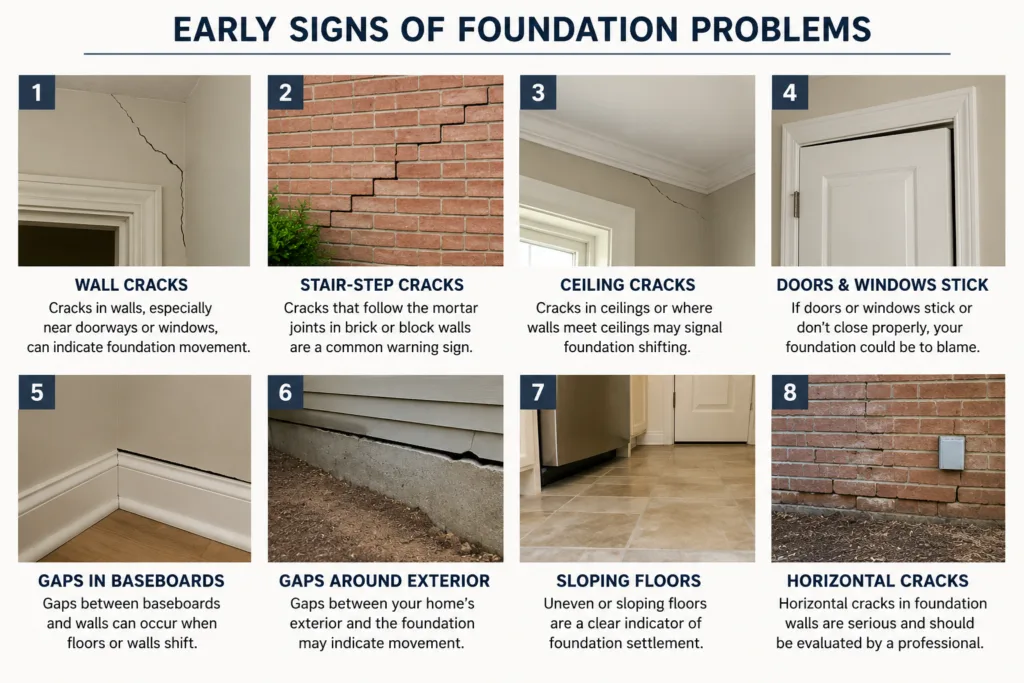
Key Warning Signs of Foundation Damage
Before you can even think about a repair timeline, you need to know what you’re looking for. Foundation issues often start small and can be easy to dismiss, but they rarely get better on their own. Spotting the warning signs early is the best thing you can do for your home’s long-term health. These problems are often interconnected—for example, the same foundation movement that causes a crack in your drywall could also make a door difficult to close. Paying attention to these clues around your property will help you understand what’s happening beneath your feet and when it’s time to call in a professional for a closer look.
Visible Cracks in Walls, Floors, or Brick
Cracks are one of the most common signs of foundation trouble. While a hairline crack in the drywall might just be from the house settling naturally, other types are more concerning. You should “be aware of common signs of foundation problems like cracks in walls or ceilings,” especially if they are large, growing, or in a specific pattern. Look for stair-step cracks in exterior brickwork, horizontal cracks along basement walls, or large, diagonal cracks extending from the corners of doors and windows. These often indicate that your foundation is moving or under significant stress, and a professional foundation repair is likely needed to stabilize your home and prevent further damage.
Gaps Around Windows and Doors
If your doors have started sticking or your windows are suddenly difficult to open and close, your foundation might be the culprit. When a foundation shifts, it can warp the frames of your doors and windows, causing them to fall out of alignment. You might also notice that “gaps around outside doors or windows can indicate foundation issues.” Take a look at your exterior doors; if you can see daylight around the edges or the deadbolt no longer lines up easily, it’s a strong signal that part of your home has shifted. These functional problems are more than just an annoyance—they’re a clear sign of underlying structural movement.
Bowing or Leaning Walls
A wall that appears to be bowing inward or leaning is a serious red flag. This is most often seen in basement or crawl space walls and is typically caused by immense pressure from the soil outside. As the soil expands and contracts with moisture, it pushes against your foundation walls. Over time, this pressure can cause them to fail. According to experts, “bowing or leaning walls are serious signs of foundation distress that should be addressed immediately.” This is not a cosmetic issue; it’s a structural problem that compromises the integrity of your home and requires an urgent and professional solution to secure the wall and prevent a potential collapse.
Soil Pulling Away From Your Home
Take a walk around the outside of your house and look at where the foundation meets the ground. Do you see a gap? “Soil pulling away from the foundation can lead to significant structural problems.” This is especially common in Oklahoma, where our clay-rich soil shrinks dramatically during dry spells. When the soil pulls back, it leaves a void. Without the soil to support it, that section of your foundation can sink and settle, leading to cracks and other issues inside your home. This gap also creates a pathway for water to pool against your foundation when it rains, which can worsen the problem significantly.
Understanding Foundation Problems in Oklahoma
Living in Oklahoma means dealing with unique environmental factors that can take a toll on your home’s foundation. It’s not just about the age of your house; it’s about the ground it’s built on. The dramatic weather shifts, from long periods of drought to sudden, heavy rains, create a challenging environment for any structure. Understanding these local challenges is the first step in protecting your property. When you know what causes foundation problems in our state, you can be more proactive about maintenance and spot potential issues before they escalate into major structural concerns that require extensive repairs.
The Impact of Oklahoma’s Clay Soil
The ground beneath our feet is the primary reason so many Oklahomans face foundation issues. Much of the state has expansive clay soil, which acts like a sponge. As one local source notes, “Oklahoma’s clay soil expands when wet and shrinks when dry, which often causes foundation issues.” During rainy seasons, the soil swells and pushes up against your foundation with incredible force. Then, during our hot, dry summers, it shrinks and pulls away, leaving your foundation unsupported. This constant cycle of expansion and contraction creates movement that can cause a stable foundation to crack, shift, and settle over time, leading to the structural problems we’ve discussed.
Tips for Preventing Foundation Issues
While you can’t change the soil, you can manage the moisture around your home to minimize its impact. Proper water management is key. Ensure your gutters are clean and that downspouts extend several feet away from your foundation. The ground around your home should be graded to slope away from the house, preventing water from pooling. Be mindful of large trees planted too close to your home, as their roots can draw moisture from the soil, causing it to shrink. Most importantly, don’t put off addressing small problems. As one expert advises, “Don’t wait to fix foundation problems because they can get worse over time.” A free inspection can help you catch issues early.
How to Choose a Foundation Repair Company
Once you’ve identified a potential foundation problem, the next step is finding the right team to fix it. This decision is just as important as the repair itself. You’re not just hiring a contractor; you’re entrusting someone with the structural integrity of your home. A reputable company will not only have the technical expertise to do the job correctly but will also provide clear communication, transparent processes, and peace of mind. Taking the time to vet your options thoroughly ensures you partner with a professional who will protect your investment and provide a lasting solution for your home.
Check for Proper Licensing and Insurance
Before you let any crew work on your property, you need to confirm they have the right credentials. Any professional contractor should be able to readily provide proof of their licensing and insurance. As one guide for homeowners suggests, “Make sure they are insured and bonded to protect you and your home.” General liability insurance covers any accidental damage to your property during the repair process, while workers’ compensation insurance protects you from liability if a worker is injured on your job site. This isn’t just red tape; it’s a crucial layer of protection for you as the homeowner.
Read Customer Reviews and Check Ratings
In today’s world, it’s easier than ever to get a sense of a company’s reputation. Take some time to do your research online. A good starting point is to “look for good reviews from real customers on websites like Google.” Don’t just look at the star rating; read through the comments to see what past clients are saying. Are they praising the company’s professionalism, communication, and the quality of the finished work? Look for patterns in the feedback. A long history of positive, detailed reviews is a strong indicator that you’re dealing with a trustworthy and reliable company that consistently delivers for its customers.
Ask About Warranties and Experience
A foundation repair is a significant investment in your home, and you want to be sure the work is built to last. That’s where warranties come in. When speaking with potential contractors, “inquire about warranties and the company’s experience in foundation repair.” A reputable company will stand behind its work with a comprehensive, transferable warranty. This shows they are confident in their methods and materials. Additionally, ask about their experience, particularly with homes in your area. A company familiar with Oklahoma’s soil and climate will be better equipped to provide a solution that addresses the root cause of your problem effectively.
Planning for Your Foundation Repair
After you’ve chosen a trusted foundation repair partner, it’s time to handle the logistics. Planning for the project involves more than just clearing a path for the work crew. You’ll need to understand the financial aspects, including what your insurance may or may not cover and what payment options are available to you. Thinking through these details ahead of time helps ensure the entire process goes smoothly, from the initial assessment to the final walkthrough. It allows you to move forward with confidence, knowing you have a clear plan for managing this important home improvement project.
Does Homeowners Insurance Cover Foundation Repair?
This is one of the first questions most homeowners ask, and unfortunately, the answer is usually no. As a major insurance provider explains, “Home insurance generally does not cover foundation damage from common issues like cracks, settling, shifting earth, or sagging floors caused by rotting wood.” Standard policies are designed to cover sudden and accidental damage, like a fire or a tornado. Foundation problems that develop over time due to soil movement, settling, or poor construction are typically considered maintenance issues and are excluded from coverage. It’s always best to check your specific policy, but it’s wise to plan for the repair as an out-of-pocket expense.
Understanding Your Financing Options
Because foundation repair is a necessary and often unexpected project, many homeowners are concerned about how to manage it financially. Reputable foundation repair companies understand this and often provide flexible payment solutions to help. While some contractors may require payment in full upon completion, many offer financing programs through trusted partners. These options can break down the total into more manageable monthly payments, allowing you to get the critical repairs you need without delay. When you get your inspection and estimate, don’t hesitate to ask about the available financing options to find a plan that fits your budget.
Your Foundation Repair: A Step-by-Step Guide
Every foundation repair project follows a similar sequence, regardless of the method used. Knowing these steps helps you understand where time is spent and what to expect before the crew arrives.
Step 1: A Thorough Inspection and Assessment
The process starts with a professional foundation inspection. At Vesta Foundation Solutions, we offer free inspections where our specialists evaluate your property, take measurements, and identify the root cause of the problem. A typical inspection takes about 60 to 90 minutes.
Step 2: Creating Your Custom Repair Plan
After the inspection, you receive a detailed repair plan with recommended solutions. Some projects, particularly those involving structural reinforcement, may require an engineering review. In Oklahoma, engineering reviews typically take two to four weeks.
Step 3: Scheduling the Work and Prepping Your Home
Once you approve the plan, the project is scheduled. Depending on the contractor’s availability and season, this may take one to three weeks. Preparation may include marking utility lines, clearing access around the foundation, and ordering materials.
Step 4: The Foundation Repair Begins
This is the hands-on phase, and it’s usually shorter than homeowners expect. The timeline depends entirely on the repair method, which we detail in the sections below.
Utilizing Minimally Invasive Techniques
The thought of foundation repair often brings images of a torn-up yard and heavy machinery, but that’s rarely the reality these days. Thankfully, modern techniques are designed to be as minimally invasive as possible, preserving your landscaping and your peace of mind. Many common issues can be resolved without major excavation. For instance, stabilizing a settling foundation with helical piers or lifting a sunken concrete slab with polymer injections are precise processes. These methods are handled with specialized equipment that minimizes the impact on your property, meaning less disruption to your daily life and a much cleaner worksite. These solutions are not only less intrusive but are often completed much faster than older methods, allowing you to feel secure in your home again without a lengthy construction project.
Step 5: Final Cleanup and Walk-Through
After the repair is complete, the crew restores the work area, backfills soil, and reviews the warranty details with you. This typically adds a day to the total project time.
How Long Does Helical Pier Installation Take?
Helical piers are steel shafts with helix-shaped plates that are screwed into load-bearing soil beneath your foundation. They’re one of the most common methods for stabilizing settling foundations in Oklahoma.
Typical on-site time: 3 to 7 days
The timeline for helical pier installation depends on the number of piers needed and the soil conditions at your property. A standard residential project with 8 to 12 piers usually takes about five days. Smaller jobs with fewer piers can be completed in three days.
Here’s what each phase looks like:
- Day 1: Equipment setup, excavation around the foundation, and utility clearance
- Days 2-4: Driving helical piers into the ground until they reach stable soil. Each pier takes roughly 30 to 60 minutes to install, but access and soil resistance can add time
- Days 5-6: Attaching brackets to connect the piers to the foundation and carefully lifting the structure to maximum practical recovery
- Day 7: Backfilling, site cleanup, and final inspection
Oklahoma’s expansive clay soils can affect installation speed. When clay is saturated from recent rain, crews may need to drill through softer layers to reach competent bearing strata deeper underground. In dry conditions, hardened clay can slow the drilling process.
If your home needs foundation repair with helical piers, a free inspection will determine the exact number of piers and estimated timeline for your project.
How Long Does Push Pier Installation Take?
Push piers (also called resistance piers) are driven hydraulically through the foundation’s footing until they reach bedrock or stable soil. They’re particularly effective for heavier structures and deeper foundation problems.
Typical on-site time: 3 to 5 days
Push pier installation follows a similar sequence to helical piers but uses a different driving method. The hydraulic ram pushes each pier section into the ground using the weight of the structure itself as resistance.
A typical residential push pier project looks like this:
- Day 1: Excavation to expose the foundation footing at each pier location
- Days 2-3: Driving pier sections into the ground. Each pier is installed in segments until it reaches load-bearing soil or bedrock
- Day 4: Mounting brackets and transferring the structural load from the soil to the piers. The foundation is then lifted to maximum practical recovery
- Day 5: Backfilling excavated areas, restoring the site, and final walkthrough
Push pier projects often move slightly faster than helical pier installations because the hydraulic process is highly efficient. However, deeper bedrock in certain parts of Oklahoma may require additional pier sections, which adds time.
How Long to Repair a Foundation Wall?
Foundation wall problems, including bowing, cracking, and leaning, require different solutions depending on the severity. Vesta Foundation Solutions uses wall anchors, carbon fiber straps, and I-beam bracing systems to stabilize and straighten damaged walls.
Typical on-site time: 1 to 5 days
The timeline varies significantly based on the repair method:
Carbon Fiber Straps: A 1-2 Day Fix
Carbon fiber straps are applied directly to the interior wall surface to prevent further inward movement. This is one of the fastest wall repair methods. A typical project involves cleaning the wall, applying the straps with industrial epoxy, and allowing the epoxy to cure. Most homes need four to eight straps, and the installation itself takes just one day. A second day may be needed for curing and inspection.
Wall Anchors: A 2-4 Day Installation
Wall anchors involve driving a steel rod through the bowed wall and into stable soil outside the foundation. A plate is attached on both the interior and exterior. This method takes longer because it requires excavation outside the home to install the exterior anchors.
- Day 1: Interior setup and drilling through the foundation wall
- Day 2: Exterior excavation and anchor placement
- Day 3: Tightening the anchor system to stabilize and gradually straighten the wall
- Day 4: Backfilling exterior excavation and cleanup
I-Beam Bracing: A 1-3 Day Project
Steel I-beams are installed vertically against the bowed wall, anchored at the top and bottom. Installation typically takes one to two days, with an additional day for final adjustments and inspection.
For any wall repair, the first step is a free inspection to determine which method best fits your situation.
How Long Does Crawl Space Encapsulation Take?
Crawl space encapsulation involves sealing the entire crawl space with a heavy-duty vapor barrier, installing drainage systems, and adding dehumidification to control moisture. It’s one of the more involved projects but protects your home’s structural integrity and indoor air quality.
Typical on-site time: 2 to 5 days
The timeline depends on the size of the crawl space, whether structural repairs are needed first, and the complexity of the moisture control system being installed.
Installing a Vapor Barrier: 1-2 Days
If the crawl space is structurally sound and only needs moisture control, the crew installs a CleanSpace vapor barrier across the floor and walls. This can be completed in one to two days for an average-sized home.
A Full Encapsulation System: 3-5 Days
A complete encapsulation includes multiple components:
- Day 1: Clearing debris, addressing any standing water, and preparing the crawl space
- Day 2: Installing the vapor barrier system across the crawl space floor and walls, sealing all seams and penetrations
- Day 3: Setting up the drainage system and sump pump (if needed) and installing the dehumidifier
- Day 4: Installing SmartJack support systems if sagging floors or weakened beams need reinforcement
- Day 5: Final inspection, system testing, and warranty review
Oklahoma’s humid summers and heavy rainfall make crawl space moisture a persistent challenge. The expansive clay soils common throughout the state retain water and create hydrostatic pressure against crawl space walls. Encapsulation addresses these conditions at the source.
Learn more about our crawl space repair solutions and how we protect Oklahoma homes from moisture damage.

How Long Does Concrete Leveling Take?
Concrete leveling raises and stabilizes sunken or uneven concrete slabs, including driveways, sidewalks, patios, garage floors, and pool decks. It’s a faster alternative to full slab replacement.
Typical on-site time: A few hours to 1 day
Concrete leveling is one of the fastest repair methods available. The process involves injecting a polyurethane foam or grout material beneath the sunken slab to lift it back to its original position.
Here’s how the process typically unfolds:
- Drilling: Small, penny-sized holes are drilled through the concrete slab
- Injection: The leveling material is pumped through the holes, filling voids beneath the slab and lifting it evenly
- Finishing: The holes are patched, and the slab is ready for use within hours
Most residential concrete leveling jobs are completed in two to four hours. Larger projects involving multiple slabs (like an entire driveway or pool deck) may take a full day.
Concrete leveling works especially well in Oklahoma because the state’s clay soils frequently shift with moisture changes, causing slabs to settle unevenly over time. The foam injection process stabilizes both the slab and the soil beneath it.

What Affects Your Foundation Repair Timeline?
Several variables can extend or shorten your specific project timeline. Understanding these factors helps you plan realistically.
The Extent of the Foundation Damage
Minor issues like small cracks or slight settling can be addressed in a day. Extensive damage involving multiple foundation areas, deep settlement, or combined wall and floor problems may extend the repair to two weeks or more. During your free inspection, our team assesses the full scope of damage so you get an accurate timeline.
How Many Piers or Anchors Are Required
Each additional pier or anchor adds time to the installation. A project requiring 6 piers will finish faster than one needing 20. The count is based on your home’s size, the weight distribution, and how much of the foundation has been affected.
Your Property’s Soil Conditions
Oklahoma sits on some of the most active soils in the country. The expansive clay found in the Oklahoma City metro area, Tulsa, Edmond, and surrounding regions expands when wet and contracts when dry. This constant cycle is a primary driver of foundation problems.
Soil conditions also affect the repair itself. Saturated clay is easier to drill through but may require deeper pier placement. Dry, hardened clay slows drilling but often provides more stable bearing once the crew reaches it. Crews experienced with Oklahoma’s soil behavior adjust their approach based on conditions that day.
Oklahoma Weather and Seasonal Changes
Oklahoma weather can impact project scheduling. Heavy rain delays excavation work and makes it unsafe to operate heavy equipment on saturated ground. Extreme heat during summer can affect crew productivity and the curing time of certain materials.
Spring and fall are typically the busiest seasons for foundation repair in Oklahoma, as homeowners address problems after the freeze-thaw cycle of winter or the heavy rains of spring. Booking your inspection early helps secure a spot on the schedule during peak periods.
Accessibility of the Work Area
Tight spaces around the foundation, landscaping features, utility lines, and the slope of the property can all affect how quickly the crew works. Homes with clear access around the perimeter allow for faster setup and equipment movement.
What to Expect While We Repair Your Foundation
Knowing what the experience is like helps you prepare your home and your schedule.
Many homeowners also wonder if they can continue living in your home during foundation repair. In most cases, the answer is yes.
Can You Stay in Your Home During the Repair?
In most cases, yes. The majority of foundation repairs allow you to remain in your home throughout the process. Pier installations, wall anchors, and crawl space work are all performed from the exterior or beneath the home. You may notice some vibration and noise from equipment, but it shouldn’t disrupt your daily routine significantly.
How to Prepare Your Home for the Repair
A few steps help the project go smoothly:
- Clear items away from interior walls near the repair area
- Remove fragile items from shelves, especially near areas where lifting will occur
- Ensure clear access around the exterior of your home (at least four feet from the foundation)
- Move vehicles out of the driveway if concrete leveling work is planned
- Note any underground sprinkler lines, septic systems, or buried utilities
What Happens After the Repair is Done?
Once the work is done, you should notice improvements in symptoms like sticking doors, cracked drywall, and uneven floors. Some improvements happen immediately after lifting, while others develop over the following weeks as the structure settles into its corrected position.
All Vesta Foundation Solutions repairs come with warranties, so you have long-term protection and peace of mind.
Ready to get started? Request your free inspection now.
FAQ: Foundation Repair Timelines in Oklahoma
How long does it take to repair a foundation?
Most foundation repairs take between one and seven days of active on-site work. Minor repairs like crack sealing take just a few hours, while pier installations typically require three to seven days. The total project timeline from inspection to completion is usually two to six weeks when you factor in scheduling and engineering.
Do I need a permit for foundation repair in Oklahoma?
Permit requirements vary by municipality. Some Oklahoma cities require permits for structural foundation work, while minor repairs may not need one. Your contractor should handle the permitting process, which can add two to four weeks to the total timeline.
What is the best time of year for foundation repair in Oklahoma?
Foundation repair can be performed year-round in Oklahoma, but fall and early spring are ideal. These seasons offer moderate temperatures and typically drier conditions. Avoid scheduling during heavy rain periods if possible, as saturated soil can delay excavation.
How long does crawl space encapsulation take?
A basic vapor barrier installation takes one to two days. Full crawl space encapsulation with drainage, dehumidification, and structural support typically takes three to five days.
Can foundation repair be done in the rain?
Light rain usually doesn’t stop work, but heavy or sustained rainfall can delay excavation, pier installation, and concrete leveling. Oklahoma’s spring storms can cause brief delays, but experienced crews plan around the forecast and adjust the schedule as needed.
Will foundation repair disrupt my daily life?
Most repairs have minimal impact on your routine. You can usually stay in your home, and the work is performed outside or beneath the structure. Expect some noise from equipment during work hours, typically between 7 a.m. and 5 p.m.
Oklahoma homes face unique foundation challenges due to the state’s expansive clay soils, seasonal weather extremes, and heavy rainfall. If you’ve noticed signs of foundation problems, getting a professional evaluation is the first step toward protecting your home. Schedule your free inspection with Vesta Foundation Solutions today, and we’ll provide a clear repair plan with a realistic timeline for your specific situation.