
Have you noticed your sidewalks looking a little uneven, or your driveway starting to sink? It’s a familiar sight for homeowners across Oklahoma, and it’s more than just an eyesore—it’s a sign of unstable soil. Instead of a temporary patch, professional concrete leveling offers a lasting solution by addressing the root cause. This process lifts the slab and stabilizes the ground beneath it. If you’re tired of looking at a tilting patio or cracked concrete, let’s get it fixed for good. Schedule your free inspection today and let our team assess the problem before it gets worse.
Concrete is one of the most durable building materials on the planet, yet it is not immune to the forces of nature. Over time, the soil beneath your concrete slabs can shift, erode, or compact, causing the surface above to sink, crack, and become uneven. When this happens, the result is more than just an eyesore. It becomes a tripping hazard, a drainage problem, and a threat to your property’s structural integrity.
Concrete leveling is a professional repair method that lifts sunken or uneven concrete slabs back to their original position without the need for full slab replacement. If you are a homeowner in Oklahoma City, Tulsa, Edmond, or the surrounding areas, understanding what concrete leveling is, how it works, and when your home needs it can help you take action before minor settling becomes a major issue.
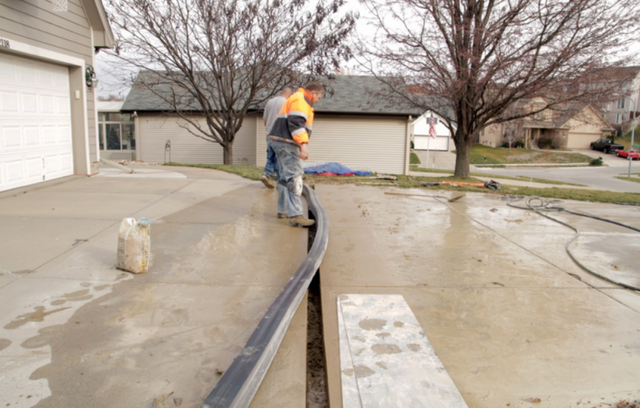
How Does Professional Concrete Leveling Work?
Concrete leveling, also known as concrete lifting or concrete raising, is a repair technique designed to restore sunken concrete to its proper elevation. Rather than tearing out the old slab and pouring a new one, professionals use advanced injection methods to raise the existing concrete from below.
Our Step-by-Step Leveling Process
Here is how professional concrete leveling typically works:
- Assessment and preparation. A trained technician inspects the affected area, identifies the cause of the settlement, and marks the injection points. This initial evaluation determines whether the slab is a good candidate for leveling.
- Drilling small access holes. Small, strategically placed holes (typically the diameter of a penny) are drilled through the sunken concrete slab. These holes serve as injection ports for the leveling material.
- Injecting the leveling compound. A specialized polyurethane foam is injected through the holes beneath the slab. The foam expands to fill voids in the soil, stabilize the base, and lift the concrete back to its proper position.
- Precise lifting and alignment. The technician monitors the lift in real time to ensure the slab rises evenly and reaches the correct elevation. This level of precision is one of the key advantages of modern foam injection technology.
- Sealing the injection holes. Once the slab is level, the small holes are patched with a non-shrink grout compound, leaving a clean, almost invisible repair.
- Immediate usability. Unlike full slab replacement, which requires days or even weeks of curing time, a leveled slab is typically ready for use within minutes of the procedure. You can walk and drive on it the same day.
Why We Use Polyurethane Foam Injection
Modern concrete leveling relies primarily on polyurethane foam injection, sometimes called poly leveling or foam jacking. This method has become the industry standard for several reasons:
- Lightweight material. Polyurethane foam weighs significantly less than traditional leveling materials, which means it does not add excessive weight to already weakened soil.
- Waterproof properties. The foam is moisture-resistant, so it will not wash away or break down when exposed to water, making it ideal for Oklahoma’s heavy rain seasons.
- Precision control. Technicians can adjust the expansion rate and volume of foam to achieve exact lift measurements, often down to fractions of an inch.
- Minimal disruption. The small injection holes and quick cure time mean less damage to your property and less downtime for your family.
Polyurethane Foam vs. Traditional Cement Slurry Methods
While the goal of lifting concrete is the same, not all leveling methods are created equal. The material used to raise the slab makes a significant difference in the process, the final appearance, and the long-term stability of the repair. At Vesta, we exclusively use polyurethane foam injection because it offers distinct advantages over older, traditional cement slurry techniques. This advanced material allows for a less invasive, more precise, and far more durable solution to sunken concrete. Let’s look at how the two methods compare so you can see why we believe foam is the superior choice for protecting your home.
Hole Size and Appearance
Imagine having work done on your driveway or patio, only to be left with large, obvious patches. With traditional cement slurry methods, that’s often the reality. This technique requires drilling wide holes, sometimes up to two inches in diameter, into the concrete to pump the heavy material underneath. After the job is done, these large holes are filled, but they can remain quite noticeable. In contrast, polyurethane foam injection offers a much cleaner and more discreet solution. We drill small, dime-sized holes—about 5/8 of an inch wide—to inject the lightweight foam. Once we patch these tiny access points, they blend seamlessly into your existing concrete, preserving the look of your property.
Material Weight and Soil Impact
The soil beneath your concrete slab is what caused it to sink in the first place, so adding more weight on top of it doesn’t make much sense. Traditional cement slurry is incredibly heavy, weighing around 100 pounds per cubic foot. Pumping this dense mixture under your slab can add significant stress to the already weak soil, potentially leading to further settlement down the road. Polyurethane foam, however, is a game-changer. It’s exceptionally lightweight, at only 2 to 4 pounds per cubic foot. Instead of burdening the soil, the foam expands to fill voids and actually helps compact and strengthen the ground beneath, providing a stable base for your concrete without adding extra weight. This approach addresses the underlying soil issue, promoting a more durable and lasting foundation repair.
Cure Time and Water Resistance
One of the biggest drawbacks of older cement slurry methods is the long wait time. After the material is pumped, you typically have to wait one to three days before you can walk or drive on the surface again. This can be a major inconvenience, especially for a busy driveway. Polyurethane foam, on the other hand, cures incredibly fast. In just 15 to 30 minutes, the foam is fully hardened, and the slab is ready for immediate use. Beyond convenience, the foam itself is structurally superior. Experts confirm the material is moisture-resistant, meaning it won’t wash away or break down when exposed to Oklahoma’s heavy rains. This creates a stable, waterproof barrier that protects the soil from future erosion, ensuring your concrete stays level for years to come.
6 Signs Your Concrete Needs Leveling

Knowing when your concrete needs professional attention is just as important as understanding the leveling process itself. Many homeowners ignore early warning signs, allowing the problem to worsen over time. Here are the most common indicators that your concrete may need leveling.
You Notice Sinking or Settling
The most obvious sign is concrete that has visibly dropped from its original position. You might notice a section of your sidewalk that sits lower than the adjacent slabs, a corner of your garage floor that has sunk, or a driveway panel that has settled near the garage entrance. Even a half-inch difference can indicate soil movement below the surface.
Your Concrete Looks Uneven or Tilted
When a concrete slab settles unevenly, one side may drop more than the other, creating a noticeable tilt. This is especially common on patios and pool decks, where soil erosion from water runoff tends to affect one edge more than the rest. A tilting slab not only looks wrong but also redirects water flow in unintended directions.
There Are New Trip Hazards
One of the most dangerous signs of concrete settlement is a raised lip or step between two adjacent slabs. These trip hazards are common along sidewalks, driveway panels, and patio edges. If you catch your foot on a raised slab edge while walking, it is time to call a concrete leveling professional.
Water Pools on Your Concrete
Settled concrete changes the natural drainage patterns of your property. If you notice water pooling on your patio, collecting against your foundation walls, or running toward your home instead of away from it, the underlying cause may be a shifted concrete slab. Improper drainage can lead to secondary problems, including foundation damage and basement moisture issues.
You See New or Growing Cracks
While not all cracks indicate settlement (concrete naturally develops hairline cracks over time), certain cracking patterns are strong indicators of soil movement below the slab. Look for:
- Stair-step cracks that follow the joints between slab sections
- Wide cracks (greater than a quarter inch) that continue to grow
- Cracks accompanied by slab movement, where one side of the crack sits higher than the other
Gaps Appear Next to Your Foundation
If you see daylight between your concrete and an adjacent structure, such as your home’s foundation, front porch steps, or garage floor, it means the slab has pulled away due to settlement. This gap often worsens over time as water enters and accelerates soil erosion beneath the slab.
What Causes Concrete to Settle in Oklahoma?
Understanding why concrete settles helps you recognize risk factors on your own property and take preventive measures. Oklahoma’s unique climate and geology make concrete settlement a particularly common problem across the state.
Oklahoma’s Expansive Clay Soil
Oklahoma sits on some of the most expansive clay soil in the country. Clay soil absorbs water and swells during wet periods, then shrinks dramatically during dry spells. This constant expansion and contraction cycle creates voids beneath concrete slabs, removing the stable support the slab needs. Over months and years, the slab gradually sinks into these voids.
Erosion from Rain and Runoff
Heavy rainfall, improper gutter drainage, and underground water flow can wash soil out from beneath concrete slabs. Oklahoma’s severe thunderstorm season, which typically runs from April through June, is a prime contributor to soil washout. When the supporting soil erodes, the concrete above loses its foundation and begins to settle.
Soil That Wasn’t Compacted Properly
During home construction, builders often use fill soil to level the building site before pouring concrete. If this fill soil is not properly compacted, it will gradually compress under the weight of the concrete slab. This type of settlement often appears within the first few years after construction but can also develop decades later as the soil continues to settle.
Intrusive Tree Roots
Large trees near concrete surfaces can affect the underlying soil in two ways. Growing roots can push soil and slabs upward, while decaying root systems leave voids that cause the concrete to drop. Both scenarios create uneven surfaces that require professional leveling.
The Freeze-Thaw Weather Cycle
Oklahoma winters bring repeated freeze-thaw cycles that further stress the soil beneath concrete. When moisture in the soil freezes, it expands and pushes the concrete upward. When it thaws, the soil contracts, and the slab drops. Over several winters, this cycle can create significant settlement.
What Kinds of Concrete Can Be Leveled?
One of the most common misconceptions about concrete leveling is that it only works for sidewalks. In reality, professional leveling can restore virtually any type of exterior or interior concrete slab. Here is a breakdown of the most common applications.
Driveways
Driveway slabs are among the most frequently leveled surfaces. They bear the weight of vehicles daily and are highly susceptible to soil erosion from runoff. Leveling a sinking driveway restores its appearance and prevents further damage to your vehicle and garage floor.
Sidewalks & Walkways
Uneven sidewalk panels are both a liability and an aesthetic concern. Concrete leveling eliminates trip hazards along your front walkway, garden paths, and side yard passages. Municipal codes in many Oklahoma communities also require property owners to maintain safe walkways.
Patios & Pool Decks
Outdoor living spaces like patios and pool decks are common candidates for concrete leveling services. Soil erosion from pool water splash, sprinkler systems, and rain runoff often affects these areas. Leveling restores the flat, safe surface you need for entertaining and relaxation.
Garage Floors
Interior slab settlement is not uncommon, especially in garages built on fill soil. A sinking garage floor can affect the fit of your garage door, create drainage issues, and make it difficult to park and move around the space.
Porches & Stoops
Front porches and entryway stoops frequently separate from the home’s foundation as the underlying soil settles. This creates both a visible gap and a step that worsens over time. Leveling these areas restores a seamless transition between your entryway and your home.
Concrete Steps
Sunken or tilting concrete steps are a significant safety concern. Leveling can restore steps to their proper alignment, eliminating the uneven risers that cause stumbles and falls.
Concrete Leveling vs. A Full Re-Pour: Which Is Better?
Many homeowners assume that damaged concrete needs to be torn out and replaced. In most cases, however, concrete leveling is the more practical and efficient option. Here is how the two approaches compare.
Faster Project Completion
Concrete leveling typically takes just a few hours for most residential projects. The slab is ready for use almost immediately. Slab replacement, on the other hand, requires demolition, grading, forming, pouring, and curing, a process that can take a week or longer before the new concrete is ready for traffic.
Less Disruption to Your Home & Yard
Replacing a concrete slab involves heavy equipment, demolition debris, and significant landscaping disturbance. Leveling is minimally invasive, requiring only small drill holes and no demolition.
A More Eco-Friendly Option
Concrete replacement generates tons of waste that ends up in landfills. Leveling reuses the existing slab, making it a more sustainable choice. The polyurethane foam used in modern leveling is also environmentally stable and will not leach chemicals into the soil.
When Is a Re-Pour the Only Option?
There are situations where leveling is not the right solution. If a slab is severely crumbled, has multiple large fractures that break it into many pieces, or has deteriorated due to years of exposure, full replacement may be necessary. A professional assessment from Vesta Foundation Solutions will determine which approach is right for your situation.
The Oklahoma Factor: Why a Local Pro Is Your Best Bet
Concrete leveling in Oklahoma is not the same as concrete leveling in other parts of the country. The state’s unique combination of expansive clay soil, extreme weather swings, and severe storm activity creates conditions that require specialized knowledge and experience.
We Know Oklahoma’s Unique Soil
A concrete leveling contractor who understands Oklahoma’s soil composition will know how to account for the ongoing expansion and contraction of clay soil. This knowledge influences injection point placement, foam density selection, and long-term stabilization strategies.
We Work With Oklahoma’s Weather
Oklahoma homeowners often wonder when the best time is to level their concrete. The ideal window is during mild, dry weather when the soil is relatively stable. Early fall and late spring often provide the best conditions. However, a qualified contractor can perform leveling year-round by adjusting their approach to current conditions.
Ensuring We Meet Local Codes
Oklahoma municipalities have specific codes regarding sidewalk maintenance, property drainage, and trip hazard thresholds. Working with a local contractor ensures your repairs meet all applicable standards.
DIY vs. Professional Concrete Leveling: Why Hire an Expert?
With DIY tutorials widely available online, some homeowners consider tackling concrete leveling themselves. While the concept seems straightforward, there are several reasons why professional service delivers better, longer-lasting results.
Access to Specialized Equipment
Professional concrete leveling requires specialized injection equipment, polyurethane foam formulations, and monitoring tools that are not available to consumers. The equipment used to inject foam at the precise pressure and volume needed to lift a slab without over-lifting or cracking it is calibrated for professional use.
The Importance of Certified Technicians
The advanced equipment is only part of the story; the real key to successful concrete leveling is the person operating it. A certified technician does more than just inject foam. Their job starts with an expert assessment to identify the root cause of the settlement, ensuring the repair addresses the underlying problem. During the injection process, they use their training to control the lift with incredible precision, often making adjustments to raise the slab evenly to within fractions of an inch. This skill is what prevents over-lifting, which can crack the slab, or under-lifting, which fails to solve the problem. When you work with trained professionals, you’re not just getting a repair; you’re getting the assurance that the job is done correctly and safely, protecting your property from further damage.
Avoid Causing More Damage
Attempting to lift concrete without proper training can result in over-lifting (which cracks the slab), under-lifting (which wastes time and materials), or injection into the wrong location (which fails to address the root cause). A professional technician understands soil behavior, foam expansion rates, and slab dynamics.
The Protection of a Warranty
Professional concrete leveling services come with warranties that protect your investment. If the slab settles again within the warranty period, the contractor will return and re-level it at no additional charge. DIY attempts offer no such protection.
A Solution That Lasts
A professional leveling job addresses the underlying soil issues, not just the surface symptoms. By filling voids, stabilizing soil, and providing a waterproof base, professional service prevents recurrence. DIY methods, such as pouring self-leveling compound on the surface, do not address the root cause and will fail again.
High-Quality Materials for a Durable Repair
The quality of a concrete leveling job is only as good as the materials used. That’s why modern professionals rely on polyurethane foam injection. This advanced method has become the industry standard because it directly addresses the challenges of Oklahoma’s soil and climate. The foam is incredibly lightweight, so it won’t add extra stress to the already weak soil beneath your slab. It’s also completely waterproof, meaning it won’t wash away or break down during our state’s heavy rain seasons. This ensures the lift is stable and secure for the long haul. Plus, the process offers incredible precision, allowing technicians to achieve an exact lift with minimal disruption to your property and family life.
Long-Term Value and Post-Repair Care
Choosing to level your concrete is an investment in your property’s safety, appearance, and stability. When done correctly with professional-grade materials, it’s a solution designed to stand the test of time. Unlike a temporary patch, a high-quality repair addresses the root of the problem by stabilizing the soil beneath the slab. This not only restores your concrete surfaces but also helps protect your property from future issues related to soil settlement and water intrusion. Thinking about the repair in terms of its long-term benefits helps highlight why professional service is so important.
While a professional repair is built to last, a little proactive care on your part can extend its lifespan even further. Understanding what to expect from your newly leveled concrete and how to maintain it will ensure you get the most value from the repair for years to come. It’s not just about fixing the problem for today; it’s about creating a stable, reliable surface that you can count on well into the future. A few simple maintenance habits can make all the difference in preserving the integrity of the work.
Lifespan of Polyurethane Foam Repairs
One of the biggest advantages of using polyurethane foam is its impressive longevity. Because the foam is a durable, synthetic material that doesn’t break down or wash out with water exposure, repairs can easily last for 10 years or more. This isn’t a temporary patch; it’s a lasting solution that stabilizes the soil and supports the slab for the long term. Professional services also come with the added security of a warranty. This protects your investment, as the contractor will stand behind their work. If the slab settles again within the warranty period, a professional team will return to address it, giving you confidence that a DIY attempt simply can’t offer.
How to Maintain Your Leveled Concrete
Once your concrete is level again, a few simple maintenance steps can help keep it that way. The most important thing you can do is manage water around the repaired area. Ensure your gutters are clean and that downspouts direct water several feet away from your concrete slabs and foundation. You should also seal any small cracks that may develop over time to prevent water from seeping beneath the slab and causing new erosion. Taking these small steps helps preserve the integrity of the repair and protects your entire property from the effects of water intrusion, which is a key part of overall home health and basement waterproofing.
Our Simple 4-Step Concrete Leveling Process
If you have identified signs of concrete settlement on your property, taking action sooner rather than later prevents the problem from escalating. Here is how to move forward.
Step 1: Get a Free, No-Obligation Inspection
The first step is a professional assessment of your concrete. Vesta Foundation Solutions offers free inspections across Oklahoma City, Tulsa, Edmond, and the surrounding areas. During the inspection, a trained technician will evaluate the extent of the settlement, identify the likely cause, and recommend the best course of action.
Step 2: We’ll Explain Your Custom Solution
Based on the inspection findings, your technician will explain whether concrete leveling, repair, or replacement is the right solution for your specific situation. You will receive a clear recommendation backed by a thorough analysis of your concrete and soil conditions.
Step 3: Schedule the Repair on Your Time
Once you approve the plan, the leveling work can typically be scheduled within days. Most residential projects are completed in a single visit, often in just a few hours.
Step 4: Use Your Restored Concrete Right Away
After the leveling is complete, you can immediately use your restored concrete surfaces. No waiting for curing, no roping off areas, and no worrying about when it will be safe to walk on.
Frequently Asked Questions About Concrete Leveling
How long does concrete leveling last?
When performed by an experienced professional using high-quality polyurethane foam, concrete leveling can last the remaining lifetime of the slab, often 20 years or more. The foam does not break down, wash away, or compress over time, providing a permanent stabilization solution.
Can concrete leveling fix all types of uneven concrete?
Concrete leveling works on most types of sunken or uneven slabs, including driveways, sidewalks, patios, pool decks, garage floors, porches, and steps. However, if a slab is severely crumbled or fractured into many pieces, replacement may be the better option. A free inspection will determine which solution is right for your situation.
How soon can I use my concrete after leveling?
In most cases, you can walk on the leveled surface within 15 minutes and drive on it within a few hours. This is one of the biggest advantages of polyurethane foam injection compared to full slab replacement, which requires days of curing time.
Is concrete leveling safe for my landscaping?
Yes. Concrete leveling is a minimally invasive process that requires only small drill holes in the slab. There is no demolition, no heavy excavation equipment, and no damage to surrounding landscaping, flower beds, or lawn areas.
What causes concrete to settle in Oklahoma specifically?
Oklahoma’s expansive clay soil is the primary driver of concrete settlement across the state. The clay absorbs moisture and swells, then shrinks during dry periods, creating voids beneath slabs. Heavy rainfall, soil erosion, poorly compacted fill, and freeze-thaw cycles also contribute to settlement.
Does Vesta Foundation Solutions offer a warranty on concrete leveling?
Yes. Vesta Foundation Solutions provides warranties on concrete leveling work. During your free inspection, your technician will explain the warranty coverage specific to your project.
Don’t Wait for the Problem to Get Worse
Concrete settlement does not fix itself. In fact, it almost always gets worse over time as soil continues to erode, shift, and compact. The longer you wait, the more extensive the damage becomes, and the more difficult and involved the repair.
If you have noticed any of the warning signs discussed in this article, such as sinking slabs, trip hazards, water pooling, widening cracks, or gaps between your concrete and home, the time to act is now.
Schedule your free inspection with Vesta Foundation Solutions and get a professional assessment of your concrete. Our team serves homeowners across Oklahoma City, Tulsa, Edmond, and the surrounding Oklahoma communities with expert concrete leveling services backed by industry-leading products and warranties.
Key Takeaways
- Professional leveling offers a permanent solution: Unlike a temporary patch, injecting polyurethane foam lifts sunken concrete and stabilizes the weak soil beneath it, preventing the problem from returning.
- Act on the early signs of settlement: Don’t ignore sinking slabs, trip hazards, or water pooling on your concrete, as these are clear indicators of unstable soil that will only worsen over time.
- Trust an expert for a guaranteed result: A professional technician has the specialized equipment and local knowledge of Oklahoma’s soil to perform a precise lift, avoiding damage and ensuring the repair is backed by a warranty.
Related Articles
- Concrete Repair & Leveling OKC | Oklahoma City Concrete Services | Vesta
- Concrete Leveling Oklahoma City | PolyLevel Lifting Experts
- Concrete Leveling | Foundation Repair & Basement Waterproofing
- Interior Slab Leveling | Foundation Repair & Basement Waterproofing
- Concrete Leveling FAQs | Foundation Repair & Basement Waterproofing