
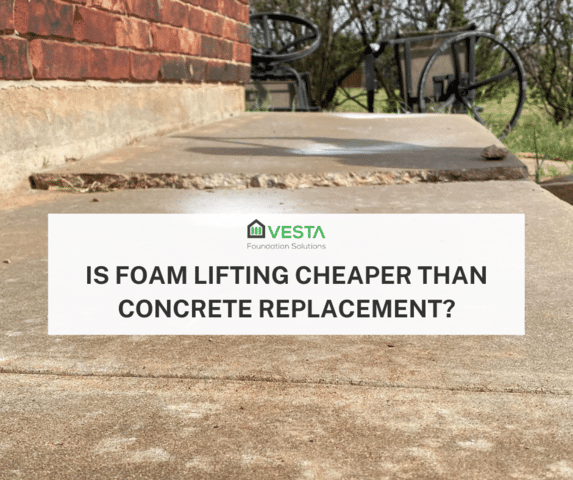
If you’re a homeowner or business owner in Tulsa, OK, with sinking concrete, you’re probably wondering what to do. Should you jackhammer it all and replace it, or is there a better way? The problem often isn’t the concrete itself, but the unstable soil underneath. Heavy rains, drought, and poor compaction cause the ground to shift, leaving your concrete unsupported. This leads to those ugly cracks and dangerous tripping hazards. Instead of a total replacement, foam concrete lifting in Tulsa offers a modern fix that solves the problem at its source, and is even used for foam foundation repair in Tulsa, OK.
When exploring the removal and replacement of the concrete, keep in mind the old concrete must be jackhammered and removed using heavy equipment. This can be disruptive and time-consuming. Then when the concrete is removed, forms are placed to help outline and hold the new concrete while it dries. When the forms are complete, the new concrete can be installed and will need several days to dry before use. This can also be delayed depending on the weather. Once the concrete is fully cured(dried), the soil beneath the new concrete can still expand, contract, and wash out. Many concrete contractors install new slabs with two guarantees: The concrete will (1) harden and (2) crack. So there is little to no guarantee with the new concrete being poured.
So, when comparing the methods, foam injection is, in most cases, cheaper than concrete removal and replacement. The procedure begins by drilling small 3/8″ holes in the concrete surface. Next, a two-part foam product called PolyLevel is injected beneath the slab. The material starts as a liquid to soak into the soil and prevent expansion and contraction later. Then when the material expands, it can slowly lift the concrete back into a level position. Once complete, the holes are filled with color-matching mortar, and the space can be used entirely in 15 minutes. The installation can take place in one day compared to the multistage process of concrete removal and replacement. This method also comes with warranties that typically last five years or beyond. Explore our comparing polyurethane concrete raising methods.
Our Concrete Protection System
Control Joints are lines in the concrete to make sure expansion cracks take the path of the predetermined lines. Many customers then have their control joints sealed using Nexuspro joint sealer. This is elastomeric caulking used to keep debris and water out of the open joints. Many types of caulking can dry and shrink in the extreme heat in Oklahoma, especially in Tulsa, while Nexus Pro is designed to stretch and bond to the concrete for long-lasting results.
Lastly, to help preserve the concrete, a layer of sealant or tint can be added to protect the surface from pitting and flaking in the future. Many customers like to match their concrete with other portions, so concrete Decoshield is a long-lasting product to help seal and protect the surface while giving a nice clean finish.
Even with the joints and sealing, most projects can still be completed in one day and used within an hour of service. With the limited labor and downtime between stages, foam injection and sealing are some of the many reasons customers have PolyLevel installed rather than having concrete replacement performed.
For more information about how you can protect your concrete click here or give us a call at 1-405-565-9868.
Vesta Foundation Solutions is a local foundation, concrete, crawlspace, and basement waterproofing company located in Oklahoma City, OK. Our crews serve all of Oklahoma, including Tulsa, Edmond, Yukon, Moore, Norman, Broken Arrow, Owasso, etc.When it comes to the long-lasting stability of your home, it is crucial to have an experienced professional to call. Vesta is a company that understands the best practices that will help restore and protect your home’s structural integrity. We do provide free, no-obligation estimates.
What Is Foam Concrete Lifting?
If you’ve noticed your driveway, sidewalk, or patio starting to sink and crack, you might be picturing a messy, expensive tear-out and replacement project. But there’s a modern, less disruptive solution you should know about. Foam concrete lifting is a process that corrects uneven concrete slabs by injecting a high-density polyurethane foam underneath them. This special foam starts as a liquid, allowing it to flow into and fill any empty spaces beneath the concrete. It then undergoes a chemical reaction, rapidly expanding and hardening into a strong, stable material that gently lifts the slab back to its original, level position.
This method, also known as polyjacking or poly leveling, is a fantastic alternative to traditional mudjacking or a full replacement. Instead of using a heavy cement slurry or bringing in disruptive equipment, foam lifting uses small injection holes and a lightweight material to achieve a precise, long-lasting result. It not only lifts the concrete but also stabilizes the soil underneath, addressing the root cause of the problem. This makes it an efficient and effective way to fix tripping hazards and restore the look and safety of your property without the major headache of demolition.
Alternative Names: Polyjacking and Poly Leveling
As you research solutions for your sinking concrete, you’ll likely come across a few different terms that all mean the same thing. “Foam concrete lifting,” “polyjacking,” and “poly leveling” are often used interchangeably to describe the process of using polyurethane foam to raise concrete. The “poly” in these names refers to the polyurethane material used in the injection process. The term “jacking” is borrowed from the traditional method of “mudjacking,” where a mud-like slurry is used to lift slabs. Here at Vesta, we use a state-of-the-art PolyLevel® system, which is engineered to provide a precise, durable, and waterproof solution for your home.
Warning Signs You Might Need Concrete Leveling
Uneven concrete is more than just a cosmetic issue; it’s often a clear signal that something is wrong with the soil supporting it. Ignoring these signs can lead to bigger, more expensive problems down the road, including water damage and even foundation issues. The most obvious warning sign is a visible trip hazard, where one concrete slab has sunk lower than the adjacent one. You might also notice water pooling in low spots on your driveway or patio after it rains, which can accelerate erosion and make the problem worse. Cracks that are widening or where one side is higher than the other are also red flags that the ground beneath is no longer providing adequate support.
Common Causes of Sinking Concrete in Oklahoma
In Oklahoma, our unique soil and weather patterns create the perfect conditions for sinking concrete. The primary culprit is unstable soil, which can be caused by several factors. When the soil beneath a heavy concrete slab shifts, compacts, or washes away, it creates empty spaces, or voids. The unsupported slab then sinks and cracks under its own weight. Understanding the specific cause is the first step toward a permanent fix. According to experts at Level Home Foundation Repair, common causes include soil erosion from water, poor initial compaction, freeze-thaw cycles, and heavy loads pressing down on the slab.
Soil Erosion and Washout
Water is the number one enemy of stable soil. Heavy Oklahoma downpours, poorly placed downspouts, or improper yard grading can send water flowing underneath your concrete slabs. As this water moves, it can slowly carry away the soil particles, creating underground voids. Over time, this erosion leaves the concrete slab without the support it needs to stay level, causing it to sink into the newly formed empty space. This is especially common around pool decks and patios where drainage might be a challenge.
Ground Freezing and Thawing
The freeze-thaw cycle that we experience during Oklahoma winters can also wreak havoc on concrete. When the ground freezes, the moisture in the soil expands, causing the ground—and the concrete slab on top of it—to heave upward. Then, when the spring thaw arrives, the soil contracts and settles back down. This repeated up-and-down movement can cause the soil to settle lower than its original position, leading to voids and, eventually, a sunken slab. This process can create significant instability over several seasons.
Heavy Loads
Sometimes, the cause is simply weight. If the soil beneath your concrete was not properly compacted before the slab was poured, it can slowly compress over time under a heavy, consistent load. This is a frequent issue with driveways that support vehicles day after day or with garage floors where heavy equipment is stored. The constant pressure compacts the weak soil, causing the slab to settle and sink. This can also happen under the support posts for a porch or deck, leading to uneven surfaces.
Problem Areas to Watch
While sinking concrete can happen anywhere, some areas around your home are more susceptible than others. These are often high-traffic zones or places where water drainage is a known issue. Keeping a close eye on these spots can help you catch problems early before they become major hazards. Pay attention to your sidewalks, driveway, and any steps leading into your home, as these are common areas for dangerous trip hazards to develop. A small crack or slight dip can quickly turn into a serious problem if the underlying soil issues aren’t addressed.
Patios, Pool Decks, and Porches
Patios, pool decks, and porches are prime candidates for concrete settlement. These areas are often located right next to your home’s foundation and are frequently exposed to water from rain, sprinklers, or pool splash-out. If the soil wasn’t properly graded away from your house when these features were installed, water can easily get underneath the slabs and erode the supporting soil. A sinking patio that slopes toward your home can be particularly dangerous, as it can funnel water directly against your foundation, leading to leaks and other moisture-related problems.
Garage Floors and Interior Home Slabs
A sinking garage floor or an uneven interior slab is a more serious concern. While the causes are often the same—poorly compacted soil or water issues—the consequences can be more significant. A cracked and sinking garage floor can affect how your garage door closes and can be a sign of deeper soil settlement. If you notice sinking in an interior slab, such as in a basement or a slab-on-grade home, it’s crucial to act quickly. This could indicate a more widespread problem that might be affecting your home’s overall structural integrity.
Signs of Trouble Inside Your Home
Sometimes, the first clues that you have a sinking slab don’t appear on the slab itself but inside your house. When a concrete slab that is part of your home’s foundation begins to settle, it can put immense stress on the structure above it. This can cause a cascade of issues throughout your home that might seem unrelated at first glance. As noted by the professionals at Perma Jack, if you see signs like sticky doors or cracks in your walls, it’s time to call a professional. These are often symptoms of a foundation problem that needs immediate attention.
Doors or Windows That Stick
Have you noticed a door that suddenly won’t latch properly or a window that’s become difficult to open and close? This is a classic sign of foundation settlement. As the slab beneath your walls sinks, it pulls the wall frames out of alignment. This distortion can cause door and window frames to become skewed, resulting in them sticking or jamming. You might find yourself having to forcefully shove a door to get it to close, which is a clear indication that the frame is no longer square.
Gaps Around Door and Window Frames
Another related sign is the appearance of gaps between your walls and the frames of your doors or windows. As the foundation settles, it can cause walls to pull away from these frames. You might see a visible gap at the top or side of a door, or you may notice that you can see daylight around a window frame that was once sealed tight. This not only indicates a structural issue but can also lead to drafts and energy loss in your home.
Cracks in Foundation Walls
Cracks in your drywall or, more seriously, in your home’s foundation walls are a major warning sign. As the slab settles, the stress has to go somewhere, and it often results in cracks. You might see diagonal cracks extending from the corners of doors and windows or stair-step cracks in brick or concrete block walls. If you see these types of cracks, it’s a strong signal that your foundation is moving. This is a problem that goes beyond simple concrete leveling and requires a comprehensive foundation repair solution to ensure your home’s stability.
How the Foam Concrete Lifting Process Works
The foam concrete lifting process is remarkably simple and efficient, especially when compared to the mess and disruption of a full concrete replacement. The entire procedure is designed to be minimally invasive and is often completed in just a few hours. The goal is not just to lift the concrete but to do so in a controlled, precise manner that also stabilizes the ground underneath for a long-term fix. According to Level Home Foundation Repair, the process involves drilling small holes, injecting an expanding foam to fill voids, and gently raising the concrete back to its proper level, all without needing to tear out the old slab. For additional details, see our homeowner’s guide to concrete slab lifting.
Injecting the Two-Part Expanding Foam
The magic behind the process is the two-part polyurethane foam. After drilling a few small, dime-sized holes through the sunken slab, a specialized injection gun is used to pump the foam components into the voids below. The components mix together as they are injected, creating a chemical reaction that causes the material to expand. This expanding foam behaves like a strong, dense cushion, filling every nook and cranny of the void. The expansion is powerful enough to lift the heavy concrete slab above it, and our skilled technicians can control the injection to ensure a precise, even lift.
Benefits of Small Drill Holes and Portable Equipment
One of the biggest advantages of foam lifting is how little it disrupts your property. The drill holes are tiny—typically only about 5/8 of an inch in diameter—and are barely noticeable once they are patched with mortar after the job is done. All the equipment is portable, meaning there’s no need to drive heavy trucks or machinery onto your lawn or landscaping. The foam itself cures very quickly, usually within 15-30 minutes, so you can walk or drive on the repaired surface almost immediately after the crew leaves. This makes it an incredibly convenient and clean repair method.
Foam Concrete Lifting vs. Other Repair Methods
When you’re faced with sinking concrete, you have a few different repair options to consider. While foam concrete lifting is a modern and highly effective solution, it’s helpful to understand how it stacks up against other common methods like mudjacking, grinding, and full replacement. Each approach has its own set of pros and cons related to cost, durability, and the level of disruption involved. Choosing the right method depends on the extent of the damage, your budget, and your long-term goals for the property. Foam lifting often comes out on top for its combination of effectiveness, speed, and minimal invasiveness.
Foam Lifting vs. Mudjacking
Mudjacking is the traditional method of lifting concrete. It involves pumping a heavy slurry of mud, sand, and cement under the slab to lift it. While it can be effective, it has several drawbacks compared to foam lifting. Mudjacking requires much larger injection holes (typically 2 inches or more in diameter) and the slurry is extremely heavy, adding significant weight to already unstable soil. The material can also erode or wash away over time. In contrast, polyurethane foam is lightweight, waterproof, and won’t break down, providing a more permanent solution with much smaller, less noticeable injection holes.
Foam Lifting vs. Grinding
Concrete grinding is a method used to eliminate trip hazards by grinding down the higher edge of an uneven slab to make it level with the lower one. While this can smooth out a dangerous edge, it’s purely a cosmetic fix. Grinding does absolutely nothing to address the underlying soil problem that caused the slab to sink in the first place. The lower slab will likely continue to sink over time, and the grinding can sometimes create an unsightly, discolored patch on your concrete. Foam lifting, on the other hand, corrects the root cause by stabilizing the soil and lifting the slab back into place.
Foam Lifting vs. Full Concrete Replacement
A full replacement involves jackhammering the old slab, hauling away the debris, preparing the base, and pouring new concrete. This is by far the most disruptive, time-consuming, and expensive option. It can also be a temporary fix if the underlying soil issues aren’t properly addressed. New concrete poured on the same unstable soil is likely to sink again. As noted by A1 Concrete, foam lifting is almost always more affordable than a full replacement and addresses the soil problem directly, making it a smarter, more cost-effective long-term solution.
Understanding the Cost of Foam Concrete Lifting
One of the first questions every homeowner has is, “How much is this going to cost?” The price of foam concrete lifting can vary significantly from one project to the next because every situation is unique. Unlike a simple product you buy off a shelf, a concrete repair is a service that has to be tailored to the specific conditions of your property. Factors like the size of the area, the extent of the sinking, and the condition of the underlying soil all play a role in the final cost. However, it’s consistently more affordable than the alternative of a full replacement.
How Costs Are Calculated
It’s a common misconception that concrete leveling is priced by the square foot. While the size of the slab is a factor, the primary cost driver is actually the amount of foam material needed to complete the job. This is determined by the size and depth of the void beneath the concrete. A slab that has sunk several inches will require much more foam to lift than one that has only settled a fraction of an inch. This is why a professional inspection is so important for getting an accurate price.
Void Size vs. Square Footage
As explained by industry experts, the cost is primarily based on the volume of the void that needs to be filled, not just the surface area of the slab. A technician will assess how much the concrete has sunk and estimate how much material will be needed to fill that empty space and lift the slab. This is why two driveways of the same size could have very different repair costs. One might have a small, shallow void, while the other could have a deep, extensive one requiring significantly more polyurethane foam.
Average Cost of Foam Lifting
While it’s impossible to give a precise quote without an inspection, we can look at some general industry averages to give you a ballpark idea. According to some sources, foam concrete lifting can range from $5 to $25 per square foot, but remember that this is just a rough estimate. A small, simple job like a single sidewalk slab might be on the lower end, while a large, deeply sunken driveway will be more. The best way to know for sure is to get a detailed, on-site evaluation from a professional.
Sample Sidewalk Repair Costs
For a typical sidewalk repair involving one or two sunken slabs creating a trip hazard, the cost is usually quite manageable. Because the area is small and the voids are often not very deep, this type of project is on the lower end of the cost spectrum. It’s a quick and affordable way to improve the safety and curb appeal of your home without breaking the bank.
Sample Garage Floor Repair Costs
A sinking garage floor is a more complex job. The area is larger, and the voids can be more substantial. The cost will depend on how many areas of the floor have settled and by how much. However, even a significant garage floor lift is still far more cost-effective and less disruptive than emptying your entire garage, tearing out the old floor, and pouring a new one, which can take weeks from start to finish.
Sample Driveway Repair Costs
Driveways are often the largest and most expensive areas to lift, simply due to their size and the heavy loads they bear. The cost will depend on how many slabs are affected and the depth of the settlement. Despite the higher price tag compared to a small sidewalk, lifting a driveway with foam is still significantly cheaper than a full replacement. To get a precise and reliable quote for your specific situation, we recommend scheduling a free, no-obligation inspection with our team.
Potential Disadvantages and Limitations
While foam concrete lifting is an excellent solution for most situations, it’s important to have a balanced understanding and be aware of its potential limitations. No repair method is perfect for every single scenario, and the success of a foam lifting job often comes down to the skill and experience of the installation crew. Knowing the potential downsides can help you ask the right questions and ensure you’re hiring a reputable company that stands behind their work. A professional will be able to identify if your project has unique challenges that need to be considered.
Incomplete Void Filling
One potential issue is that the expanding foam will naturally follow the path of least resistance. If not done correctly, this could lead to the foam filling only part of the void, leaving some areas unsupported. As one source points out, this can result in “empty pockets or thin layers under the slab.” An experienced technician knows how to strategically place injection holes and control the flow of the foam to ensure the entire void is filled completely and evenly, providing solid, long-lasting support for the entire slab.
Risk of Over-Lifting the Concrete
The polyurethane foam expands with incredible force, which is what allows it to lift a multi-ton concrete slab. However, this power needs to be carefully controlled. An inexperienced operator could accidentally inject too much foam or inject it too quickly, causing the slab to be lifted too high. This is known as over-lifting, and it can be difficult to correct. This is why it’s crucial to work with a skilled professional who uses monitoring equipment to ensure a precise, controlled lift to the exact right height.
Weather Sensitivity and Environmental Concerns
The chemical reaction that causes the foam to expand can be sensitive to extreme temperatures. Professional crews know how to adjust their process for hot or cold weather, but it is a factor to be aware of. Additionally, some homeowners may have concerns about the environmental impact of injecting a chemical foam into the ground. You can rest assured that modern polyurethane foams, like the one we use, are environmentally safe. Once cured—which happens very quickly—the foam is inert and stable, meaning it will not leach any chemicals into your soil or groundwater.
How Long Does a Foam Lifting Repair Last?
When you invest in a home repair, you want to know that it’s going to last. One of the most significant benefits of foam concrete lifting is its durability. This isn’t a temporary patch; it’s a long-term, and often permanent, solution to sinking concrete. The material itself is designed to withstand the harsh underground environment without breaking down, and when the root causes of the settlement are also addressed, you can expect the repair to last for many years to come. It’s a reliable way to restore your concrete and your peace of mind.
The Durability of Polyurethane Foam
The high-density polyurethane foam used in concrete lifting is an incredibly resilient material. As described by the experts at NCFIGEO, the foam is essentially a type of plastic that is waterproof, stable, and resistant to decay. Unlike the organic materials in a mudjacking slurry, it will not erode, wash away, or break down over time. It’s a permanent structural support that maintains its strength and integrity for decades, effectively acting as a new, solid base for your concrete slab for the life of the concrete itself.
Factors That Determine a Lasting Repair
While the foam itself is permanent, the overall longevity of the repair depends on addressing the issues that caused the concrete to sink in the first place. A successful, long-lasting repair involves more than just injecting foam; it requires a holistic approach to managing the conditions around the slab. A reputable contractor won’t just lift your concrete; they will also help you identify and solve the underlying problems to prevent future settlement and ensure the repair lasts as long as possible.
Fixing Poor Drainage
Since water erosion is the number one cause of sinking concrete, managing drainage is critical for a lasting repair. This means ensuring your gutters are clean and functional, and that your downspouts are directing water far away from your concrete slabs and foundation. In some cases, re-grading the soil around a patio or sidewalk may be necessary to ensure that water flows away from the area, rather than pooling or flowing underneath it.
Strengthening Weak Soil
The foam injection process itself helps to strengthen the soil directly beneath the slab. As the liquid foam is injected, it permeates and mixes with the loose top layer of soil. When the foam expands and hardens, it binds these soil particles together, creating a solid, stable, and lightweight base that is much stronger than the original loose dirt. This soil stabilization is a key benefit that helps prevent the slab from sinking again in the future.
Managing Heavy Weight on the Slab
For areas like driveways, it’s important to be mindful of the weight they support. While a foam-lifted slab is very strong, it’s still sitting on the same underlying soil base. Avoid parking exceptionally heavy vehicles, like large RVs or commercial trucks, on your residential driveway unless it was specifically designed for that purpose. By managing the load on the slab, you can help ensure that your foam lifting repair remains stable and level for years to come.
Frequently Asked Questions
How long does the repair take, and when can I use my driveway again? One of the best parts of foam concrete lifting is how fast it is. Most projects, like a driveway or patio, are finished in just a few hours on the same day. The foam cures very quickly, so you can typically walk on the surface in about 15 minutes and drive on it within half an hour after we finish. This means you get your space back almost immediately, without the long wait times associated with pouring new concrete.
Is the foam material safe for my lawn, pets, and family? Absolutely. While the material is a chemical during the injection process, it becomes completely inert and stable once it cures. This happens very quickly underground. The hardened foam is waterproof and won’t break down or leach any harmful substances into your soil or groundwater. It’s an environmentally safe solution that gives you peace of mind.
My concrete has a lot of cracks. Can it still be lifted with foam? This really depends on the condition of the slab. Foam lifting is incredibly effective for slabs that are still mostly in one piece, even with some cracks. However, if your concrete is shattered into many small, crumbling pieces, it may not be a good candidate for lifting. The best way to know for sure is to have a professional take a look; they can tell you if lifting is the right approach or if another solution is needed.
Will the repair be noticeable? I’m worried about how it will look. We take great care to make the repair as discreet as possible. The injection holes we drill are very small, about the size of a dime. After we lift the concrete, we patch these small holes with a color-matching mortar that blends in with your existing surface. The result is far less noticeable than the large, patched holes from mudjacking or the color and texture mismatch of a new concrete slab next to an old one.
Why is this a better long-term solution than just replacing the concrete? Pouring a new slab of concrete without addressing the soil underneath is often just a temporary fix. The same unstable soil that caused your original slab to sink will likely cause the new one to sink, too. Foam lifting solves the problem at its source. The foam not only lifts the concrete but also flows into the voids and compacts the loose soil, creating a strong, stable base that prevents future sinking. It’s a solution that addresses both the symptom and the cause.
Key Takeaways
- Address the soil, not just the slab: Foam concrete lifting provides a long-term fix by stabilizing the unstable ground beneath your concrete, which is often the real source of the problem.
- Look for clues inside your house: Don’t ignore indoor warning signs; sticking doors, gaps near window frames, and cracks in your walls can all point to a sinking concrete slab affecting your home’s structure.
- Get a quick and convenient fix: The foam injection process is minimally invasive and fast, allowing you to walk or drive on the repaired area the same day, which avoids the lengthy downtime of a full replacement.