
Have you noticed an exterior door starting to stick or a window that’s suddenly difficult to close? You might be surprised to learn the root cause isn’t your house at all, but the ground right outside. When a porch or walkway slab settles, it can create these frustrating issues. It’s a subtle but serious sign that your concrete needs leveling. If you’ve noticed uneven concrete around your Oklahoma home, don’t wait for the problem to get worse. Schedule your free inspection today, and let our experts diagnose the issue before it becomes a safety hazard.
Concrete is one of the most durable building materials on earth, but it is not immune to Oklahoma’s challenging soil conditions. Over time, the expansive clay soils throughout Oklahoma City, Tulsa, Edmond, and surrounding areas shift and settle beneath your slabs, causing driveways, sidewalks, patios, and pool decks to sink, crack, and become uneven.
The good news? what concrete leveling is and when your home needs it can restore your surfaces to their original position without tearing out and replacing the entire slab. The key is catching the warning signs early, before minor settling becomes a major structural problem.
In this guide, we will walk you through the seven most common signs that your concrete needs professional leveling, explain why Oklahoma soil conditions make this problem so common, and show you how polyurethane foam injection provides a permanent solution.
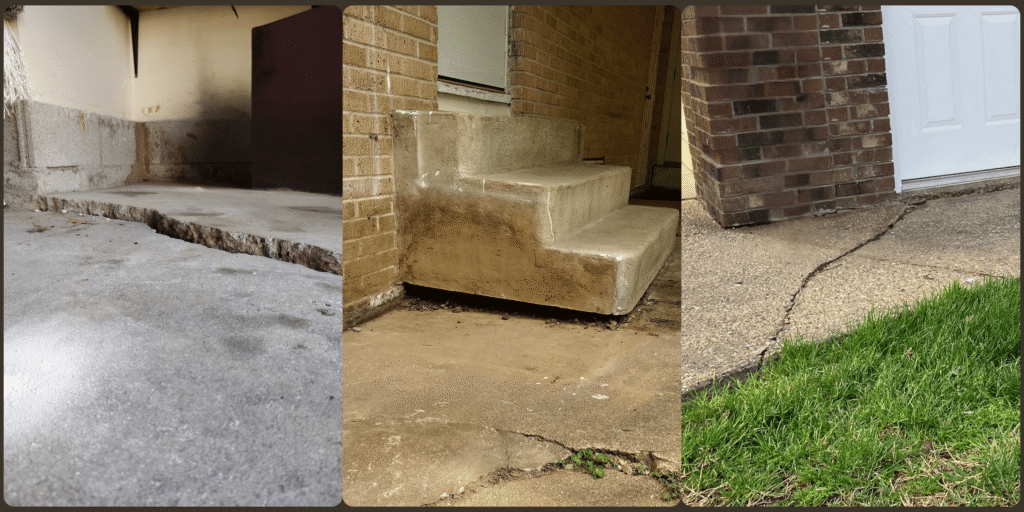
Why Is My Oklahoma Concrete Sinking?
Before diving into the warning signs, it helps to understand why concrete settlement is so prevalent across Oklahoma. The answer lies beneath your feet.
Oklahoma sits on some of the most expansive clay soil in the United States. During heavy spring rains, this clay absorbs water and swells significantly. During the hot, dry summers, it shrinks and contracts, creating voids beneath your concrete slabs. This constant cycle of expansion and contraction gradually undermines the support structure beneath your concrete.
Several factors accelerate this process:
- Soil erosion from poor drainage: Water flowing beneath slabs washes away supporting soil, leaving empty pockets that cause the concrete to drop.
- Inadequate soil compaction during construction: If the soil beneath your slab was not properly compacted before the concrete was poured, it will compress over time under the weight of the slab.
- Tree root activity: Large tree roots can channel water beneath slabs, creating erosion pathways that destabilize the soil.
- Plumbing leaks: Underground water line leaks saturate the soil and accelerate erosion beneath concrete surfaces.
Understanding these causes helps you recognize the warning signs before they become serious safety hazards.
Sign 1: Your Concrete Slabs Don’t Line Up
The most obvious sign that your concrete needs leveling is visible unevenness where one slab section sits higher or lower than the adjacent section. Professionals call this “lippage,” and it is the earliest indicator that the soil beneath your concrete is shifting.
Walk along your driveway, sidewalk, or patio and look for these telltale indicators:
- One slab tilting while the neighboring section remains flat
- A “stair-step” appearance across a walkway or driveway
- Gaps widening between slabs at expansion joints
- Any vertical displacement of a quarter inch or more
Why this matters: Uneven slabs are rarely isolated incidents. When one section drops, it redirects water drainage patterns across the entire area. That redirected water flows beneath adjacent “good” slabs, causing them to sink as well. What starts as one uneven section can quickly spread to multiple slabs if left unaddressed.
The quarter test: Place a U.S. quarter on its edge at the joint between two slabs. If the quarter fits easily into the gap or the height difference, your concrete has moved enough to warrant a professional evaluation.
Sign 2: Puddles Forming on Your Driveway or Patio
Does water collect in puddles on your driveway, patio, or sidewalk long after the rain has stopped? Professionals refer to this as “birdbathing,” and it signals that your concrete has lost the proper slope needed for drainage.
Residential concrete is designed with a slight pitch, typically one-eighth to one-quarter inch per foot, to direct water away from structures. When the slab settles, that engineered slope reverses, creating low spots where water accumulates.
Problem areas to check:
- Patio sections closest to your home’s foundation
- Driveway areas near the garage door
- Sidewalk sections near downspout discharge points
- Pool deck surfaces where water should drain toward the deck drains
The Oklahoma connection: Standing water is particularly destructive in Oklahoma because of our freeze-thaw cycles. During winter, trapped water in the pores of the concrete expands when it freezes, acting like a hydraulic jack that pushes the slab in every direction. This accelerates cracking and creates additional pathways for water infiltration, compounding the settling problem.
If you notice persistent puddles on your concrete surfaces, it is a clear sign that concrete lifting is needed to restore proper drainage.
Sign 3: You’re Tripping Over Uneven Concrete Edges
A vertical height difference of just half an inch between adjacent slabs creates a genuine trip hazard. Falls from tripping on uneven concrete are among the leading causes of injury on residential properties, particularly for elderly family members, young children, and visitors who are unfamiliar with your property.
High-risk areas include:
- The transition from your driveway to your garage floor
- Front porch steps and entryway walkways
- Pool deck surfaces, where wet concrete amplifies slip-and-fall risk
- Sidewalk sections along your property line
Liability consideration: As a homeowner, you may be held responsible for injuries that occur on your property due to known hazards. A visibly uneven sidewalk or driveway that causes a delivery driver, mail carrier, or guest to trip could result in a liability claim. Professional concrete leveling eliminates these hazards and restores a safe, even surface.
If any section of your outdoor concrete creates a noticeable step or catches your foot when walking normally, schedule a professional assessment right away.
Sign 4: Small Cracks Are Getting Bigger
Not all concrete cracks indicate a leveling problem. Hairline surface cracks from normal curing are cosmetic and generally harmless. However, certain crack patterns are strong indicators that your slab is settling and needs professional concrete raising.
Crack patterns that signal settling:
- Diagonal cracks that are wider at one end than the other, indicating rotational stress from uneven soil support
- Cracks where one side is higher than the other, showing that the slab has physically dropped on one side
- Cracks that have widened over time, meaning the soil movement is ongoing and progressive
- Multiple parallel cracks running in the same direction, suggesting the entire slab is under stress from beneath
How to monitor cracks: Mark the ends of any cracks with a pencil and note the date. Measure the width at the widest point. Check again in 30 days. If the crack has grown longer or wider, the underlying soil is actively shifting and concrete leveling should be scheduled before the damage worsens.
When to act immediately: If you can slide a U.S. quarter into the crack, water is already penetrating beneath the slab and accelerating the erosion process. Early intervention with concrete leveling prevents the need for more extensive repairs down the road.
Sign 5: Sticking Doors and Windows Near Settled Concrete
Sometimes the signs of concrete settling are not in the concrete itself but inside your home. When a porch slab, garage floor, or foundation-adjacent concrete settles, it can pull on the framing of the attached structure, causing interior symptoms that many homeowners do not immediately connect to an outdoor concrete problem.
Interior warning signs connected to slab settlement:
- Exterior doors that drag on the threshold or no longer latch properly
- Garage doors that do not seal evenly along the floor
- Windows near settled slabs that become difficult to open or close
- Visible gaps between walls and baseboards in rooms adjacent to settled concrete
- New cracks appearing in interior drywall, particularly above door frames
The connection to concrete leveling: Your home’s structure is an interconnected system. When one element shifts, it transfers stress to adjacent components. A settled porch slab can misalign the door frame above it. A dropped garage floor can torque the walls on either side. If you notice these interior symptoms combined with any of the exterior signs above, the cause may be concrete settlement that requires professional leveling.
Sign 6: Your Porch or Walkway Is Pulling Away From the House
Look closely at where your driveway, patio, or sidewalk meets your home. A visible gap between the concrete surface and the foundation wall is a clear sign that the slab has dropped away from the structure.
Common separation points to inspect:
- Where the driveway meets the garage floor lip
- Where patio or porch slabs connect to the foundation wall
- Where sidewalk sections meet front or back steps
- Where pool deck surfaces adjoin the pool coping
Why separation is serious: These gaps are more than cosmetic. They create entry points for water, insects, and rodents. In Oklahoma, water intrusion through these gaps during heavy spring rains can saturate the soil along your foundation, potentially creating foundation issues in addition to the existing concrete settling problem.
Concrete lifting with polyurethane foam injection can close these gaps by raising the slab back to its original position, restoring the seal between your concrete and your home’s foundation.
Sign 7: The Concrete Slab Feels Unstable Underfoot
Step firmly on the corner or edge of a concrete section and shift your weight. Does the slab move? This instability means the soil beneath the concrete has eroded significantly, leaving a void, an empty pocket of air, under the heavy slab.
How to test for voids:
- Walk to the edge or corner of each slab section and shift your weight back and forth
- Listen for a hollow sound when you tap the concrete surface firmly
- Look for slab edges that appear to float above the surrounding soil level
Why this is urgent: A slab with a void beneath it is under constant stress. The concrete is essentially spanning an unsupported gap, bending under its own weight and the weight of anything on top of it. Over time, this stress causes the slab to crack and break apart. Once a slab breaks into multiple pieces, concrete leveling becomes more complex than if the problem had been addressed when the void first formed.
If you feel any movement in your concrete, the void beneath it is actively growing. This is one of the most time-sensitive warning signs that professional concrete raising is needed.
How Does Polyurethane Concrete Leveling Work?
If you have identified any of these warning signs around your Oklahoma home, the next step is understanding how professional concrete leveling restores your surfaces. Vesta Foundation Solutions uses the PolyLevel polyurethane foam injection system, the most advanced concrete lifting technology available.
The PolyLevel process:
- Site assessment: Our team evaluates the extent of settling, identifies the underlying cause, and maps the injection points needed to lift the slab evenly.
- Drilling injection ports: Small, dime-sized holes are drilled through the concrete surface at strategic locations. These holes are nearly invisible after the work is complete.
- Foam injection: High-density polyurethane foam is injected through the ports beneath the slab. The foam expands to fill voids, stabilize the soil, and lift the concrete back to its original level.
- Precision leveling: Our technicians monitor the lift in real time, adjusting the injection to achieve a precise, even surface.
- Port sealing: The injection holes are sealed with concrete, leaving a clean, finished surface.
Key advantages of PolyLevel concrete leveling:
- Lightweight: The foam weighs significantly less than the soil it displaces, preventing additional stress on weak soils
- Waterproof: PolyLevel foam does not absorb water, eliminating the risk of future washout
- Fast cure time: The concrete can be used within 15 minutes of treatment
- Permanent: The foam maintains its structural integrity for the life of the slab
- Minimal disruption: Most residential concrete leveling projects are completed in a single day
Whether you need driveway leveling, sidewalk lifting, patio raising, or pool deck leveling, the PolyLevel system handles it all with precision and speed.
The Polyurethane Injection Process
So, what does this process actually look like when our team arrives at your home? It’s a surprisingly clean and precise operation. First, a Vesta specialist will walk the property with you to assess the settled areas and map out the best spots for injection. Then, we drill a few small, dime-sized holes through the sunken slab. These ports are the only entry points needed. From there, we inject the high-density polyurethane foam, which expands beneath the concrete to fill every void and gently lift the slab. We monitor the lift in real-time to ensure a perfectly level result. Once finished, we seal the tiny ports, making them nearly invisible. The whole process is designed for minimal disruption to your property and your day.
How Long Does the Process Take?
One of the biggest benefits of using polyurethane foam is how quickly it works. Unlike other methods that require significant downtime, the PolyLevel foam cures rapidly. In fact, your concrete slab is ready for normal use, like walking or even driving on it, just 15 minutes after the injection is complete. Most residential concrete repair projects are finished in a single day, allowing you to get back to your routine without waiting for materials to set or for a messy construction site to be cleaned up. It’s a fast, efficient, and lasting solution to uneven concrete.
Other Concrete Leveling Methods
While polyurethane foam injection is the modern standard, it’s helpful to understand how it evolved from older techniques. The general practice of lifting concrete slabs is sometimes called “slabjacking,” and it has been around for decades. These traditional methods also work by pumping material underneath a sunken slab to raise it, but the materials and process are quite different. The original approach used a heavy mixture of cement, soil, and water. While it could lift concrete, this older method came with several drawbacks that the development of lightweight polyurethane foam was specifically designed to overcome. Understanding these differences makes it clear why foam has become the preferred choice for homeowners and professionals alike.
Traditional Cement-Based Slurry Leveling
The original method for lifting concrete involves pumping a thick, heavy slurry underneath the slab. This mixture, typically composed of cement, sand, and soil, is forced into voids to push the concrete back up. The process requires drilling larger holes into the concrete to accommodate the thick material. While this technique can raise a slab, the material itself is incredibly heavy. Adding hundreds or even thousands of pounds of a cement-based mixture on top of soil that is already weak and prone to compression can sometimes lead to further settling over time. It also has a much longer cure time before the surface can be used again.
Why Polyurethane Foam is Often Preferred
Polyurethane foam offers several distinct advantages over older slurry methods. First, it’s incredibly lightweight, weighing only about 4 pounds per cubic foot compared to over 100 pounds for a traditional slurry. This prevents any additional stress on the already weak soil beneath your slab. Second, the foam is waterproof and will not wash away or break down over time, providing a permanent support structure. Because it cures in just 15 minutes, your driveway or patio is ready for immediate use. If you’re ready to see how this modern, long-lasting solution can restore the safety and appearance of your property, request a free inspection from our team today.
How to Know When Your Concrete Needs Leveling
Not every settling situation requires an emergency response, but waiting too long always makes the problem worse. Here is how to prioritize your concrete leveling needs:
Address immediately (safety and structural risk):
- Slabs that rock or move underfoot
- Trip hazards exceeding half an inch
- Water draining toward your home’s foundation
- Large gaps between concrete and your foundation wall
Address this season (preventative):
- Visible settling that has not yet created a trip hazard
- Cracks that are slowly widening
- Cosmetic separation from steps or foundation walls
- Persistent water pooling after rain
Monitor and schedule (early stage):
- Minor unevenness that is not progressing
- Hairline cracks without vertical displacement
- Slight drainage changes on flat surfaces
Regardless of urgency level, every settling situation benefits from a professional evaluation. Our free inspection includes a thorough assessment of the settling, identification of the root cause, and a detailed recommendation for restoration.
When Leveling Isn’t the Right Solution
While polyurethane concrete leveling is a fantastic solution for many situations, it’s not a one-size-fits-all fix. Knowing when leveling isn’t the right approach is just as important as recognizing when it is. The integrity of the concrete slab itself is the biggest factor. If the slab is too damaged, lifting it can do more harm than good. In these cases, a professional assessment is critical to determine the best path forward for a safe and lasting repair.
Severely Cracked or Crumbled Slabs
Concrete leveling works by lifting an intact slab. If your concrete is badly cracked, crumbling, or falling apart, it no longer has the structural integrity to be lifted in one piece. Attempting to raise a shattered slab would be like trying to lift a pile of puzzle pieces by one corner—it will just break apart further. This kind of widespread damage, often called spalling, indicates that the concrete itself has failed and leveling won’t restore its surface or strength. A professional can help you understand the next steps when the damage is this extensive.
Minor Surface Blemishes
On the other end of the spectrum, sometimes the issue is purely cosmetic and doesn’t require structural intervention. If you have small bumps or dips that are less than an eighth of an inch deep, full-scale leveling is likely overkill. These minor surface imperfections, along with discoloration or tiny hairline cracks from the original curing process, don’t typically signal an underlying soil problem. Often, these can be addressed with a simple sealer or filler, which is a much different process than lifting the entire slab.
DIY Repair vs. Professional Leveling
It can be tempting to tackle home repairs yourself, but it’s crucial to know the difference between a small cosmetic fix and a job that requires professional expertise. When it comes to uneven concrete, a DIY approach is only suitable for the most minor, non-structural issues. For anything involving settled slabs, especially here in Oklahoma where soil is a major factor, calling a professional is the safest and most effective route. This ensures the root cause of the problem is addressed, not just the symptom.
Handling Small Spots with Self-Leveling Compound
You might see self-leveling concrete compounds at the hardware store, and they can be useful in specific situations. These products are designed to create a smooth, even surface over an existing floor, usually indoors, before installing tile or vinyl. While a self-leveling compound can improve the look of an interior floor, it’s essentially a thin overlay. It doesn’t lift the slab, fill deep voids, or stabilize the soil beneath it. It’s a cosmetic solution for minor interior unevenness, not a structural repair for a sunken driveway, patio, or sidewalk.
When to Call a Professional
If uneven concrete is creating a daily tripping hazard, it’s time to call a professional. Any of the seven signs we’ve discussed—from water pooling against your foundation to slabs rocking underfoot—are clear indicators that the problem is beyond a simple DIY fix. Professional polyurethane injection addresses the underlying cause by filling voids and stabilizing the soil, something a surface patch can’t do. If you’re seeing any of these warning signs, the best first step is to schedule a free inspection to get an expert diagnosis.
What to Expect After Concrete Leveling
Once your concrete has been professionally leveled, you can enjoy a safer, more attractive surface almost immediately. But what happens next? Understanding the longevity of the repair, its limitations, and how to maintain it will help you get the most out of your investment. The PolyLevel process is designed to be a long-term solution that not only lifts the concrete but also addresses the soil issues that caused it to sink in the first place. With a little knowledge and care, your newly leveled concrete will serve you well for years to come.
The Longevity of the Repair
One of the biggest questions homeowners have is, “How long will it last?” With proper care, a polyurethane concrete leveling repair can last for the entire life of the concrete slab itself. The high-density polyurethane foam used in the process is waterproof and incredibly stable. It won’t wash out or break down over time like soil can. By creating a solid, supportive base that’s impervious to moisture, the repair provides a permanent solution to the unstable soil conditions that caused the concrete to settle in the first place.
Limitations to Keep in Mind
It’s also important to have realistic expectations about what concrete leveling can and cannot do. The primary goal of the process is to lift the slab and stabilize the ground beneath it. While this restores the concrete to its proper position, leveling won’t fix existing cracks that were already in the slab. The process may cause some cracks to close up, but they will still be visible. Think of it as correcting the foundation of the problem, not erasing the cosmetic evidence that a problem once existed.
Addressing Surface Cracks Separately
After your slab is lifted and stable, you can take steps to address any remaining cracks. While hairline surface cracks from the original curing process are generally harmless, larger cracks should be sealed. Filling these cracks with a flexible, waterproof sealant prevents water from seeping beneath the slab, which protects the newly stabilized soil. This is an important follow-up step that improves the appearance of your concrete and helps ensure the long-term success of the leveling repair by preventing future water-related issues.
The Importance of Stable Soil
Ultimately, the longevity of any concrete repair depends on how stable the soil is underneath it. This is where professional concrete leveling truly shines. The polyurethane foam doesn’t just lift the slab; as it expands, it also compacts the surrounding soil, increasing its load-bearing capacity. This process creates a strong, solid foundation that resists the future soil movement and erosion that are so common in Oklahoma. By addressing the root cause of the problem, the repair provides a lasting solution, not just a temporary fix.
Maintaining Your Leveled Concrete
Your newly leveled concrete is ready to use almost immediately, but a few simple maintenance steps can help ensure it stays in great shape. It’s a good idea to check your concrete every few years to catch small issues before they become big ones. Make sure to seal any new or existing cracks and joints to keep water out from under the slab. Also, check that your gutters and downspouts are directing water far away from your concrete surfaces. Preventing water from pooling near or on your concrete is the single best thing you can do to prevent future settling.
Get a Lasting Fix for Your Settled Oklahoma Concrete
Concrete settling is one of the most common property issues Oklahoma homeowners face, and it is one of the most straightforward to resolve when caught early. The seven warning signs outlined in this guide, uneven slabs, water pooling, trip hazards, widening cracks, sticking doors, foundation separation, and slab movement, are all signals that the soil beneath your concrete needs attention.
Vesta Foundation Solutions provides expert concrete leveling services throughout Oklahoma City, Tulsa, Edmond, and surrounding areas. Our PolyLevel polyurethane foam injection system delivers permanent results with minimal disruption to your property and your schedule.
Contact us today to schedule your free inspection or call us at 1-405-565-9884. Our team will evaluate your concrete, identify the cause of the settling, and recommend the right solution for your property.
Frequently Asked Questions About Concrete Leveling
Can My Sunken Concrete Be Leveled?
In most cases, concrete leveling is the preferred solution as long as the slab itself is still structurally intact. If the concrete has only settled, cracked at joints, or separated from adjacent structures, polyurethane foam injection can lift it back into position. Full replacement is typically only necessary when the slab has broken into multiple small pieces or the surface has severely deteriorated beyond repair.
How long does concrete leveling take?
Most residential concrete leveling projects are completed in just a few hours. A typical driveway or patio can be leveled and ready for use within the same day. The PolyLevel foam cures in approximately 15 minutes, so you can walk and drive on the surface almost immediately after the work is complete.
How Long Does Concrete Leveling Last?
Yes. The PolyLevel polyurethane foam used by Vesta Foundation Solutions is engineered for permanent performance. The foam is waterproof, does not break down over time, and maintains its structural integrity in all weather conditions. Our concrete leveling work is backed by a warranty for your peace of mind.
Can You Level Driveways, Patios, and Sidewalks?
Virtually any exterior concrete surface can be leveled with PolyLevel injection, including driveways, sidewalks, patios, garage floors, pool decks, front porches, and commercial walkways. Interior slab leveling is also available for settled basement and garage floors.
Why Does Concrete Settle So Often in Oklahoma?
Oklahoma’s expansive clay soils are the primary cause of concrete settlement. The clay absorbs water and swells during rainy periods, then shrinks during dry spells. This constant expansion and contraction cycle creates voids beneath concrete slabs, causing them to sink over time. Poor drainage, inadequate soil compaction, plumbing leaks, and tree root activity can accelerate the process.
Learn more about your options in our guide to concrete repair vs replacement.
Key Takeaways
- Recognize the Telltale Signs of Settling: Uneven slab edges that create trip hazards and persistent puddles on your patio are not just annoyances; they are clear signals that the shifting soil beneath is causing problems that will only get worse.
- Connect the Dots to Your Home’s Structure: Issues inside your home, like a sticking front door or a garage door that will not seal properly, can be directly linked to a sinking concrete slab outside. These are often symptoms of the same underlying issue.
- Prioritize a Professional, Long-Term Fix: While DIY compounds only cover up the problem, professional polyurethane foam injection addresses the root cause. This method lifts the slab and stabilizes the soil, providing a lasting solution that prevents future issues.
Related Articles
- Concrete Repair & Leveling OKC | Oklahoma City Concrete Services | Vesta
- Concrete Leveling Oklahoma City | PolyLevel Lifting Experts
- Concrete Leveling | Foundation Repair & Basement Waterproofing
- Interior Slab Leveling | Foundation Repair & Basement Waterproofing
- Concrete Leveling FAQs | Foundation Repair & Basement Waterproofing