
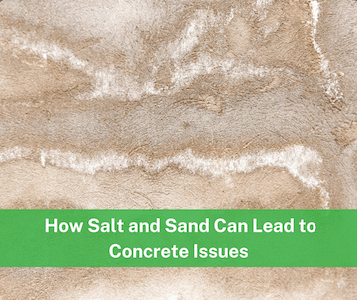
That first spring thaw can reveal some unwelcome surprises. A newly cracked driveway, pitted sidewalks, or a crumbling stoop. It’s easy to blame the weather, but the real problem might be the de-icer you used all winter. What you choose to put on your concrete has a major impact on its lifespan. These aren’t just minor annoyances; they are common concrete issues that can lead to costly repairs. Understanding why your concrete is failing is the first step to finding a lasting solution, not just a temporary patch.
There are many factors that can play into the concrete around a home falling into disrepair. One primary reason is the soil under the concrete.
But, what you put on top of your concrete can make a difference as well. When water freezes and thaws over and over, it can cause the surface of your concrete driveway to crack, pit and crumble.
Think of your driveway as a giant sponge. Concrete is porous, so it soaks up water at the surface – maybe from rain or melting snow. When temperatures drop below freezing, water turns into ice, which expands and breaks the walls of those tiny pores, weakening the concrete. You probably won’t notice this damage at first. Unfortunately, though, it worsens exponentially with every freeze/thaw cycle until the pitting and flaking become obvious to the naked eye.
Sprinkling salt to your driveway and sidewalks doesn’t help either. Not only does it assist the freeze/ thaw cycle, but the salt itself accelerates the breakdown of concrete by causing corrosion under the surface, leading to cracked and crumbling concrete.
The key to protecting your driveway for the long term is to seal it from the elements. Sealing your driveway may seem like a no-brainer, but many homeowners forget this simple step only to regret it years later when it becomes necessary to replace or resurface their driveway.
Book your free, no-obligation inspection and have a trained contractor diagnose your concrete issues.
—
Vesta Foundation Solutions is an award-winning Oklahoma City foundation repair contractor and crawl space waterproofing specialist founded in 2017. We repair over 40 homes a week ranging from concrete repair to dirt crawl space solutions. We service all of Oklahoma such as: Tulsa, Yukon, El Reno Edmond.
When it comes to the long-lasting stability of your home, it is crucial to have an experienced professional to call. Vesta is a company that understands the best practices that will help restore and protect your home’s structural integrity. We provide free, no-obligation estimates in crawl space repair, foundation repair, concrete lift and leveling, and basement waterproofing.
Frequently Asked Questions
My concrete driveway looks solid. Why is it cracking and flaking? It’s easy to think of concrete as a solid rock, but it’s actually more like a hard sponge. It has tiny pores that absorb water from rain and melting snow. When the temperature drops, that trapped water freezes and expands, creating tiny fractures from the inside. After many freeze-thaw cycles, those small fractures grow into the visible cracks and pits you see on the surface.
I use rock salt every winter to melt ice. Is that really damaging my concrete? Yes, it can cause significant harm over time. While salt does melt ice, it creates a saltwater brine that seeps into the concrete’s pores. This brine not only lowers the freezing point, leading to more frequent freeze-thaw cycles, but it also chemically attacks the concrete and can corrode any steel reinforcement inside.
My driveway already has some cracks and pits. Is it beyond repair? Not necessarily. Many types of concrete damage can be repaired and stabilized without needing a complete replacement. The key is to address the underlying cause of the problem, not just patch the surface. A professional assessment can determine if a repair, like leveling or sealing, is a viable long-term solution for your specific situation.
How exactly does sealing concrete prevent this kind of damage? Think of a concrete sealer as a high-quality raincoat for your driveway. It works by filling the surface pores to create a protective barrier. This barrier prevents water, salt, and other chemicals from soaking into the concrete in the first place. By keeping moisture out, you effectively stop the destructive freeze-thaw cycle before it can begin.
What are the first signs of concrete damage I should look for? Early signs can be subtle, so it helps to know what to watch for. Look for fine, web-like cracks on the surface, a condition sometimes called crazing. You might also see small, shallow holes (pitting) or notice areas where the top layer seems to be flaking or peeling away. Catching these issues early often makes the repair process much simpler.
Key Takeaways
- Winter weather weakens concrete from within: Concrete naturally absorbs water from rain and melting snow. When this water freezes, it expands and breaks down the material’s internal structure, causing the cracks and pits you see on the surface.
- De-icing salt accelerates damage: Rock salt might seem helpful, but it actually makes concrete problems worse. It intensifies the harmful freeze-thaw cycle and introduces chemical corrosion that causes your driveway to crumble faster.
- Sealing your driveway is the key to prevention: The most effective way to protect your concrete is to apply a sealant. This simple step creates a waterproof barrier, stopping water from soaking in and preventing weather-related damage before it starts.