
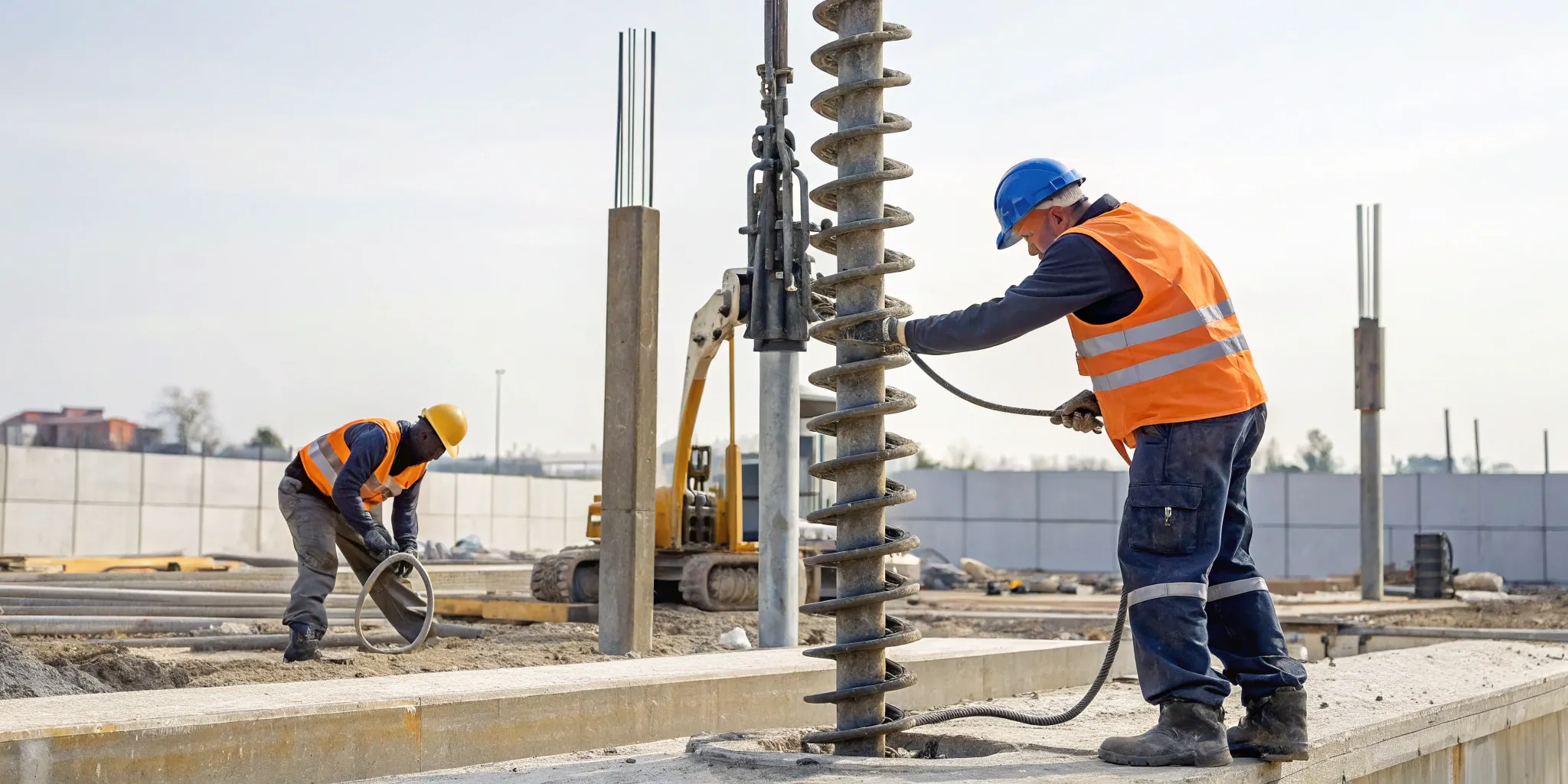
The thought of “foundation repair” can be stressful, often bringing to mind major excavation and a torn-up yard. But the solution doesn’t have to be a messy ordeal. Helical piers offer a precise, engineered fix. Think of them as giant steel screws that twist deep into the ground, finding stable soil without the chaos. The helical pier installation process is a high-tech approach that removes the guesswork. In this guide, we’ll show you exactly how it works, from the specialized equipment we use to why this method provides a reliable, permanent fix for your home.
Key Takeaways
- Stabilize your home with an engineered solution: Helical piers are steel shafts that screw deep into the ground until they hit solid, load-bearing soil. This process transfers your home’s weight onto this stable base, permanently stopping foundation settlement.
- Installation is precise and data-driven: Professionals use specialized equipment to monitor torque as each pier is installed. This measurement confirms when the pier has reached stable ground, which removes all guesswork and ensures a reliable repair for your specific property.
- Gain immediate and permanent peace of mind: Once installed, helical piers start working right away, providing instant support for your home. This is a one-time repair that requires no future maintenance, securing your foundation for the long term.
What Exactly Is a Helical Pier?
If you’ve noticed cracks in your walls or floors that seem to be getting worse, you might be dealing with a settling foundation. It’s a stressful situation, but there are reliable solutions out there. One of the most effective methods for stabilizing a home is using helical piers.
So, what are they? Imagine a giant steel screw. That’s essentially what a helical pier is. It’s a long, steel shaft with circular plates, called helices, welded to it. These piers are specifically engineered to be twisted deep into the ground, bypassing the unstable Oklahoma soil near the surface that’s causing your foundation to shift. They are driven down until they hit solid, load-bearing soil or even bedrock, which provides a solid base.
Once they’re anchored in this stable ground, heavy-duty steel brackets are attached to the piers and secured to your home’s foundation. This process effectively transfers the weight of your house from the weak, shifting soil onto the strong, stable piers. The result is a permanently stabilized foundation that is no longer sinking. This method is a trusted and long-lasting form of foundation repair that can stop settlement in its tracks and, in many cases, even lift your home back toward its original position, closing up cracks and leveling floors.
A Proven Technology Since the 1800s
When you’re dealing with something as important as your home’s foundation, you want a solution you can trust completely. Helical piers might sound like a modern invention, but they are actually a time-tested technology with a long history of success. This method has been used to support structures since the 1800s, making it one of the most established and reliable techniques in structural engineering. This isn’t a new or experimental fix; it’s a proven principle that has been refined over generations to provide dependable, long-lasting support. The longevity of this technology speaks volumes about its effectiveness, giving you confidence that your home is being secured by a method with a track record of performance that spans centuries.
Helical Piers, Piles, or Anchors? Understanding the Terms
As you research solutions for your foundation, you might come across a few different names that can be confusing. You’ll hear terms like helical piers, helical piles, screw piles, or even ground anchors. Don’t let the jargon throw you off—they all refer to the same powerful tool. Think of them as giant steel screws that are installed deep into the earth to support your home. The different names often just describe how they’re being used. For example, “pier” or “pile” typically refers to supporting a downward load (the weight of your house), while “anchor” can describe its function in resisting upward forces. Regardless of the terminology, the goal is the same: to bypass unstable soil and anchor your foundation to solid, load-bearing ground. When you work with a professional for your foundation solutions, we handle the technical details so you can focus on the result—a secure and stable home.
What Makes a Helical Pier So Strong?
Helical piers are engineered for strength and longevity. They are constructed from galvanized steel shafts, which protects them from rust and corrosion while they’re in the ground. The key features are the helical plates, or flights, which look like a screw’s threads. These plates are what allow the pier to be twisted into the earth and are sized specifically to match your home’s needs and local soil conditions.
The installation isn’t a simple matter of digging a hole. We use specialized hydraulic machinery to rotate the pier deep into the ground with minimal disruption to your property. As the pier is installed, we carefully monitor the torque to ensure it has reached the required depth and capacity to support your home.
Load Capacity and Pier Components
You might be wondering just how much weight these piers can handle. The answer is a lot. A single helical pier is engineered to support up to 74,000 pounds, which is more than enough to secure even the heaviest parts of your home. This incredible strength is a key reason why they are part of a permanent foundation repair solution. Each pier is made from a galvanized steel shaft that prevents rust and corrosion, ensuring it lasts for decades underground. The real magic, though, is in the helical plates, or “flights,” that give the pier its screw-like appearance. These plates are what allow us to twist the pier deep into the earth, anchoring it firmly in stable soil far below the surface.
Is a Helical Pier Right for Your Home?
Helical piers are a versatile solution, but they are particularly well-suited for lighter structures like single-story homes or foundation additions. These types of structures often don’t have enough weight to properly install other types of piers. Helical piers are also an excellent choice when soil conditions are tricky or when you need to install piers in tight spaces with limited access.
If your home is showing signs of foundation settlement, such as sticking doors, warped floors, or cracks in the drywall and brickwork, helical piers can stop the problem from getting worse. By stabilizing the foundation, you prevent further structural damage that can become much more expensive to fix down the road. The best way to know if they’re the right solution for your property is to have a professional take a look. You can schedule a free inspection to get a clear picture of what’s going on beneath your home.
Why Oklahoma Foundations Shift
Living in Oklahoma means dealing with some pretty dramatic weather swings, from heavy spring rains to long, dry summers. While we adapt, the ground beneath our homes is in a constant state of reaction. The biggest challenge for foundations in our state is the soil itself. Much of Oklahoma is built on expansive clay soil, which acts like a powerful sponge. This soil can absorb huge amounts of water, and its behavior changes drastically depending on the moisture content. This constant change puts an incredible amount of stress on your home’s foundation, making it one of the most common sources of structural issues for property owners in the area.
The Impact of Expanding and Contracting Soil
The soil around your home can cause big problems. When clay soil gets wet, it expands and pushes on your foundation with immense force, sometimes causing it to heave, or lift up. Then, when the weather turns dry, that same soil shrinks and pulls away from the foundation, leaving voids and unsupported gaps. This cycle of expansion and contraction means your foundation is constantly being pushed and pulled in different directions. Over time, this movement can cause your foundation to sink or settle into the unstable ground. This is why solutions like helical piers are so effective—they bypass this volatile topsoil to anchor your home to stable earth deep below, providing a lasting fix for foundation problems.
Getting Ready for Your Helical Pier Installation
So, you’ve decided that helical piers are the right solution for your home. That’s a great step toward a stable foundation. Before our team arrives with the equipment, there are a few things that happen to get your property ready. Knowing what’s coming can make the entire process feel much smoother. Here’s a simple breakdown of the preparation phase, from the initial look at your foundation to clearing the space for our crew to work.
Why a Soil and Foundation Check Comes First
The first thing we do is perform a thorough assessment of your home’s foundation and the surrounding soil. A trained specialist will examine your property for tell-tale signs of settlement, like sloping floors, cracks in your drywall, or a chimney that’s pulling away from the house. This isn’t just a quick look; we’re figuring out the exact cause and extent of the problem. Because helical piers need to be drilled deep into stable, load-bearing soil to work correctly, this evaluation is critical. It helps us map out a precise plan for your home. You can get started by scheduling a free inspection with one of our experts.
The Role of a Structural Engineer
For a repair this important, you want an expert’s stamp of approval. This is where a structural engineer comes in. Their job is to take all the information gathered during our initial inspection—the soil type, the weight of your house, and the specific pattern of settlement—and create a detailed blueprint for the repair. This isn’t a one-size-fits-all fix; the engineer designs a plan tailored specifically to your home. This ensures the right number of piers are placed in the exact right spots to provide lasting support. This level of professional oversight is a crucial part of a successful foundation repair, removing any guesswork and guaranteeing the solution is designed for long-term stability.
Prepping Your Property for Our Crew
Once we have a plan, the next step is to prepare the work area. To install the piers, we need clear access to the foundation footing. This might mean temporarily moving things like your air conditioning unit, landscaping features, or a few deck boards. Our crew will then dig small, precise holes, usually about three feet by three feet, at planned intervals around your foundation. This gives us the room we need to bring in the equipment and begin the foundation repair process without causing a major disturbance to your yard. We handle this part of the process carefully to keep your property looking its best.
How We Ensure a Safe and Smooth Installation
Your safety and the integrity of your home are our top priorities. Every successful foundation project starts with safe, professional practices. Our team follows strict protocols to ensure the entire installation is stable and reliable from start to finish. This includes setting up our equipment correctly and maintaining proper clearances around the work area. For example, we make sure there’s enough space between the ground and your home’s structure to install the support brackets properly. This careful setup allows us to work efficiently and ensures the helical piers provide the permanent support your foundation needs.
Securing Permits and Utility Mark-Outs
Before we can start stabilizing your home, there are a couple of behind-the-scenes steps we take to ensure a safe and efficient project. Depending on your specific location in Oklahoma and the scope of the work, a permit may be required for structural foundation repairs. Additionally, it’s absolutely critical to locate all underground utility lines before any excavation happens. This is a standard safety measure to prevent damage to water, gas, or electrical lines on your property. You don’t have to worry about managing these details on your own; it’s a standard part of our pre-installation checklist. We coordinate these steps to make sure your foundation repair project proceeds without any unexpected delays. These are the kinds of details we cover during our initial assessment, which you can schedule by requesting a free inspection.
The Right Tools for a Lasting Foundation Fix
When you picture foundation repair, you might imagine a lot of heavy machinery and guesswork. But installing helical piers is a surprisingly precise science. It’s a blend of powerful equipment and sophisticated technology that allows us to secure your home’s foundation with accuracy. We don’t just drill until we feel like stopping; every step is measured, monitored, and calculated to ensure a permanent solution. This technology-driven approach is what sets a professional foundation repair apart and gives you confidence that the job is done right. Let’s look at the specific tools we use to stabilize your home.
Why Specialized Machinery Matters
To get helical piers deep into stable soil, we use specialized hydraulic equipment. Think of it as a high-powered, high-precision drill. Depending on your property’s layout, we might use a tracked mini-excavator or a more compact machine. These are designed to be both powerful and nimble, allowing us to work efficiently in tighter spaces without tearing up your entire yard. The key component is the hydraulic torque motor attached to the machine. This is what rotates the pier and drives it into the ground, like a screw into wood, providing a steady, controlled force for a clean installation.
What Is Torque Monitoring and Why Is It Crucial?
This is where the real precision comes in. As we drive each helical pier into the earth, we constantly monitor the resistance, or torque. A monitoring tool gives us a live readout of how much force it’s taking to advance the pier. This data tells us exactly when the pier has reached solid, load-bearing soil deep beneath the unstable layers near the surface. By correlating the torque reading to the pier’s load capacity, we eliminate all guesswork. We know, with certainty, that each pier is anchored in stable ground and can support its designated portion of your home’s weight.
How a Torque Bar Ensures a Safe Installation
Installing a helical pier isn’t just about drilling a steel shaft into the ground; it’s a highly controlled process, and the torque bar is the key to that control. This tool is part of our monitoring system, giving our crew a live reading of the resistance the pier meets as it twists deeper into the soil. This data is incredibly important because it tells us exactly when the pier has reached stable, load-bearing soil—the harder it is to turn the pier, the stronger the soil. This direct correlation between torque and soil stability means we can pinpoint the perfect depth for each pier, completely removing guesswork from the equation. This data-driven method is what makes the entire installation so safe and reliable. Our team uses the torque readings to make informed decisions on the spot, confirming that every pier is installed to the correct depth and capacity. This level of precision is what makes helical piers such a trusted solution for stabilizing foundations, giving you the confidence that your home is resting on a solid, professionally engineered support system.
How We Determine Your Home’s Support Needs
Before we bring out the equipment, our team does the math. We analyze your home’s structure, the soil on your property, and the extent of the settlement to create a customized repair plan. This plan determines how many piers are needed, where they should be placed, and the depth they must reach to provide lasting support. Every home is different, so a one-size-fits-all approach doesn’t work. This careful planning ensures the solution is engineered for your property. It’s why a professional assessment is the most important first step, and we offer a free inspection to get you started.
Calculating Pier Depth and Spacing
Getting the depth and spacing of helical piers just right is a science, not a shot in the dark. It all comes down to a plan engineered specifically for your home. We determine the correct depth by driving each pier deep into the ground, using torque monitors to tell us exactly when we’ve hit stable, load-bearing soil. This removes any guesswork and confirms each pier can handle its share of the load. Spacing is just as calculated. While piers are typically placed about six feet apart, the final layout depends on your home’s unique structure and where the settlement is most severe. This detailed planning ensures your home’s weight is distributed evenly, providing a permanent foundation repair.
Your Helical Pier Installation: A Step-by-Step Guide
Seeing your home’s foundation get repaired can feel like a major undertaking, but understanding the process can make it much less intimidating. Our team at Vesta follows a precise, proven method to install helical piers and stabilize your home for good. We handle every detail, from the initial excavation to the final cleanup, ensuring the job is done right. Here’s a look at exactly what you can expect, broken down into four clear steps.
Step 1: Driving the Piers into the Ground
The first step is to carefully excavate small areas around your foundation where the piers will be installed. Then, using a hydraulic torque motor, we begin drilling the first section of the helical pier into the ground. Think of it like a giant screw twisting its way deep into the earth. Unlike other methods that simply push piers into the ground, this rotational installation is gentler on your home and allows for precise placement. This technique minimizes disruption to your property while setting the stage for a powerful foundation repair solution.
Step 2: Verifying We’ve Reached Stable Soil
As the pier drills deeper, we attach steel extensions to push it further down, past the unstable soil near the surface. We continue this process until the pier reaches solid, load-bearing soil or bedrock. How do we know when we’ve hit the right spot? We constantly monitor the torque, or rotational pressure, on the hydraulic motor. Once the torque reading hits a specific, predetermined value, we know the pier is anchored in soil that’s strong enough to support your home’s weight. This step is crucial for guaranteeing a permanent fix.
Step 3: Attaching Brackets to Your Foundation
With the helical piers firmly anchored deep in stable soil, the next step is to connect them to your home. We attach heavy-duty steel brackets to the top of each pier, fitting them securely beneath your foundation’s footing. These brackets are the critical link in the system. Their job is to transfer the entire weight of that section of your home off the failing soil and onto the solid, stable piers. This immediately stops the foundation from sinking or settling any further and prepares it for the final step.
Preparing the Footing for a Perfect Fit
With the pier anchored deep in the ground, the next move is to connect it to your home. But before we can secure the heavy-duty steel bracket, there’s a small but critical preparation step. We carefully prepare the surface of your foundation’s footing where the bracket will sit. This involves cleaning away any loose concrete, soil, or debris to create a perfectly smooth and solid seat for the bracket. It might seem like a minor detail, but this step is essential for ensuring the bracket sits completely flush against the footing, creating a seamless connection between your home and the stable ground below.
Why is this perfect fit so important? A flush connection guarantees that the weight of your home is transferred evenly and directly onto the pier. If the surface were uneven, it could create pressure points or gaps, which might compromise the stability of the repair over time. By taking the time to prepare the footing, we ensure that every component of the system works together flawlessly. This meticulous attention to detail is a hallmark of a professional foundation repair and is key to providing the permanent, reliable support your home needs to stand strong for years to come.
Step 4: Lifting Your Home to a Level Position
Finally, we place hydraulic jacks on the brackets and begin the lifting process. With incredible control, we gently and evenly raise the settled parts of your foundation. Our goal is to achieve “maximum practical recovery,” which means lifting the structure as close to its original level as possible without causing any new stress or damage. Once the lift is complete, the brackets are permanently secured to the piers, and the load of your home is officially transferred. After a final check, we backfill the excavated areas, leaving your foundation stable and secure. If you’re seeing signs of foundation trouble, the best first step is to schedule a free inspection with our team.
Busting Common Myths About Helical Pier Installation
When you’re dealing with foundation problems, the last thing you need is confusing information. Helical piers are a fantastic, modern solution for many homes, but a few common misunderstandings can cause homeowners to hesitate. Let’s clear up some of the biggest myths so you can feel confident about the best way to support your home.
Myth #1: “This repair is too expensive.”
It’s easy to assume that an advanced solution like helical piers comes with a huge price tag. While the initial material cost can sometimes be higher than for traditional concrete piers, they often save you money overall. The installation process is much faster and requires less heavy excavation, which means lower labor costs. Think of it this way: you’re investing in a precise, engineered solution that gets the job done efficiently. This approach minimizes disruption to your property and provides a permanent fix, preventing more costly foundation repair down the road.
Myth #2: “My property isn’t suitable for helical piers.”
Another common worry is that helical piers won’t work with specific soil types or property layouts. The truth is, helical piers are incredibly versatile. They are specifically designed to perform well in a wide range of soil conditions, from loose sand to the dense, shifting clay we often see here in Oklahoma. Because the installation equipment is relatively compact, we can use them in tight spaces with limited access, like close to property lines or under existing decks. Whether your home is large or small, helical piers can be customized to provide the exact support it needs.
Myth #3: “I can do this myself.”
With so many home improvement projects going the DIY route, it might be tempting to think you can tackle this one yourself. However, helical pier installation is a job that absolutely requires professional expertise. It involves specialized hydraulic machinery to drive the piers to the correct depth and torque. Our team uses precise calculations to ensure each pier can support its designated load. An improper installation can lead to inadequate support or even cause further structural damage. The best first step is always to get a professional opinion with a free inspection to understand what your home truly needs.
Step 5: Confirming the Lift with Final Measurements
Once your home has been lifted and stabilized, our work isn’t quite finished. The final step is all about verification. We conduct a thorough final check to confirm the success of the foundation repair. Our crew will visually inspect the areas that were showing signs of trouble before, like those persistent cracks in the drywall or the slight slope you noticed in the hallway. We then take a new set of floor elevation measurements throughout your home. These new readings are carefully compared to the original measurements we took during your initial inspection, giving us concrete data on how much the foundation has improved. This final confirmation ensures the lift was successful and your home is secure.
Can Piers Be Installed from Inside a Crawl Space or Basement?
Absolutely. While exterior installation is most common, helical piers are versatile enough to be installed from inside your home if needed. This is often the best solution when there are too many obstacles outside, like a large deck, extensive landscaping, or a neighboring property that’s very close to your foundation. The most important factor is having clear access to the foundation footing. Whether we achieve that from the outside or from within your crawl space or basement, the goal is the same. We use more compact equipment for interior jobs to work efficiently in tight spaces, ensuring a seamless crawl space repair that stabilizes your home with minimal disruption.
Considerations for Helical Pier Installation
Choosing the right foundation solution is a big decision, and while helical piers are an excellent choice for many homes, it’s important to understand when they are the best fit and what the job entails. They are a powerful tool in our toolkit, but like any specialized solution, they have specific applications where they truly shine. Thinking through these points will help you have a more informed conversation with a foundation specialist and ensure you get the best possible outcome for your home.
When Another Solution Might Be Needed
Helical piers are incredibly versatile, but they are especially effective for stabilizing lighter structures. Think single-story homes, porches, or foundation additions where the structural load is not excessively heavy. In these cases, helical piers are ideal because they don’t rely on the weight of the structure to be driven into the ground. For much heavier, multi-story buildings, a different type of pier system might be recommended to provide the necessary support. The best way to determine the right approach is with a professional assessment, where an expert can evaluate your home’s specific weight, design, and the unique soil conditions on your property to recommend the most effective foundation repair method.
Why This Is Not a DIY Project
While the concept of a giant screw might sound straightforward, installing helical piers is a highly technical process that should only be handled by trained professionals. The installation requires specialized hydraulic machinery to drive the piers to the correct depth and achieve the necessary torque. Our team uses precise engineering calculations and live torque monitoring to confirm that each pier has reached stable, load-bearing soil. An improper installation, done without the right equipment or expertise, can fail to support your home correctly and could even cause more significant structural damage. To ensure a safe and permanent solution, it’s essential to work with a professional team. You can get a clear picture of what your home needs by scheduling a free inspection.
Other Uses for Helical Piers
The primary job of helical piers is to stop foundation settlement, but their usefulness doesn’t end there. They are also an excellent solution for new construction projects, where they can be installed before the foundation is poured to guarantee a stable base from day one, preventing future problems. Helical piers are also used to support and straighten bowing retaining walls or to provide solid footings for decks and sunrooms. Essentially, any structure showing signs of settlement—like interior wall cracks, sloping floors, or doors and windows that stick—can often be stabilized with this technology. They address the root cause by anchoring the structure to solid ground, providing a lasting fix for a variety of structural issues.
What to Expect After Your Helical Pier Installation
Once the installation crew packs up and leaves, you can immediately feel confident in your home’s stability. Unlike repairs that require waiting for materials to cure, a helical pier installation delivers results right away. Here’s what you can expect for your home long after the work is done.
A Stronger Foundation, Right Away
One of the best things about helical piers is that they start working the moment they’re installed. There’s no waiting period for concrete to dry or materials to set. As soon as our team secures the piers and transfers the load of your home onto them, they are actively supporting the structure. This means you get immediate stability and can stop worrying about further settlement. This quick turnaround is a major advantage for any homeowner eager to resolve their foundation repair issues and get back to normal life without delay. The solution is effective from day one, providing a solid base for your home.
Protecting Your Foundation for Years to Come
Helical piers aren’t just a quick fix; they are a permanent solution. Designed to last for the life of your home, they are installed deep into stable, load-bearing soil, preventing any future settlement in the areas they support. Once they are in the ground and the final adjustments are made, they don’t need to be revisited. This is a one-time repair that offers lasting protection for your property. You can feel secure knowing that the root cause of the settlement has been addressed, safeguarding your home’s structural integrity for decades. If you’re wondering if this is the right permanent fix for your home, a professional can assess your situation during a free inspection.
The Lifespan of a Helical Pier System
When you invest in a foundation repair, you want to know it’s going to last. Helical piers are designed to be a permanent solution, with an expected lifespan of 120 years or even longer. This incredible durability comes from their construction. They are made from high-strength, galvanized steel, which is specifically treated to resist rust and corrosion while buried in the ground. This means they maintain their structural integrity for generations, providing a reliable and long-term fix for your home’s foundation. It’s a one-time repair that requires no future maintenance, securing your home for the long haul.
Simple Tips for Ongoing Foundation Care
While the piers themselves don’t require maintenance, you can help protect your entire foundation with a few simple habits. First, ensure proper drainage around your home. Keep your gutters clean and make sure downspouts direct water several feet away from the foundation. It’s also a good practice to maintain at least a six-inch clearance between the ground and your home’s siding or exterior finish. This prevents moisture from wicking up into the structure and keeps the area around the pier brackets clear. These small steps can make a big difference in preventing future water-related issues and supporting your home’s overall health.
Related Articles
- Helical Piers Explained: Why They’re the Smart Choice for Stabilizing Foundations
- Helical Piers Vs Push Piers
- Helical Piers
- The Helical Pier System–a Permanent Solution
- Foundation Piers
Frequently Asked Questions
How long does a typical helical pier installation take? Most helical pier projects are completed in just a few days. Because the process doesn’t involve waiting for concrete to cure, it’s much faster than many traditional repair methods. The exact timeline depends on the number of piers your home needs, but we can give you a clear schedule after the initial inspection.
Will the installation process destroy my landscaping? We understand how much your landscaping means to you, and we work hard to protect it. The equipment we use is designed to be nimble and work in tight spaces. While we do need to dig small, targeted holes near your foundation and may need to temporarily move a few plants or shrubs, our goal is always to keep the disruption to a minimum and leave your property looking great.
Can helical piers really close the cracks in my walls? In many cases, yes. After stabilizing the foundation, we can often lift the settled portions of your home back toward their original position. This process, called maximum practical recovery, frequently closes cracks in drywall and brick and helps sticking doors and windows operate smoothly again. The primary goal is to permanently stop the settlement, and the cosmetic improvements are a fantastic result of that lift.
Are helical piers always the best solution for a settling foundation? Helical piers are an excellent and versatile solution, particularly for homes in Oklahoma’s tricky soil. However, the best repair method always depends on your home’s specific structure, weight, and the underlying soil conditions. A thorough professional assessment is the only way to determine the right fix, which is why we always start with a detailed inspection to create a plan tailored for your property.
What’s the difference between a small crack and a serious foundation problem? It’s normal for a home to have a few tiny, hairline cracks from minor settling over time. You should pay closer attention to cracks that are getting wider, are diagonal, or appear over doors and windows. Other warning signs include sloping floors or doors that suddenly begin to stick or jam. If you notice any of these issues, it’s a good idea to have a professional take a look to determine the cause.
Managing Backfill and Addressing Cosmetic Cracks
After the lift is complete and the brackets are secured, our crew carefully backfills the excavated areas around your foundation, taking care to leave your property looking neat. While the primary goal is to permanently stabilize your home, one of the most satisfying results of the lifting process is seeing the cosmetic damage disappear. As we gently raise the foundation back toward its original position, you’ll often see those frustrating cracks in your drywall and brick begin to close. Sticking doors and windows that were once a daily annoyance may start to operate smoothly again. This is because the lift realigns your home’s frame, relieving the stress that caused these issues in the first place. It’s a visible confirmation that your foundation repair has addressed the problem at its source.