
Schedule your free basement inspection today and find out exactly what is causing moisture problems in your home.
A wet basement is more than just an inconvenience; it’s a warning sign. That standing water, dampness on the walls, or persistent musty smell points to a deeper issue. For homeowners with a wet basement in Oklahoma, the problem often starts right in our unique clay soil. It expands and contracts, putting immense pressure on your foundation. This constant movement can cause cracks and settlement, creating pathways for water to get in. Understanding what causes this is the first step toward finding a lasting solution and protecting your home.
Oklahoma presents unique challenges for basements. Expansive clay soils, unpredictable weather patterns, and regional water table conditions create a combination that puts basements under constant pressure. Fewer than 10 percent of homes in Oklahoma have basements, but those that do face some of the most difficult waterproofing conditions in the country.
This guide covers the most common causes of wet basements in Oklahoma, explains how each one affects your home, and outlines proven wet basement solutions that address each root cause.
Key Takeaways:
- Oklahoma’s expansive clay soils are the leading cause of wet basements in the state, creating hydrostatic pressure that forces water through foundation walls and floors.
- Seasonal weather cycles of heavy rain followed by drought cause repeated soil movement that opens cracks and weakens basement waterproofing over time.
- Identifying the specific cause of your wet basement determines which solution will work. A professional inspection pinpoints the problem so you can fix it permanently.
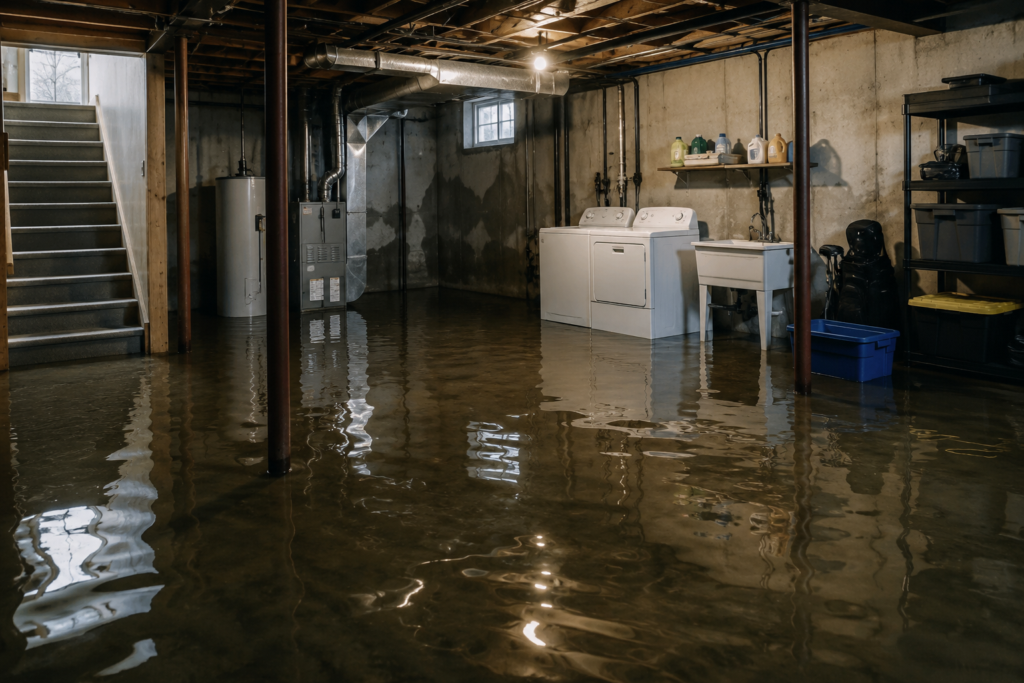
Why Oklahoma’s Clay Soil Causes Wet Basements
The single biggest factor behind wet basements in Oklahoma is the state’s expansive clay soil. Much of the Oklahoma City and Tulsa metro areas sit on soil with high clay content, and this soil behaves in ways that directly threaten basement integrity.
Clay soil absorbs water and expands when wet. During Oklahoma’s heavy spring rains and severe thunderstorms, the ground around your foundation becomes saturated. As the clay swells, it pushes against your basement walls and floor with increasing force. This force is called hydrostatic pressure, and it is the primary mechanism that drives water into basements. If you are already seeing water on your walls, our guide on why your basement wall is leaking and how to stop it covers the specific warning signs and repair solutions.
The U.S. Geological Survey has identified expansive soils as responsible for billions of dollars in structural damage each year across the United States. Oklahoma’s red clay is among the most expansive in the country.
How Waterlogged Soil Puts Pressure on Your Walls
When saturated clay soil presses against your foundation, it forces water through any available pathway:
- Hairline cracks in poured concrete walls
- Mortar joints in concrete block foundations
- The cove joint where the basement wall meets the floor
- Porous concrete surfaces that allow moisture to seep through
Unlike sandy or loam soils that drain quickly, clay holds water against your foundation for days or even weeks after rainfall ends. This sustained pressure is what makes Oklahoma basements especially vulnerable to water intrusion.
When Clay Soil Expands and Contracts
Oklahoma’s clay soil does not just expand. It also shrinks dramatically during dry periods. Summer drought conditions cause the soil to pull away from your foundation, creating gaps between the soil and the basement walls. When the next heavy rain arrives, water rushes into these gaps and pools directly against your foundation before the clay has time to re-expand.
This repeated cycle of expansion and contraction also causes the soil to shift under and around your foundation. Over time, that movement opens new cracks in your basement walls and floor, creating additional entry points for water.
How Oklahoma’s Storms Can Flood Your Basement
Oklahoma’s weather is defined by extremes. The state regularly experiences cycles of heavy rainfall followed by extended dry periods, and both conditions contribute to wet basement problems.
During spring storm season, Oklahoma receives intense rainfall over short periods. Severe thunderstorms can drop several inches of rain in a single event, overwhelming the soil’s ability to absorb water. When the ground becomes saturated, excess water has nowhere to go except against your foundation.
How Heavy Rain Overwhelms Your Foundation
During prolonged or heavy rainfall, multiple factors work against your basement simultaneously:
- Soil saturation increases hydrostatic pressure against foundation walls
- Surface runoff flows toward the foundation if the grading slopes incorrectly
- Gutter overflow concentrates large volumes of water near the foundation
- Rising groundwater pushes up through the basement floor
- Cove joint seepage occurs where the wall and floor meet under pressure
Many Oklahoma homeowners first notice basement leaks when it rains heavily. Water may appear as damp patches on walls, pooling along the floor edges, or seeping through visible cracks.
Why Drought Can Also Cause Foundation Problems
Counterintuitively, drought conditions set the stage for future wet basement problems. When clay soil dries out and contracts, it creates voids around your foundation. The next heavy rain fills these voids quickly, concentrating water directly against the basement walls before the soil can absorb it.
This is why many Oklahoma homeowners see their worst basement water problems after a dry spell ends with a sudden storm. The soil around the foundation cannot absorb and distribute the water evenly, so it all concentrates at the lowest point, which is your basement.
Is Poor Yard Drainage Flooding Your Basement?
Even in areas with moderate rainfall, poor drainage around the foundation can cause persistent basement moisture. Drainage problems allow water to collect near your home instead of flowing away from it.
Common Drainage Problems to Look For
Improper grading. The ground around your home should slope away from the foundation at a minimum grade of six inches over the first ten feet. Many Oklahoma homes, especially older ones, have settled over time, creating areas where the grade slopes toward the foundation instead of away from it.
Clogged or missing gutters. Gutters collect roof runoff and direct it away from the foundation through downspouts. When gutters are clogged, damaged, or missing entirely, rainwater falls directly along the foundation perimeter. A single roof can shed hundreds of gallons of water during a storm, and all of that water ends up concentrated at the foundation line.
Short downspout extensions. Downspouts that discharge water less than four feet from the foundation dump concentrated volumes of water right where it causes the most damage. The water saturates the soil immediately adjacent to the basement walls.
Lack of foundation drainage. Older Oklahoma homes often lack modern foundation drain systems around the perimeter. Without a drainage system to intercept groundwater before it reaches the basement, water pressure against the foundation continues to build unchecked.
Landscape features that trap water. Flower beds, retaining walls, and concrete patios can direct water toward the foundation or prevent it from draining away. Mulch beds against the foundation wall can also hold moisture against the concrete.

Are Foundation Cracks an Open Door for Water?
Every foundation develops some degree of cracking over time. In Oklahoma, the combination of soil movement, temperature changes, and hydrostatic pressure accelerates this process.
Which Cracks Should You Worry About?
Vertical cracks are the most common type found in poured concrete foundations. They typically result from concrete shrinkage during curing or from minor settlement. While small vertical cracks may not initially admit water, hydrostatic pressure from saturated clay soil can force moisture through them over time.
Horizontal cracks in block or poured concrete walls are more concerning. They indicate lateral pressure from the surrounding soil pushing inward on the wall. Oklahoma’s expansive clay creates significant lateral force when saturated, and horizontal cracks are a sign that the wall is under stress.
Stair-step cracks follow the mortar joints in concrete block foundations. These cracks indicate differential settlement, where one part of the foundation has moved more than another. Oklahoma’s shrink-swell soil cycles frequently cause this type of movement.
Floor cracks allow water to seep up through the basement floor when the water table rises or hydrostatic pressure builds beneath the slab. Water seeping through basement floor cracks is a common problem in Oklahoma homes during and after heavy rain events.
That Leaky Seam Where the Wall Meets the Floor
The cove joint is the seam where your basement wall meets the floor. This joint is not sealed during construction because the wall and floor are poured at different times. In Oklahoma, the cove joint is one of the most frequent entry points for water.
When hydrostatic pressure builds in the saturated clay soil around and beneath your foundation, water follows the path of least resistance. The unsealed cove joint provides an easy pathway, which is why many homeowners notice water appearing along the base of their basement walls before it shows up anywhere else.
When Groundwater Rises: The High Water Table Problem
Oklahoma’s water table varies significantly by region. Areas near rivers, creeks, and floodplains tend to have higher water tables, while locations on higher ground generally have deeper ones. However, Oklahoma’s clay soil can create what experts call a “perched water table,” where water accumulates in the clay layer above the true water table.
How Rising Groundwater Gets Into Your Basement
When the water table rises to the level of your basement floor, or above it, water pushes up through the floor slab and cove joint with considerable force. This is different from surface water seepage. Groundwater pressure comes from below and can introduce water even when the weather has been dry for days.
Signs that your wet basement may be related to a high water table include:
- Water appearing on the basement floor with no visible wall leaks
- Moisture that persists regardless of weather conditions
- Dampness that returns quickly after cleanup
- Water pressure lifting floor tiles or causing floor paint to bubble
Oklahoma’s Unique Challenge: Perched Water Tables
Oklahoma’s clay soil creates a unique situation. Because clay is so dense and slow-draining, water can become trapped in a layer of saturated clay above the deeper aquifer. This perched water table acts like a localized zone of high groundwater that sits directly against your foundation.
A perched water table can cause persistent wet basement problems even when the regional water table is far below your basement floor. The only way to address this is to install a drainage system, such as a sump pump, that actively removes water from beneath and around the foundation.
Underground Springs: A Hidden Source of Water
In some parts of Oklahoma, the water in your basement isn’t just from rain—it could be from hidden underground springs. These natural water sources create persistent moisture issues, especially in areas with a high water table. It’s a known issue in some communities, where homeowners have noted that underground springs can create unexpected water problems, even in homes that have been dry for decades. When heavy rains saturate the ground, the pressure from these springs builds, pushing water up through the basement floor and the cove joint. This effect is amplified by Oklahoma’s dense clay soil, which traps the water against your foundation, leaving it with nowhere to go but inside. Understanding these hidden sources is a key part of effective basement waterproofing.
Could the Leak Be Coming From Inside Your Home?
Not every wet basement is caused by groundwater. Interior water sources can create or worsen moisture problems, and they are sometimes harder to identify because the signs mimic external water intrusion.
Leaky Pipes, Appliances, and Other Indoor Culprits
Leaking pipes. Water supply lines, drain pipes, and sewer connections running through or near the basement can develop leaks. Slow leaks may go unnoticed for months while gradually introducing moisture into the basement environment.
Water heater failures. A failing water heater can leak small amounts of water continuously or release its full tank suddenly. Both scenarios introduce significant moisture into the basement.
Condensation. During Oklahoma’s humid summers, warm, moist air entering the basement through windows or vents can condense on cooler basement surfaces. This condensation can be severe enough to create standing water, particularly on cool concrete floors and walls.
Sump pump failure. If your home has a sump pump that stops working due to a power outage, mechanical failure, or a clogged discharge line, water that would normally be removed can back up into the basement.
Rainwater or Plumbing? How to Tell the Difference
A simple test can help distinguish condensation from actual water intrusion. Tape a 12-inch square of aluminum foil to the basement wall and leave it for 48 hours:
- If moisture collects on the outer surface (facing the room), the problem is condensation.
- If moisture collects between the foil and the wall, water is coming through the wall from outside.
This test does not replace a professional inspection, but it gives you a starting point for understanding your wet basement.
Why Wet Basements Are So Common in Oklahoma
Several factors combine to make Oklahoma one of the more challenging states for basement waterproofing.
When Soil, Storms, and Drainage Collide
Expansive clay soils are present across much of the OKC and Tulsa metropolitan areas. These soils generate more hydrostatic pressure against foundations than sandy or loamy soils found in other regions.
Extreme weather variability means Oklahoma foundations endure repeated cycles of saturation and drought. This constant movement opens cracks and weakens waterproofing barriers faster than in states with more consistent moisture levels.
Freeze-thaw cycles during Oklahoma winters cause water trapped in foundation cracks to expand when it freezes, widening existing cracks and creating new pathways for water entry. While Oklahoma’s frost line is relatively shallow at approximately 18 inches, the temperature fluctuations between freezing and thawing throughout winter are frequent enough to cause cumulative damage.
Fewer basements mean less local expertise. With fewer than 10 percent of Oklahoma homes having basements, general contractors may not have deep experience with basement waterproofing. Working with a basement waterproofing company that specializes in Oklahoma’s unique conditions ensures the right diagnostic approach and effective solutions.
Aging housing stock. Many Oklahoma homes with basements were built decades ago when waterproofing standards were less rigorous. Original waterproofing materials degrade over time, leaving the foundation increasingly exposed to water intrusion.
Spotting the Warning Signs of a Wet Basement
Recognizing the signs your home needs basement waterproofing early can prevent extensive damage. Here are the most common indicators:
- Musty or damp odors that persist even with ventilation
- Water stains or discoloration on basement walls or floor
- White powdery deposits (efflorescence) on concrete or block surfaces
- Visible mold or mildew on walls, floors, or stored items
- Peeling paint or bubbling wall coatings indicating moisture behind the surface
- Damp or wet carpet or flooring
- Rust on metal items stored in the basement
- Condensation on pipes, windows, or walls (often called “sweating”)
- Standing water or recurring puddles after rain events
- Increased insect activity (centipedes, silverfish, pill bugs thrive in moisture)
If you notice any of these signs, schedule a professional inspection before the problem worsens. Small issues become major problems quickly in Oklahoma’s active soil environment.
What to Do When Your Basement Floods: An Emergency Guide
Discovering water in your basement is a homeowner’s nightmare. It’s stressful, messy, and the path forward can feel overwhelming. Before you do anything else, take a deep breath. The most important actions you take in the first few hours can make a huge difference in protecting your family and your home. This emergency guide walks you through the critical first steps, from ensuring your safety to making the right phone calls. The immediate goal is to manage the crisis safely and effectively. Once the water is gone and the area is clean, you can shift your focus to finding a permanent solution to make sure it never happens again.
Safety First: Before You Enter the Water
Before you even think about wading into the water, stop and assess the situation for hazards. A flooded basement can contain serious electrical dangers from submerged outlets and appliances, as well as contaminated water carrying bacteria and other pollutants. Your absolute first priority is to make sure everyone in the house, including children and pets, is safe and kept far away from the basement area. Do not enter the water until you are certain the electricity to the basement has been shut off at the breaker box. If you are unsure how to do this safely or if the breaker box is located in the flooded area, do not touch it. This is the moment to call a professional electrician to assess the situation and eliminate any risk of electrocution.
Who to Call for a Flooded Basement
Once an electrician has confirmed the area is safe from electrical hazards, it’s time to assemble your response team. You’ll need a few key professionals to help you stop the source of the water, clean up the mess, and prevent long-term damage. Knowing who to call and in what order will help you take control of the situation efficiently and prevent the problem from escalating. Making these calls promptly can save you from more extensive and difficult repairs down the road.
1. An Electrician
This is your first and most important call. An electrician needs to be the one to safely turn off the power to your basement. Submerged outlets, appliances, and wiring create a life-threatening risk of electrical shock. An electrician can disconnect the power at the source, ensuring that you and any other professionals entering the basement can do so without danger. Never attempt to enter standing water without getting this professional all-clear first.
2. A Licensed Plumber
After the area is electrically safe, your next call should be to a licensed plumber if you suspect the flood is from an internal source. They can quickly identify and repair issues like a burst pipe, a failing water heater, or a backed-up sewer line. Stopping the flow of water is a critical step to prevent the situation from getting any worse. A plumber can diagnose the problem and get your home’s systems back in working order, containing the immediate cause of the flood.
3. A Water Damage Restoration Company
With the area safe and the source of the leak stopped, the next step is to call a water damage restoration company. These specialists have the industrial-grade equipment needed to pump out the water, remove damaged materials, and thoroughly dry the entire space. Their job is to mitigate the damage and prevent the growth of mold and mildew, which can begin to form in as little as 24 to 48 hours. They handle the immediate cleanup so you can focus on the next step: finding a permanent waterproofing solution.
Understanding Your Insurance Coverage
As soon as you’ve made your initial safety calls, contact your insurance agent. Understanding your coverage is key to managing the financial aspect of the flood. A standard homeowners insurance policy often covers water damage from sudden and accidental internal sources, such as a burst pipe or an overflowing washing machine. However, damage from external sources like heavy rainfall or rising groundwater typically requires a separate flood insurance policy. Your agent can review your specific policy, explain what is covered, and guide you through the process of filing a claim. Be sure to document the damage with photos and videos before any cleanup begins.
The Cleanup Process: How to Dry Your Basement
After the standing water has been removed, the race against moisture begins. Getting your basement completely dry as quickly as possible is essential to prevent mold growth and further structural damage. This process involves removing all wet materials and using specialized equipment to pull every last bit of moisture from the air and surfaces. Whether you hire a restoration company or tackle some of the work yourself, the principles are the same: be thorough and be fast. A damp basement can lead to long-term problems, so this step is just as critical as the initial water removal.
Removing Water and Wet Materials
Even after the bulk of the water is pumped out, you’ll likely be left with saturated items and damp surfaces. Use a wet/dry vacuum to remove any remaining puddles. Next, you need to get everything that got wet out of the basement. This includes area rugs, furniture, boxes, and stored belongings. Porous items like carpet and padding are nearly impossible to salvage and should be removed and discarded immediately to prevent bacteria and mold from flourishing. Saturated drywall and insulation will also need to be cut out and removed, as they act like sponges and are prime breeding grounds for mold that can compromise your home’s air quality.
Drying Different Types of Flooring
Once the basement is empty, focus on drying the structure itself. The most effective way to do this is by creating as much airflow as possible. Set up high-velocity fans to circulate air across the floors and walls. At the same time, run a large-capacity dehumidifier to pull moisture out of the air. This combination is crucial for drying porous surfaces like concrete, which can hold water for a long time. If you notice your concrete floors or walls remain damp long after the flood, it’s a strong sign that you have an ongoing issue with water intrusion that requires a professional basement waterproofing system to address the root cause.
The Real Impact of a Wet Basement on Your Home’s Value
A flooded basement is more than a one-time cleanup project; it can have a lasting impact on your home’s value and desirability. Potential buyers are often wary of homes with a history of water issues, as it signals the potential for hidden problems like mold, wood rot, and foundation damage. Addressing the root cause of the water intrusion isn’t just about protecting your home—it’s also about protecting your investment. A dry, stable basement is a significant asset, while a wet one can become a major financial liability, especially when it comes time to sell.
How Water Damage Affects Your Property Value
A history of water in the basement can significantly decrease your home’s market value, with some estimates suggesting a reduction of 10% to 25%. When buyers see signs of past water damage, like stains on the walls or a musty smell, they immediately factor in the potential for future problems and costly repairs. This uncertainty often leads to lower offers or can cause buyers to walk away from the sale altogether. A wet basement becomes a major negotiating point that puts you, the seller, at a distinct disadvantage in the real estate market, as it creates doubt about the overall health and maintenance of the property.
Selling a Home with a History of Water Issues
If you plan to sell your home, you’ll need to disclose any known history of water problems. However, you can turn this potential negative into a positive by taking proactive steps. Instead of just noting a past issue, you can show buyers that you’ve installed a permanent, professional solution. Having a comprehensive waterproofing system installed by a specialist demonstrates that the root cause has been addressed. This provides peace of mind and can even become a selling point, assuring buyers that the home is protected. If you’re concerned about your basement’s condition, a professional can identify the problem and recommend a lasting fix, helping you preserve your home’s value. You can start by getting a free, no-obligation inspection to understand your options.
How to Get a Permanently Dry Basement
Understanding the cause of your wet basement determines the right wet basement solutions for your home. Oklahoma homes typically need systems engineered for high hydrostatic pressure and expansive soil conditions.
Managing Water From Inside Your Basement
Interior waterproofing addresses water that has already entered the basement by capturing and redirecting it before it causes damage:
- Foundation drain systems installed along the interior perimeter collect water at the wall-floor joint and channel it to a sump pump
- Sump pump systems actively remove collected water from beneath and around the foundation, discharging it safely away from the home
- Basement dehumidifiers control humidity levels to prevent condensation and inhibit mold growth
- Waterproof wall systems protect finished walls from moisture and direct water seepage down to the perimeter drain
Stopping Water on the Outside
Exterior solutions address water before it reaches the foundation:
- Regrading the soil around the home to direct surface water away from the foundation
- Extending downspouts at least four to six feet from the house
- Cleaning and maintaining gutters to prevent overflow
- Correcting landscape features that trap water against the foundation
Why an Expert Assessment Is a Must
Every wet basement has a specific cause, and choosing from available wet basement solutions depends on accurately identifying that cause. Applying a sealant when the real problem is hydrostatic pressure will not work. Installing a sump pump when the issue is poor grading wastes resources.
Vesta Foundation Solutions provides free basement inspections throughout Oklahoma City, Tulsa, Edmond, and surrounding areas. Our trained technicians identify the specific source of your water problem and recommend a targeted solution that addresses the root cause, not just the symptoms.
Frequently Asked Questions
What’s the Most Common Cause of a Wet Oklahoma Basement?
Expansive clay soil is the leading cause. Oklahoma’s clay absorbs water and expands, creating hydrostatic pressure that forces water through foundation walls, floors, and the cove joint. This pressure is most intense during and after heavy rainstorms when the soil is fully saturated.
Why Does My Basement Leak When It Rains?
When it rains, water saturates the clay soil around your foundation. As the soil expands, it creates pressure against basement walls and the floor slab. Water follows the path of least resistance through cracks, the cove joint, and porous concrete. Basement leaks during rain are almost always caused by external water pressure, not interior plumbing issues.
Can a Wet Basement Cause Health Problems?
Yes. A wet basement promotes mold and mildew growth, which can begin within 24 to 48 hours of moisture exposure. Through the stack effect, air from your basement rises into your living spaces, carrying mold spores, allergens, and excess humidity. This can aggravate respiratory conditions, trigger allergies, and create an unhealthy living environment.
Why Is My Basement Wet When It Hasn’t Rained?
Several conditions can cause basement moisture without recent rainfall. A high or perched water table can push water up through the floor. Condensation from humid outdoor air meeting cool basement surfaces creates moisture. Slow plumbing leaks behind walls or under the floor can introduce water gradually. A professional inspection can determine the exact source.
Is It Normal for Oklahoma Basements to Be Damp?
Some degree of humidity is common in below-grade spaces, but persistent dampness, standing water, or visible moisture is not normal and should not be ignored. These conditions indicate water intrusion that will worsen over time and can lead to structural damage and mold growth. A proper waterproofing system keeps Oklahoma basements dry permanently.
How Do I Know if My Basement Needs Professional Waterproofing?
If you see water stains, efflorescence, mold, persistent dampness, musty odors, or standing water, your basement needs professional attention. Even minor symptoms in Oklahoma’s active clay soil environment tend to worsen with each storm cycle. A free inspection from a basement waterproofing specialist identifies the problem and the right fix.
Oklahoma homeowners dealing with a wet basement deserve clear answers and lasting solutions. Contact Vesta Foundation Solutions at 1-405-565-9884 to schedule your free inspection. We serve Oklahoma City, Tulsa, Edmond, and surrounding communities across Oklahoma.
Hiring a Waterproofing Specialist vs. a General Handyman
When you discover water in your basement, your first instinct might be to call a general handyman. While they are great for many household tasks, basement waterproofing is a job for a specialist. A generalist might suggest a simple patch or a coat of sealant, but these are temporary fixes that don’t address the root cause, especially in Oklahoma. The real problem is often intense hydrostatic pressure from our expansive clay soil. A basement waterproofing company has the diagnostic tools and specialized knowledge to identify the source of the water and design a system that manages it effectively. It’s best to hire experts who understand how to provide a permanent solution for your home.
Understanding Your Warranty
A quality waterproofing solution is an important part of protecting your home, and it should come with a strong warranty. When you work with a reputable specialist, the warranty is a reflection of their confidence in the products and the installation. Look for a long-term, nationally backed warranty that is also transferable to the next owner. This not only gives you peace of mind but also adds tangible value to your property if you decide to sell. A company that stands behind its work with a comprehensive, transferable warranty demonstrates a commitment to providing a lasting solution, not just a quick fix that will fail in a few years.
Proactive Steps to Prevent Future Flooding
After a professional waterproofing system is in place, there are several proactive steps you can take to support it and reduce the amount of water that reaches your foundation. Simple outdoor maintenance makes a huge difference. Keep your gutters clean and ensure your downspouts extend at least four to six feet away from your house to direct rainwater away. Also, regularly inspect your foundation for any new cracks. Addressing small issues early can prevent them from becoming major entry points for water. If you spot any concerning cracks, having a professional foundation repair assessment is a wise next step to protect your home’s structural integrity.
Installing Sump Pump Backups and Alarms
For many Oklahoma homes, a sump pump is the heart of the waterproofing system, actively pumping water out and away from the foundation. However, the severe storms that cause the most flooding are often the same ones that knock out the power. A standard sump pump is useless without electricity. That’s why installing a battery backup system is so important. A backup pump will automatically take over during a power outage, ensuring your basement stays dry when it’s most vulnerable. Modern systems can also include alarms that notify you if there’s a mechanical failure or if the pump is overwhelmed, giving you time to react before a flood occurs.
Protecting Your Window Wells
Basement window wells are a common and often overlooked source of water intrusion. An uncovered window well can act like a funnel, collecting rainwater, leaves, and debris right up against your basement window. This pooled water creates pressure against the window seals and the surrounding foundation, eventually leading to leaks. One of the simplest and most effective ways to prevent this is to install sturdy, well-fitting window well covers. These covers stop water and debris from getting in while still allowing sunlight to pass through. It’s a small measure that prevents a significant amount of water from ever reaching a weak point in your foundation.