
That sinking feeling when you spot water seeping through your basement wall is all too common for Oklahoma homeowners. Our state’s unique mix of expansive clay soil and sudden, heavy storms puts immense pressure on foundations, making a leaking basement wall a frequent problem. The longer you wait, the worse the damage gets, potentially turning a small leak into a major foundation issue. Don’t let it get to that point. Schedule your free inspection today and let our team identify exactly what is causing your basement wall to leak.
Water entering your basement through the walls is more than a nuisance. It threatens your home’s structural integrity, creates conditions for mold growth, and can damage everything stored below grade. Understanding why your basement wall is leaking is the first step toward a permanent solution.
This guide covers the most common causes of leaking basement walls, the warning signs Oklahoma homeowners should watch for, professional basement wall leak repair methods that actually work, and how to decide when it is time to call in experts. Whether you are dealing with water coming through basement wall cracks or widespread basement wall seepage, this article will help you understand your wet basement solutions and make the right decision.
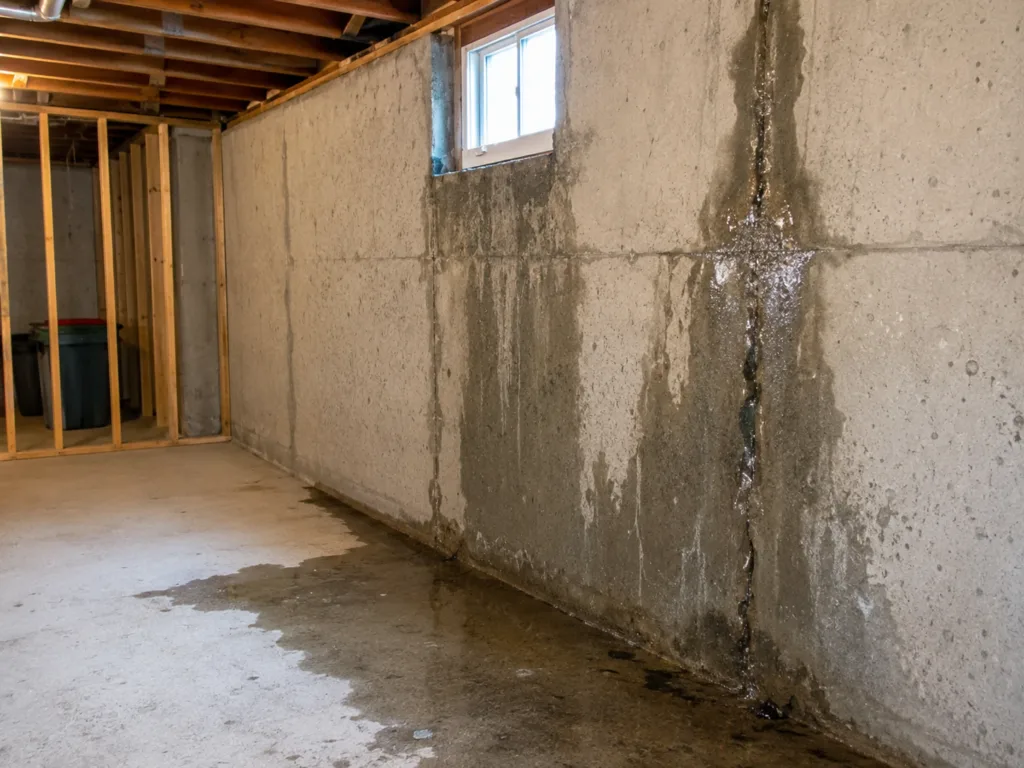
Why Is My Basement Wall Leaking?
A leaking basement wall rarely has a single cause. Multiple factors work together to push water through concrete, block, or stone walls. Here are the most common culprits Oklahoma homeowners encounter.
The Force of Outside Water Pressure
Hydrostatic pressure is the primary driver behind most leaking basement walls. When the soil surrounding your foundation becomes saturated with water, it exerts tremendous force against the basement walls. This pressure forces water through any available opening, including hairline cracks, porous concrete, and construction joints.
In Oklahoma, the state’s expansive clay soils make hydrostatic pressure particularly problematic. Clay soil absorbs water and swells significantly during rain events, then shrinks during dry periods. This constant expanding and contracting cycle puts relentless stress on basement walls.
The “Clay Bowl Effect”
Let’s go back to when your home was first built. A large pit was excavated for the foundation, and once the walls were in place, the area was backfilled with soil. This backfilled soil is much looser and more porous than the dense, untouched earth around it, creating what’s known as the “clay bowl effect.” When it rains, this loose soil acts like a basin, collecting water and holding it directly against your foundation. This saturated soil creates intense pressure, forcing water through any tiny crack or weak point in your basement walls. It’s a very common problem that leads to persistent leaks and requires a professional basement waterproofing system to fix for good.
Lateral Soil Pressure
Beyond the force of collected water, the soil itself can exert its own damaging pressure. This is called lateral soil pressure, and in Oklahoma, our expansive clay soil is the primary cause. When this type of soil absorbs moisture, it swells and pushes sideways against your basement walls with incredible force. Over time, this constant pressure can cause walls to bow inward, lean, and develop significant cracks, which become direct highways for water to enter your home. Solving this problem means addressing the structural issue itself, which often requires professional foundation repair to stabilize the walls and prevent any further movement.
When Foundation Cracks Let Water In
Foundation cracks are the most visible pathway for water to enter your basement. Several types of cracks indicate different issues:
- Vertical cracks typically result from concrete shrinkage during the curing process. While they may start small, they widen over time and allow water to seep through during rainstorms.
- Horizontal cracks are more concerning because they indicate lateral soil pressure pushing against the wall. These cracks suggest the wall is under significant stress.
- Stair-step cracks in block walls follow the mortar joints and usually indicate foundation settlement or shifting soil conditions.
- Diagonal cracks near corners often result from differential settlement where one section of the foundation settles more than another.
Each type of crack requires a different repair approach, which is why professional assessment matters.

How Poor Yard Drainage Causes Leaks
Water always follows the path of least resistance. When your home’s exterior drainage is inadequate, water collects against the foundation walls instead of being directed away from your home.
Common drainage problems that contribute to leaking basement walls include:
- Clogged or damaged gutters that overflow and dump water directly at the foundation
- Short downspout extensions that discharge water too close to the house
- Negative yard grading where the soil slopes toward the foundation rather than away from it
- Missing or failed downspout drainage lines that allow concentrated water flow at the foundation
How Oklahoma’s Weather Affects Your Basement
Oklahoma’s weather patterns create a unique set of challenges for basement walls. The state experiences:
- Heavy spring rainstorms that can dump several inches of rain in a short period, quickly saturating soil around foundations
- Extreme temperature swings between seasons that cause concrete to expand and contract, gradually widening existing cracks
- Tornado season storms that bring intense, sustained rainfall capable of overwhelming even well-designed drainage systems
- Extended summer droughts followed by heavy rains, causing clay soils to shrink and swell dramatically
This repeated wet-dry cycle is particularly hard on Oklahoma foundations because the state’s clay-heavy soil amplifies the pressure changes against basement walls.
Seepage at the Wall and Floor Joint
The joint where the basement wall meets the floor (called the cove joint) is one of the most common entry points for water. In poured concrete basements, the wall and the floor are poured separately, creating a natural seam. Hydrostatic pressure from beneath the slab pushes water up through this joint.
You may notice this as a line of wetness or water pooling along the base of the wall, particularly during or after heavy rainfall.
Understanding the “Cold Joint”
This seam is often called a “cold joint” because the concrete floor and walls are poured at different times. Think of it this way: the floor is poured and allowed to cure, and then the walls are poured on top. Because they don’t fuse into one solid piece, a tiny, almost invisible gap is created between the two. When the soil around your foundation becomes saturated after a heavy Oklahoma rain, hydrostatic pressure can easily force water through this vulnerable seam. The expansive clay soil in our area makes it worse, as it swells and shrinks, putting constant stress on this joint. If you’re noticing a persistent line of moisture or even small puddles where your basement wall meets the floor, it’s a tell-tale sign that your cold joint is leaking and needs a professional basement waterproofing solution.
When Water Seeps Through Concrete Walls
Concrete and concrete block walls are not waterproof by nature. Over time, the waterproofing membranes applied during construction can degrade, leaving the wall material exposed to moisture. Concrete block walls are especially vulnerable because the hollow cores can fill with water that eventually seeps through mortar joints.
Leakage vs. Seepage: What’s the Difference?
You might hear people use the terms “leakage” and “seepage” to describe water in their basement, but they point to slightly different issues. Leakage is when water actively flows through a distinct opening. Think of a visible stream of water coming through a wall crack or a puddle forming on the floor after a storm. It’s a more obvious and often faster-moving problem. Seepage, on the other hand, is a slower process where water gradually moves through the porous concrete or block wall itself. This often looks like a large, damp patch on the wall that feels wet to the touch or dark stains that grow over time. Both are clear signs that your basement is under attack from outside water pressure and requires a professional waterproofing solution to keep your home dry and protected.
Weak Points from Construction (Rebar Tie Holes)
Sometimes, the source of a leak is a weak point that was created when your home was first built. Poured concrete foundation walls are reinforced with steel rods, often called rebar, for added strength. During construction, metal ties hold the concrete forms in place, and these ties often pass through the wall. After the concrete cures and the forms are removed, the small holes left by these ties are patched with cement. Over the years, these patches can degrade, shrink, or pop out due to the constant pressure of water and soil against the wall. This creates a perfect, small pathway for water to get through, resulting in isolated wet spots or drips that seem to appear out of nowhere. While they may look minor, these leaks are a direct sign of hydrostatic pressure at work.
Could It Be an Internal Plumbing Leak?
While outside water is the usual suspect, sometimes the source of moisture is already inside your house. An internal plumbing leak from a broken pipe, a faulty water heater, or a failing fixture can mimic the signs of a basement wall leak. The key difference is that these leaks aren’t tied to the weather; they can happen anytime. Telltale signs include a sudden, unexplained spike in your water bill, damp spots appearing on upper-level walls or ceilings, or the sound of running water when all your faucets are off. If you notice these symptoms, it’s wise to investigate for a plumbing leak. A professional plumber can use specific tools to pinpoint hidden leaks behind walls or under floors, helping you address the correct problem first.
Is Your Basement Wall Leaking? Look for These Signs
Catching a leaking basement wall early can prevent significant damage. Here are the signs every Oklahoma homeowner should monitor.
Obvious Water Stains and Puddles
The most obvious sign is visible water on the basement wall or floor. However, leaks do not always present as active water flow. Look for:
- Water stains appearing as discolored patches on walls, often with a yellowish or brownish tint
- Damp spots that appear after rainstorms and slowly dry between events
- Puddles or standing water along the base of walls
- Water trails or streaks running down walls from specific points
That White, Chalky Powder on Your Walls
Efflorescence is a white, powdery, or crystalline deposit that forms on basement walls. It occurs when water moves through concrete, dissolving mineral salts in the process. As the water evaporates on the interior surface, it leaves these salt deposits behind.
While efflorescence itself is not harmful, it is a reliable indicator that water is actively moving through your basement wall. The more efflorescence you see, the more moisture is passing through.
The Smell of Dampness, Mold, and Mildew
A persistent musty smell in your basement is a strong indicator of excess moisture, even if you cannot see visible water. Mold can begin growing within 24 to 48 hours of moisture exposure and often develops in hidden areas behind walls, under carpet, or in storage boxes.
Common signs of mold include:
- A persistent earthy or musty smell
- Dark spots or discoloration on walls, floors, or stored items
- Allergic reactions (sneezing, coughing, itchy eyes) that worsen when you are in the basement
Peeling Paint or Bubbling Wallpaper
Water pushing through basement walls damages interior finishes. Watch for:
- Peeling or bubbling paint as moisture breaks the bond between paint and the wall surface
- Wallpaper loosening or developing bumps and ridges
- Drywall that feels soft or shows signs of warping
- Paneling pulling away from the wall
Bowed Walls and Other Serious Signs
Some signs indicate that a leaking basement wall has progressed to a structural concern:
- Cracks that are widening over time (mark them with a pencil and date to track changes)
- Walls bowing or leaning inward from sustained soil pressure
- Doors and windows sticking or no longer closing properly
- Uneven or sloping floors above the basement
If you notice any of these structural indicators, professional assessment is critical. These issues do not resolve on their own and typically worsen over time.

How Pros Fix a Leaking Basement Wall for Good
Permanent solutions for leaking basement walls address both the water entry point and the underlying pressure driving the water inside. Here is how professional waterproofing teams approach the problem.
Interior vs. Exterior Waterproofing Solutions
When it comes to waterproofing, there are two primary strategies: managing water from the inside or stopping it from the outside. An interior water management system is designed to control any water that makes its way through your basement walls. This approach typically involves installing a specialized drainage channel along the interior perimeter of the foundation, right where the wall meets the floor. This channel collects water from wall seepage or from the cove joint and directs it to a sump pump. The sump pump then automatically pumps the water out of the basement and away from your home, keeping your space dry. This is an incredibly effective method for handling hydrostatic pressure and is less disruptive than exterior work. Our team at Vesta specializes in these types of comprehensive basement waterproofing systems.
Exterior waterproofing, on the other hand, is a preventative measure that stops water before it can even touch your foundation walls. This process involves excavating the soil around your home’s perimeter down to the foundation footing. A waterproof barrier or membrane is then applied to the exterior of the walls, creating a seal against moisture. While this method is very thorough, it requires significant excavation of your landscaping. The best solution for your home isn’t a one-size-fits-all answer; it depends on the specific cause of the leak, your foundation type, and the soil conditions on your property. That’s why a professional evaluation is so important. An expert can diagnose the root problem and recommend the most effective, long-term solution for your home. To understand what your basement truly needs, the first step is a detailed free inspection.
Sealing Cracks from the Inside
Professional crack repair goes far beyond surface-level patching. Two primary methods are used:
Epoxy Injection fills the crack completely from front to back, bonding the concrete together and creating a waterproof seal. Epoxy works best on stable, non-moving cracks and restores the structural integrity of the wall.
Polyurethane Injection uses a flexible foam that expands inside the crack, creating a watertight seal that can accommodate minor wall movement. This method is often preferred for cracks that may continue to shift slightly with seasonal soil changes.
Both methods are applied from the interior, meaning no exterior excavation is required, and the repair can typically be completed in a single visit.
Installing an Interior Water Management System
When water enters through multiple points or through the cove joint, an interior drainage system is often the most effective solution. This approach involves:
- Installing a perimeter drain channel along the inside edge of the basement floor
- Routing collected water to a sump pump system
- The sump pump automatically discharges water away from the foundation
Interior drainage systems are designed to manage water that gets past the wall, keeping the basement dry regardless of exterior conditions. They are particularly effective in Oklahoma where clay soil conditions create persistent hydrostatic pressure.
Adding a Sump Pump to Keep Your Basement Dry
A sump pump is a critical component of any basement waterproofing system. These pumps sit in a basin (sump pit) below the basement floor and automatically activate when water reaches a certain level.
Key features of a reliable sump pump system include:
- Primary pump with sufficient capacity for your basement size
- Battery backup to keep the system running during power outages, which are common during Oklahoma storms
- Alarm systems that alert you if the pump fails or the water level rises too high
- Discharge lines that route water well away from the foundation
Using Wall Liners and Vapor Barriers
For walls experiencing widespread moisture intrusion, membrane systems create a barrier between the wet wall and the interior space. These systems direct water that penetrates the wall downward into the drainage system rather than allowing it into the basement.
Waterproofing Your Foundation from the Outside
In some cases, addressing the problem from the outside provides the most complete solution. Exterior waterproofing involves:
- Excavating the soil around the foundation
- Cleaning and preparing the wall surface
- Applying a waterproof membrane or coating
- Installing or replacing exterior drainage at the footing level
- Backfilling with drainage-friendly material
While more extensive than interior solutions, exterior waterproofing addresses water before it ever reaches the wall.
DIY Fixes vs. Professional Repair: What’s the Difference?
Many homeowners attempt to fix a leaking basement wall with products from the hardware store. While some temporary measures can slow moisture intrusion, it is important to understand their limitations.
The Limits of a Quick DIY Fix
- Hydraulic cement can fill small, active leaks temporarily by expanding as it sets
- Masonry waterproofing paint can slow minor moisture migration through porous walls
- Improved gutter maintenance and downspout extensions can reduce the volume of water reaching the foundation
- Adjusting yard grading to slope away from the foundation at a minimum of six inches over the first ten feet
DIY Crack Patching with Hydraulic Cement
You might come across hydraulic cement at your local hardware store as a solution for active leaks. This material is useful because it sets incredibly fast, even when water is present, and expands as it cures to fill the crack. It works better than a simple silicone sealant for patching a hole where water is actively seeping through. However, it’s important to view this as a temporary patch, not a permanent repair. While the cement might stop water from entering through that specific spot for a while, it does nothing to relieve the hydrostatic pressure pushing against your foundation wall. The water will eventually find another weak point to exploit.
Using Waterproof Paint and Sealants
Specialty waterproof paints and sealants are another common DIY approach. These products are designed to create a thick membrane on the interior of your basement walls to block moisture. For this to have any chance of working, the wall surface must be perfectly clean, dry, and free of any efflorescence or mold before application. While these coatings can hold back minor dampness, they are ultimately a surface-level fix. The moisture is still penetrating your foundation wall from the outside; it’s just being trapped behind the paint. This can cause the paint to bubble or peel over time and can lead to the deterioration of the wall itself, hidden from view. A true, long-term solution involves managing the water before it can damage your foundation, which is the goal of professional basement waterproofing systems.
Why a Patch Job Won’t Last
Temporary measures typically address symptoms rather than root causes. Here is why they fall short:
- Surface sealants cannot withstand hydrostatic pressure. When significant water pressure builds against the wall, surface-applied products eventually fail.
- Patching one crack does not address the underlying pressure. Water simply finds the next weakest point in the wall.
- Interior-only approaches leave water in the wall. Even if the water is not visible inside, it is still saturating the concrete, which degrades the wall over time.
The “Cork in a Bottle” Analogy Explained
Think about trying to stop a leak in a full water bottle by just sticking a cork in the hole. The cork might hold for a little while, but as pressure builds inside, it’s only a matter of time before it pops out or the water finds another weak spot. This is the perfect analogy for why quick, surface-level patches fail on leaking basement walls. The real issue isn’t just the crack; it’s the immense hydrostatic pressure from saturated soil pushing against your foundation. A simple patch of cement or a coat of sealant is just a cork against a powerful, relentless force. Eventually, the water will win. It will either push the patch off or, more likely, find the next easiest path into your basement. This is especially true in Oklahoma, where our expansive clay soil amplifies that pressure. Lasting solutions require comprehensive basement waterproofing methods that manage the water, not just temporarily plug a single hole.
When to Call a Professional
Contact a professional waterproofing team when you notice:
- Water entering through multiple points along the wall
- Recurring leaks that return after temporary repairs
- Cracks that are growing wider or longer over time
- Any horizontal cracking or wall bowing
- Water entering at the cove joint (wall-floor connection)
- Persistent musty odors even when no visible water is present
- Water intrusion during every rainstorm, not just severe events
A professional inspection identifies the root cause and recommends solutions matched to the specific conditions at your property.
Tips for Hiring a Reputable Contractor
Choosing the right contractor to fix your basement is a big decision, but a few key steps can point you toward a trustworthy professional. I always recommend looking for a company that specializes in basement waterproofing, not a general handyman, because they have the specific experience needed for a permanent repair. A true professional will begin with a thorough inspection to pinpoint the root cause of the leak, understanding that different issues require different solutions. They should be able to explain the problem and their proposed fix clearly. Don’t forget to check online reviews and ask for local references. Be wary of anyone promising a quick, one-size-fits-all solution, as these temporary patches often fail to address the underlying water pressure, meaning the leak will likely return.
How Oklahoma’s Soil Conditions Affect Your Basement
Understanding Oklahoma’s unique geological conditions helps explain why leaking basement walls are so prevalent in the state.
Dealing with Oklahoma’s Expansive Clay Soil
Oklahoma sits on some of the most expansive clay soil in the United States. This type of soil can swell by 10% or more when wet and shrink significantly when dry. This seasonal expansion and contraction creates a relentless push-pull cycle against basement walls.
During wet periods, the swelling soil presses against the foundation with thousands of pounds of lateral pressure. During drought, the soil pulls away, leaving gaps that fill with water during the next rain event. Over years, this cycle fatigues concrete walls, widens cracks, and compromises waterproofing membranes.
What a High Water Table Means for Your Home
Many areas across Oklahoma, particularly in river valleys and low-lying regions near the Canadian River, Arkansas River, and their tributaries, have naturally high water tables. Homes in these areas face constant hydrostatic pressure, even during periods without significant rainfall.
How Wet and Dry Seasons Impact Your Foundation
Oklahoma’s rainfall patterns create predictable periods of elevated risk for basement leaks:
- March through June brings the heaviest rainfall, with the highest risk of basement water intrusion
- Late summer and fall drought conditions cause soil shrinkage and gap formation
- Winter freeze-thaw cycles can force water into cracks as it expands during freezing
How to Keep Your Basement Dry for Years to Come
Preventing leaking basement walls requires both proactive maintenance and professional waterproofing when conditions warrant it.
Simple Maintenance to Prevent Basement Leaks
- Clean gutters twice per year (spring and fall) and after major storms
- Extend downspouts at least four to six feet from the foundation
- Maintain positive grading so soil slopes away from the house on all sides
- Keep window wells clear of debris and ensure they drain properly
- Monitor your basement regularly for new cracks, stains, or moisture
- Run a dehumidifier during humid months to control condensation
Knowing When to Invest in Professional Waterproofing
Professional basement waterproofing makes sense when:
- Temporary measures have failed to control moisture
- Your home is in an area with known high water table conditions
- You are finishing your basement and need to protect the investment
- Foundation cracks are actively growing or multiplying
- Water intrusion is happening during every rain event
A free inspection from a qualified waterproofing professional can determine the source of your leak and recommend the right solution for your home’s specific conditions.
Frequently Asked Questions About Leaking Basement Walls
Can a leaking basement wall be fixed from the inside?
Yes. Many basement wall leaks can be effectively repaired from the interior. Professional crack injection, interior drainage systems, and sump pump installation are all performed from inside the basement without the need for exterior excavation. Interior solutions are particularly effective when combined with proper exterior drainage maintenance.
What is the most common cause of a leaking basement wall?
Hydrostatic pressure is the most common cause. When the soil around your foundation becomes saturated, water pressure builds against the walls and forces moisture through cracks, porous concrete, and construction joints. In Oklahoma, the state’s expansive clay soils intensify this pressure during wet seasons.
How quickly should I address a leaking basement wall?
Address it as soon as you notice it. Mold can begin growing within 24 to 48 hours of moisture exposure, and ongoing water intrusion accelerates structural deterioration. What starts as a minor seep can become a major problem within a few months if the underlying cause is not corrected.
Does a leaking basement wall mean my foundation is failing?
Not necessarily. Most basement wall leaks are waterproofing issues, not structural failures. Vertical hairline cracks and cove joint seepage are common and repairable. However, horizontal cracks, bowing walls, or rapidly widening cracks may indicate structural concerns that require immediate professional evaluation.
Will waterproofing paint stop a basement wall from leaking?
Waterproofing paint may temporarily reduce minor moisture migration through porous concrete, but it cannot withstand hydrostatic pressure. If water is actively entering through cracks or joints, paint will eventually peel, bubble, or allow water to push through. Professional waterproofing addresses the root cause rather than just the surface symptom.
How do I know if my basement leak is from condensation or seepage?
A simple foil test can help determine the source. Tape a piece of aluminum foil to the damp section of the wall and leave it for 24 to 48 hours. If moisture forms on the outside of the foil, you have a condensation problem that a dehumidifier can address. If moisture forms behind the foil (between the foil and the wall), water is seeping through from the exterior, and waterproofing is needed.
Do not let a leaking basement wall compromise your home’s safety and comfort. Vesta Foundation Solutions provides free inspections for Oklahoma homeowners dealing with basement water intrusion. Our team will identify the source of your leak and recommend the right solution for your specific situation. Schedule your free inspection now or call us to get started.
Does homeowner’s insurance cover a leaking basement wall?
This is a common question, and the answer is typically no. Most homeowner’s insurance policies are designed to cover sudden and accidental water damage, such as a burst pipe. Leaks from foundation cracks, hydrostatic pressure, or general seepage are usually considered maintenance issues and are excluded from coverage. Furthermore, standard policies almost always exclude damage from flooding, which includes water from heavy rainfall or a high water table—a significant concern for Oklahoma homeowners. It is essential to understand your policy’s limitations and speak directly with your insurance agent about what is covered. They can clarify your specific situation and advise on whether additional endorsements or a separate flood insurance policy would be beneficial for you.
Key Takeaways
- Water Pressure Is the Real Problem: A leaking basement wall is almost always caused by hydrostatic pressure, which is the force of water-saturated soil pushing against your foundation. In Oklahoma, our expansive clay soil makes this pressure even more intense, forcing water through tiny cracks and joints.
- Look for More Than Just Puddles: Early warning signs of a leak are not always obvious. Watch for damp stains on the walls, a white chalky powder called efflorescence, peeling paint, or a persistent musty smell, as these all point to moisture getting through your foundation.
- Professional Solutions Address the Cause, Not the Symptom: While DIY patches like waterproof paint might offer a temporary fix, they cannot stand up to constant water pressure. A permanent solution involves a professional system, such as interior drainage and a sump pump, that manages water at its source to keep your basement dry for good.
Related Articles
- How to Repair a Leaky Basement Wall (3 Steps)
- Basement Waterproofing Oklahoma | Guaranteed Dry Basements
- Basement Flooding – Vesta Foundation Solutions
- Basement Waterproofing Near Me in Oklahoma City | Vesta Foundation Solutions
- Waterproofing Basement Walls | Foundation Repair & Basement Waterproofing