
Here in Oklahoma, our homes face a unique challenge: expansive clay soil. This soil acts like a sponge, swelling dramatically when it’s wet and shrinking when it’s dry. This constant movement puts immense pressure on your foundation, creating stress that can lead to cracks and, eventually, leaks. So, that water in your basement isn’t just bad luck; it’s often a direct result of our local geology. This guide is written for Oklahoma homeowners who are tired of dealing with damp walls. We’ll explain how to perform a basement leak repair that stands up to our specific soil conditions, helping you protect your home’s foundation and create a dry, usable space for good.
A leak in your basement is often just a symptom of a larger issue happening outside your home. Simply applying a coat of sealant to the inside wall is like putting a bandage on a problem that needs stitches. Understanding the warning signs that your home needs basement waterproofing helps you catch problems before they escalate. To achieve a lasting fix, you have to address what’s forcing water against your foundation in the first place. Understanding the common causes of leaking basement walls helps you identify what is driving water into your home. This article will help you understand the underlying causes, from saturated soil to foundation settlement. We’ll then show you how to repair leaky basement wall problems from the inside while keeping the bigger picture in mind, ensuring your hard work isn’t just a temporary solution but a meaningful step toward a permanently dry space.
Key Takeaways
- Identify the source before you seal: The root cause of a wet basement is almost always outside, so check your gutters, downspouts, and yard grading before attempting an interior repair.
- Use the right tools for the job: A lasting repair requires a clean, dry wall and specific materials, like hydraulic cement for active leaks and masonry caulk for sealing cracks, not general-purpose sealants.
- Don’t ignore structural warning signs: If leaks return or you notice widening cracks, uneven floors, or sticking doors, it’s time to call a professional, as these point to deeper foundation issues.
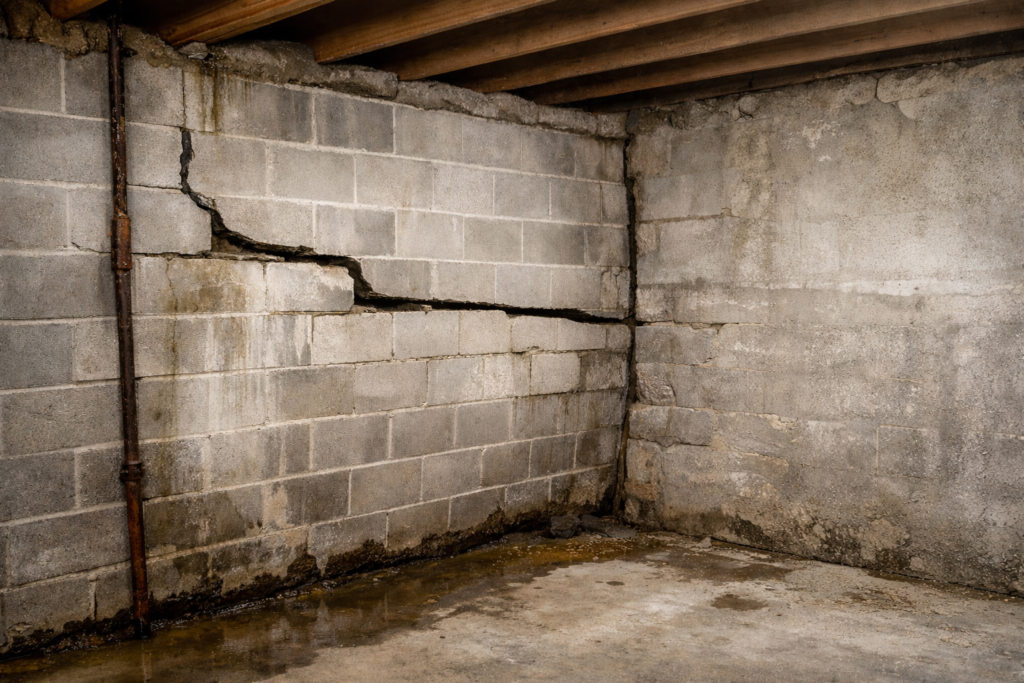
Why Is Your Basement Wall Leaking?
Finding a puddle in your basement is frustrating, but before you can fix the leak, you need to understand where the water is coming from. Most of the time, the problem starts outside your home. Water is persistent, and it will always follow the path of least resistance into your basement. Understanding the common causes can help you pinpoint the source of your leak and figure out the best way to stop it for good. Let’s look at the four most frequent culprits behind a wet basement wall.
The “Clay Bowl Effect” Explained
When your home was built, contractors dug a large hole for the foundation and then pushed some of that soil back into place once the walls were up. This backfilled soil is much looser and more absorbent than the undisturbed, dense soil around it. As a result, when it rains, water collects in this loose soil, creating what’s known as the “clay bowl effect.” This trapped water has nowhere to go and builds up pressure against your foundation walls. This force, called hydrostatic pressure, can push water through even the tiniest cracks and gaps, leading to leaks. It’s a primary reason why effective basement waterproofing solutions are so critical for keeping the space dry long-term.
Common Leak Sources to Investigate
While hydrostatic pressure is the force pushing water into your home, the water still needs an entry point. Leaks often appear at the weakest points in your foundation. Before you can tackle a repair, you need to play detective and trace the water back to its source. Sometimes the culprit is obvious, like a visible crack, but other times it’s a bit more subtle. By carefully inspecting your basement walls and the area immediately outside your home, you can often find the exact spot where water is getting in. Let’s walk through a few of the most common weak spots that allow water to breach your basement walls.
Leaky Window Wells
Basement windows are a frequent source of leaks, especially if the window wells aren’t draining properly. If a window well fills with water during a storm, that water sits directly against both the window and the foundation wall. According to Thrasher Foundation Repair, you should check for signs like “puddles, rotting wood frames, rusted metal frames, drafts, or condensation.” A clogged drain or improper grading that slopes toward your house can make the problem worse. Clearing debris from the well and ensuring the ground outside slopes away from your foundation are good first steps, but persistent leaks may point to failing seals or a more significant drainage issue that needs a professional solution.
Gaps Around Pipes and Utilities
Your foundation walls have openings for pipes, electrical conduits, and other utility lines to pass through. These penetrations are necessary, but they can also be vulnerable spots for water intrusion. The sealant used to close the gaps around these pipes can degrade over time, creating a direct path for water from the saturated soil outside. Thrasher Foundation Repair notes that you should “look for cracks in the walls, peeling paint, crumbling mortar, rust, or efflorescence” around these areas. If you see any of these signs, it’s a strong indicator that the seal has failed and needs to be addressed as part of a comprehensive foundation repair strategy.
Internal Plumbing Failures
Not every basement puddle is caused by groundwater. Sometimes, the source is already inside your home. A leaking water heater, a burst washing machine hose, or a dripping pipe can all lead to significant water on your basement floor. As one expert points out, “You’ll likely notice the appliance isn’t working right before major water damage.” If you find water localized around an appliance and there hasn’t been any recent rain, it’s a good idea to investigate your plumbing. For these types of issues, your best course of action is to call a qualified plumber to fix the appliance or pipe first before addressing any water damage.
Is Poor Exterior Drainage the Culprit?
The ground surrounding your home is your first line of defense against water. Ideally, your yard should have a gentle slope that directs rainwater away from your foundation. If the ground is flat or, even worse, slopes toward your house, water will pool against your basement walls every time it rains. This constant contact gives water plenty of opportunities to seep through tiny openings in the concrete. A comprehensive basement waterproofing strategy often begins by assessing how water behaves around your property. Take a walk around your house during the next downpour to see where the water is going; you might be surprised by what you find.
Identifying Cracks from a Settling Foundation
Your house naturally settles over time, but significant shifts can cause problems. Here in Oklahoma, the expansive clay soil swells when it’s wet and shrinks when it’s dry, putting immense pressure on your foundation. This movement can lead to cracks in your basement walls. While some hairline cracks are normal, vertical or stair-step cracks can be a sign of a bigger issue. Water can easily find its way through these openings, especially around areas where materials meet, like where steel rebar is embedded in the concrete. Addressing these issues often requires professional foundation repair to stabilize your home and seal the entry points for water.
Is Groundwater Pushing Through Your Walls?
After a heavy rain, the soil around your foundation can become completely saturated. This waterlogged soil creates what’s known as hydrostatic pressure, pushing against your basement walls from the outside. This constant force can drive water through the porous concrete itself, even if there are no visible cracks. Think of it like a cork in a bottle; a simple patch on the inside might hold for a while, but the external pressure will eventually find another weak spot. This is why a lasting solution often involves a system designed to relieve that pressure and manage groundwater effectively.
Don’t Forget to Check Your Gutters
It might seem simple, but your gutters play a huge role in keeping your basement dry. Their job is to collect rainwater from your roof and channel it safely away from your foundation. If your gutters are clogged with leaves and debris, water will overflow and pour directly down the side of your house. Similarly, if your downspouts are too short, they’ll deposit all that water right next to your basement walls. This creates the exact pooling problem you want to avoid. Before you assume a major issue, do a quick check of your gutter system. If that simple fix doesn’t solve the leak, it might be time for a free inspection to find the real source.
What Tools and Materials Do You Need?
Before you can tackle that leaky wall, you need to gather the right supplies. Think of it like prepping your ingredients before you start cooking; having everything on hand makes the whole process smoother and more effective. Getting your toolkit ready is the first real step toward a drier, more comfortable basement. Most of these items are readily available at your local hardware store. Below, we’ve broken down exactly what you’ll need, separating the materials for the repair from the tools and safety gear you’ll use to apply them.
Your Material Checklist
First up are the materials that will actually patch the leak. For filling in minor, non-active cracks and holes, a good concrete patching compound is your go-to. It creates a solid surface and stops moisture from seeping through. If you’re dealing with a crack that’s actively leaking water, you’ll need hydraulic cement. This product sets incredibly fast, even while wet, expanding as it cures to plug the hole and stop the flow. Once your patches are dry, a final coat of interior waterproof paint or sealant adds another layer of protection and helps the repair blend in with the rest of your wall.
Essential Tools and Safety Gear
With your materials ready, let’s talk tools and safety. You’ll need a stiff wire brush to thoroughly clean the crack and the area around it. This step is crucial because it removes loose debris and ensures your patching material will stick properly. A trowel will help you apply the patching compound and cement smoothly. Most importantly, don’t forget your safety gear. Always wear safety goggles to protect your eyes from dust and flying bits of concrete. A good pair of waterproof gloves will protect your hands, and a dust mask is essential, especially when you’re mixing cement products. Your safety should always be the top priority.
How to Prep the Wall for Repair
Before patching a leak, proper wall preparation is crucial for a lasting repair. Applying sealant on a dirty, damp, or unstable surface won’t hold, leading to recurring leaks. Cleaning and assessing the area ensures repair materials bond correctly and keep water out. This preparation phase helps avoid DIY mistakes and allows you to understand the problem’s full extent, such as the crack’s size or unexpected water sources.
Pinpoint the Source of the Leak
Your first job is to play detective and figure out where the water is coming from. While you see the water inside your basement, the root cause is almost always outside your home. Water could be getting in due to poor yard grading that directs rain toward your house, or from cracks in the foundation itself. Clogged gutters overflowing near the foundation are another common culprit. Pinpointing the exact entry point helps you understand if you’re dealing with a simple crack or a more complex basement waterproofing issue. If you can’t find an obvious source, it might be time to get a professional opinion.
Clean and Prep the Leaky Area
Once you’ve identified the leaky spot, you need to get it ready for repair. Start by using a wire brush to scrape away any loose paint, old sealant, or crumbly concrete from the crack and the surrounding area. The goal is to get down to a solid, clean surface. Next, use a shop vacuum to remove all the dust and debris so the new sealant can adhere properly. For smaller cracks, filling them with a masonry-specific caulk can create a smooth, sealed surface. Make sure the area is completely clean and as dry as possible before moving on to the next step.
Safety First: Key Precautions to Take
Working with repair materials like hydraulic cement requires a few safety measures. Always wear protective gloves and a dust mask, as the fine particles can irritate your skin and lungs. It’s also crucial that you don’t try to apply sealants to a wall that is actively dripping or wet. Most waterproofing products need a damp but not saturated surface to cure correctly. If water is flowing in, the material will likely wash away before it has a chance to set. If you’re facing a steady leak, a professional can offer solutions to manage the water flow during the foundation repair process.
Your Step-by-Step Guide to Basement Leak Repair
Once you’ve prepped your wall, you’re ready to tackle the repair itself. This three-step process is designed to handle minor leaks from the inside by patching active water sources, sealing potential entry points, and creating a moisture-resistant barrier. Remember to work in a well-ventilated area and wear your safety gear, including gloves and eye protection. Following these steps carefully can help you manage small-scale water intrusion. However, if you find the cracks are wide or the water flow is heavy, these might be signs of a bigger problem. In those cases, a professional basement waterproofing solution is your best bet for a permanent fix. For now, let’s focus on what you can do to address the immediate issue.
Step 1: Stop Active Leaks with Hydraulic Cement
If you have water actively trickling through a crack or hole, your first job is to stop it. This is where hydraulic cement comes in. This material is a lifesaver because it expands as it cures and can set incredibly fast, even in the presence of water. Start by mixing a small amount of the cement according to the package directions until it has a putty-like consistency. Press the cement firmly into the crack or hole where water is coming through. Hold it in place for a few minutes until it hardens and the leak stops. This creates an immediate plug, allowing you to move on to the next steps without water getting in your way.
Widen the Crack for a Stronger Bond
It might feel counterintuitive, but to properly fix a crack, you often need to make it a little wider first. Before applying cement, chip away at the crack edges with a hammer and chisel to form a V-shaped groove, removing weak concrete for a solid base. Use a stiff wire brush to clear debris and old sealant, creating a clean channel for hydraulic cement to bond strongly with the leak source.
Mix and Apply the Cement Quickly
The key to working with hydraulic cement is speed. This material is designed to set incredibly fast—often in just a few minutes—which is why it’s so effective at stopping active leaks. Because of this rapid curing time, you should only mix as much cement as you can use immediately. Mix the powder with water to a thick consistency, then press it into the crack with a putty knife or trowel, filling the entire channel. This step is essential for basement waterproofing, as it stops the leak and readies the wall for further sealing.
Step 2: Seal Cracks with Masonry Caulk
With any active leaks plugged, you can now address the rest of the cracks. For smaller, non-leaking cracks, a high-quality masonry or concrete caulk is the right tool for the job. This type of sealant is flexible and designed to bond tightly with concrete, preventing moisture from seeping through in the future. Use a caulk gun to apply a steady bead directly into the cracks, making sure to fill them completely. Then, smooth the bead with your finger or a putty knife to ensure a tight seal. This step is essential for addressing potential weak spots that could cause problems later. Keep in mind that significant cracking could indicate a need for foundation repair.
Step 3: Apply an Interior Waterproof Coating
The final step is to apply a waterproof sealant over the entire repaired area and the surrounding wall. Products often labeled as “waterproofers” are much thicker than regular paint and are designed to soak into the pores of the concrete, creating a robust barrier against moisture. Use a thick-nap roller or a heavy-duty brush to apply a generous, even coat. Pay close attention to the repaired cracks and the joint where the wall meets the floor. For the best protection, you’ll likely need to apply a second coat after the first one dries completely. This final layer gives your wall a clean finish and provides long-lasting defense against dampness.
Common DIY Mistakes to Avoid
Tackling a leaky basement wall yourself can feel empowering, but a few common missteps can turn a simple project into a recurring headache. The goal is to fix the problem for good, not just put a temporary patch on it. Understanding what not to do is just as important as knowing the right steps to take. By avoiding these frequent errors, you can ensure your repair is effective and durable, giving you a better chance at a dry, comfortable basement. Let’s walk through the most common trip-ups so you can get the job done right the first time.
Mistake #1: Sealing a Wet Wall
It’s tempting to slap a coat of sealant on a wall the moment you see moisture, but this is a recipe for failure. Applying any waterproofing product to a surface that is actively wet or even just damp is a critical error. The sealer simply won’t bond correctly to the concrete or masonry. The barrier may bubble, peel, or wash away, so wait for a dry period when the wall is completely dry to the touch before repairing. This ensures the materials can properly adhere and cure, creating a strong, lasting seal.
Mistake #2: Using the Wrong Repair Materials
The aisle at the hardware store is filled with tubes of caulk and tubs of sealant, and it’s easy to grab the wrong one. Using a general-purpose silicone or acrylic caulk on a basement wall crack is a common mistake. These materials aren’t designed to withstand the constant moisture and hydrostatic pressure found in a basement. For active leaks, hydraulic cement is a far better choice because it expands as it cures, sets incredibly fast (even while wet), and forms a powerful, watertight plug. For sealing hairline cracks after the leak is stopped, a high-quality masonry or polyurethane caulk is the right tool for the job. Always read the product label to match the material to your specific problem.
Mistake #3: Ignoring Deeper Structural Problems
Patching a crack from the inside often treats a symptom rather than the root cause, such as poor drainage, soil pressure, or foundation settlement. An interior patch is temporary; if external pressure builds, water may find another weak spot or compromise the repair. True basement waterproofing often involves addressing the conditions outside your home. If you notice large, horizontal cracks, bowing walls, or recurring leaks, these could be signs that you need a more comprehensive foundation repair solution.
Mistake #4: Trapping Moisture Inside the Wall
Sealing a basement wall from the inside seems like a straightforward fix, but it can inadvertently trap water within the concrete itself. While you’ve stopped the water from entering your living space, you haven’t stopped it from entering the wall. Concrete is porous, and when you apply an interior sealant, the moisture being pushed through from the outside gets stuck. This trapped water can slowly degrade the concrete, weakening your foundation over time. Saturated soil pressure persists even after patching a crack, forcing water into the wall and potentially causing bigger problems. A comprehensive basement waterproofing strategy addresses this pressure, rather than just blocking the water’s final exit point.
How to Prevent Future Leaks
After you’ve repaired your leaky wall, the next step is to play defense. Preventing water from reaching your foundation in the first place is the key to a permanently dry basement. A few proactive habits and a watchful eye can make all the difference in keeping your home protected from future water intrusion. Think of it as protecting your hard work and your home’s long-term health.
These preventative measures address the root causes of leaks, from surface water management to the integrity of your foundation itself. By staying on top of these areas, you can significantly reduce the chances of facing another damp, musty basement wall. It’s about shifting from a reactive approach to a proactive one, giving you peace of mind every time it rains. Let’s walk through the most effective ways to keep your basement dry for good.
Keep Your Gutters and Grading in Check
Your home’s first line of defense against water is its drainage system. Clogged gutters or improper grading can send rainwater cascading down your foundation walls, creating immense pressure that leads to leaks. Make it a habit to clean your gutters and downspouts regularly, ensuring they are clear of leaves and debris. Check that your downspouts extend several feet away from your house, directing water away from the foundation. Also, take a look at the ground slope, or grading, around your home. It should gently slope away from the walls, encouraging water to flow away naturally instead of pooling. These simple maintenance tasks are crucial for effective basement waterproofing.
Keep an Eye on Your Foundation
Regularly inspecting your foundation can help you catch small problems before they become big ones. Take a walk around your basement every few months and look for new cracks, damp spots, or white, chalky residue, which can indicate moisture. Even a slow, minor leak needs attention, as it can signal a larger issue or worsen over time. Pay close attention to any small stress fractures, as these are common entry points for water. If you spot a new crack or notice an existing one is growing, it’s a sign that your foundation may be shifting. Addressing these issues early is the best way to protect your home’s structural integrity and avoid major foundation repair.
Should You Install a Moisture Control System?
For persistent water problems, a comprehensive moisture control system might be the best long-term solution. While interior repairs are effective, the ultimate goal is to stop water from ever reaching your foundation walls. Professional solutions can create a waterproof barrier, blocking water intrusion at its source. Systems like sump pumps and dehumidifiers can also manage any moisture that does make its way inside, keeping your basement air dry and healthy. If you’re dealing with recurring leaks, it’s a good idea to get a professional assessment. An expert can identify the underlying cause and recommend the right system for your home’s specific needs. You can request a free inspection to explore your options.
Waterproof Before You Finish Your Basement
If you’re dreaming of turning your basement into a cozy living area or home gym, hitting pause to address moisture is the most important first step. Before you even think about framing walls or laying down carpet, you need to ensure the space is completely dry. Water intrusion typically originates outside your home due to saturated soil or poor grading. Covering a damp wall with new finishes only conceals the issue and traps moisture, fostering mold and rot. Effective basement waterproofing tackles these external causes, preventing water from reaching your foundation and safeguarding your investment from expensive damage.
When Is It Time to Call a Professional?
While tackling a leaky wall yourself can be rewarding, some situations are best left to the experts. DIY fixes are great for minor, one-off issues, but they often act as a bandage for a deeper problem. If you’re only treating the symptom, like a small crack, you might be missing the root cause of the water intrusion. Ignoring these underlying issues can lead to more extensive and complicated problems down the road.
Knowing when to put down the tools and pick up the phone is key to protecting your home’s structural integrity and value. Certain signs are clear indicators that the problem is beyond a simple surface repair. If you spot evidence of structural trouble or find yourself fighting the same leak over and over, it’s time to get a professional opinion. An expert can accurately diagnose the source of the leak and provide a lasting solution.
If You Spot Signs of Structural Damage
A small leak might not seem like a big deal, but it can be a symptom of a much larger issue with your home’s foundation. If you notice other changes around your house, pay close attention. Cracks in basement walls, sloped floors, and sticking doors or windows are more than just quirks. These are classic signs of structural damage.
These issues often indicate that your foundation is settling or shifting. Simply patching the crack where water gets in won’t solve the underlying movement. It’s crucial to address these problems promptly, as a professional can properly diagnose the cause and determine if you need foundation repair to stabilize your home and prevent further damage.
When the Leaks Just Won’t Quit
It’s frustrating to fix a leak only to find another damp spot after rain. If water keeps seeping through your walls, DIY isn’t enough. Persistent leaks indicate a bigger issue, like groundwater pressure or drainage problems, that a simple patch can’t fix.
When you’re stuck in a cycle of cleaning and patching the same area, it’s time to call for backup. A professional has the tools and expertise to identify the true source of the water and implement effective basement waterproofing solutions to keep your basement dry for good. If you’re tired of temporary fixes, a professional assessment is the best next step. You can request a free inspection to get a clear picture of what’s happening and find a permanent solution.
Understanding Professional Waterproofing Systems
When DIY patches aren’t cutting it, professional waterproofing systems offer a more robust and permanent solution. These systems tackle groundwater and saturated soil pressure by addressing the root cause, not just symptoms. Professionals use two main strategies to keep a basement dry: managing interior water and preventing exterior entry. The best approach depends on the leak’s cause and foundation condition. Understanding how these systems work can help you make an informed decision when you’re ready to find a lasting fix.
Interior Water Management
One of the most reliable ways to guarantee a dry basement is to control any water that makes its way inside. An interior water management system is designed to do just that. This system involves placing a specially designed drainage channel just beneath the floor along the inside perimeter of your basement walls. Any water that seeps through the walls or up from the joint where the wall and floor meet is intercepted by this channel. The water is then quietly directed to a sump pump system, which automatically pumps it up, out, and safely away from your home. This method effectively manages water intrusion without the need for major exterior excavation, ensuring your basement stays dry no matter how much it rains.
Exterior Waterproofing Solutions
The most direct way to solve a water problem is to stop it at the source. Exterior waterproofing solutions create a barrier on the outside of your foundation, preventing water from ever touching your basement walls. This process typically involves excavating the soil around the foundation to expose the exterior walls. A durable, waterproof membrane is then applied directly to the concrete, sealing it off from ground moisture. This comprehensive approach is often paired with an exterior drainage system to relieve hydrostatic pressure and channel water away. While it is a more intensive process, it’s an incredibly effective method for complete basement waterproofing and protecting your home’s structural integrity.
How to Maintain Your Repaired Walls
After you’ve repaired your leaky basement wall, the next step is to make sure it stays that way. Consistent maintenance is your best defense against future water problems. A little vigilance goes a long way in protecting your home and your peace of mind. By creating a simple routine and taking a few proactive steps, you can keep your basement dry for years to come. Staying on top of your basement’s condition helps you catch small issues before they turn into major headaches. The goal is to shift from reacting to leaks to preventing them altogether.
Set Up a Simple Inspection Routine
Set aside time every few months, and especially after heavy rainfall, to give your basement walls a quick look. You’re searching for any new signs of moisture, like dark spots, peeling paint, or a white, chalky substance called efflorescence. Even a slow leak needs immediate attention, as it can compromise the repair and lead to more significant issues over time. If possible, try to keep the perimeter of your basement walls clear of storage so you can easily spot any changes as soon as they appear. This simple habit makes it much easier to catch and fix new problems before they get out of hand.
Long-Term Care for Your Waterproofed Walls
True long-term care starts outside your home. Make sure your gutters are clean and that downspouts direct water several feet away from your foundation. The ground around your house should also slope away from the walls, as addressing outside drainage is crucial for reducing the amount of water pressing against your foundation. Inside, a quality waterproof sealant adds another layer of protection. Proper basement waterproofing not only stops leaks but also helps lower humidity, prevent mold growth, and protect anything you store in the space. If you spot trouble during an inspection, don’t hesitate to get a professional opinion. You can always request a free inspection to understand the health of your foundation.
Related Articles
- Waterproofing Basement Walls | Foundation Repair & Basement Waterproofing
- Retaining Wall Failures: Causes, Prevention, and Repair Solutions | Foundation Repair & Basement Waterproofing
- Basement Flooding | Foundation Repair & Basement Waterproofing
- Basement Waterproofing Oklahoma | Guaranteed Dry Basements
- Rainy Weather and Its Effects on Crawl Spaces and Basements: How to Protect Your Home from Water Damage | Foundation Repair & Basement Waterproofing
Frequently Asked Questions
My basement wall is just damp, not actively leaking. Do I still need to repair it? Yes, any sign of moisture is worth addressing. A damp wall indicates that water is making its way through the concrete, even if it’s not flowing freely. This constant moisture can lead to mold growth, musty odors, and can weaken the wall over time. Think of it as an early warning sign; fixing it now can prevent a much bigger water problem later on.
Why is it so important to address the problem from the outside? Patching a crack from the inside stops water at its final entry point, but it doesn’t stop the water from gathering against your foundation. The real goal is to manage water around your home so it never puts pressure on your basement walls in the first place. Correcting issues with your gutters and the slope of your yard reduces that external pressure, providing a more permanent solution than an interior patch alone.
What is that white, chalky powder on my basement walls? That white, powdery substance is called efflorescence. It happens when water seeps through concrete and evaporates, leaving behind natural salt deposits. While the powder itself is harmless, it’s a clear sign that you have a moisture problem. It tells you that water is moving through your foundation walls, which is a problem you’ll want to investigate further.
Can I just use waterproof paint to fix the leak? Waterproof paint is a great final step, but it’s not a solution on its own for an active leak. These coatings are designed to seal the surface of a clean, dry wall to prevent future dampness from seeping through. If you apply it over a crack that is still letting water in, the pressure from the water will likely cause the paint to bubble and peel away, failing to fix the root problem.
How can I tell if a crack is a normal settling crack or a sign of a serious foundation issue? Generally, thin, vertical hairline cracks are a normal part of a house settling. The cracks that signal a bigger problem are usually horizontal, run in a stair-step pattern along mortar lines, or are wider than a quarter of an inch. If you see these types of cracks, or if any crack is actively growing, it’s a strong indicator that you should have a professional inspect your foundation.