
Let’s be honest, seeing your basement floor sink or crack is unsettling. It’s more than just a cosmetic issue; it’s a signal that something is wrong with the soil supporting your home. Your first instinct is likely to find a solution, and fast. Many homeowners have heard of a process called mudjacking basement floor leveling, an older technique for lifting concrete. But is it the right choice for your property? Before you decide, it’s important to understand how it works, its potential drawbacks, and how newer technologies offer a more durable, less invasive alternative for a lasting repair.
But what’s the best way to fix your uneven concrete? For many homeowners, the term mudjacking comes to mind. And this outdated, messy method could be stopping them from fixing their concrete.
Here’s how it works: Mudjacking crews drill large-diameter holes into the surface, then inject a messy mixture of cement and soil below the concrete. Because the mud is hydraulically pumped under considerable pressure, it can lift the cement slab section back to its original position.
But the problem with traditional mudjacking is that the weight of the mixture that is pumped under the slab, combined with the weight of the concrete itself, can actually cause the slab to sink further if the soil beneath isn’t able to support the load.
Why Concrete Basement Floors Sink
That sinking feeling you get when you notice your basement floor is uneven isn’t just in your head—it’s right under your feet. A sinking or cracked concrete floor is more than a cosmetic issue; it’s a sign that the ground beneath your home is unstable. This usually happens for one of two reasons: the soil wasn’t prepared correctly, or water is causing trouble. Understanding the root cause is the first step toward a lasting solution. Both issues create empty spaces, or voids, under the concrete slab. Without solid ground to rest on, the heavy concrete has nowhere to go but down, leading to the uneven, cracked surfaces that are a cause for concern for many Oklahoma homeowners.
Poorly Compacted Soil
When your home was built, the soil underneath should have been tightly packed to create a stable base for the foundation. Unfortunately, this step is sometimes rushed or done improperly. Over time, this loose soil naturally settles and compacts under the immense weight of your home and the concrete slab. As the soil shifts and settles, it creates voids beneath the floor. The concrete, now unsupported, can crack and sink into these empty pockets. This process can be slow, happening over many years, or it can be accelerated by changes in soil moisture, but the result is the same: an unstable, uneven floor that needs professional attention to restore its integrity and safety.
Soil Erosion from Water Intrusion
Water is often the primary culprit behind sinking concrete here in Oklahoma. Heavy rains, poor yard drainage, plumbing leaks, or even hydrostatic pressure can introduce excess moisture into the soil around and under your foundation. This water can slowly wash away the soil particles beneath your basement floor, a process known as erosion. Just like with poorly compacted soil, this erosion creates voids. The more soil that washes away, the larger the void becomes, and the less support your concrete slab has. Addressing the water intrusion is critical, as simply lifting the concrete without managing the water problem will likely lead to the issue returning down the road.
Understanding Mudjacking for Basement Floors
For years, a common method for lifting sunken concrete has been mudjacking. You may have heard of it as slab jacking, and it’s a process designed to physically lift a concrete slab by injecting a material underneath it. The basic idea is to fill the voids that have formed from soil settlement or erosion, forcing the slab back toward its original, level position. While it was once a standard approach, the process involves some pretty invasive steps and uses materials that can introduce new problems. It’s important to understand exactly how this traditional method works to see why more modern techniques have become the preferred choice for homeowners looking for a durable, long-term fix.
The Mudjacking Process Explained
The mudjacking process is a multi-step operation that aims to correct sunken concrete by force. It begins with drilling, followed by pumping a slurry mixture, and ends with patching the holes. Each stage of this traditional method has distinct characteristics that impact both the process and the final outcome. The goal is to fill the underlying voids and lift the slab, but the materials and techniques used are what set it apart from more advanced solutions. Let’s walk through what a typical mudjacking job entails from start to finish so you can get a clear picture of what’s happening to your concrete floor.
Drilling Large-Diameter Holes
The first step in the mudjacking process is drilling a pattern of large holes, typically one to two inches in diameter, directly through the sunken concrete slab. These holes serve as injection ports for the slurry that will be pumped underneath. The size and number of holes depend on the size of the slab and the extent of the sinking. This drilling process is not only noisy and dusty but also permanently alters the appearance of your concrete, leaving behind a series of noticeable holes that will need to be patched later on.
Pumping the Slurry Mixture
Once the holes are drilled, a thick, cement-based slurry is prepared. This mixture, often containing sand, soil, water, and cement, is then pumped under high pressure through the holes. The force of the injection is what fills the voids and hydraulically lifts the heavy concrete slab. The crew carefully monitors the process to raise the slab as close to its original position as possible. However, this slurry is incredibly heavy, adding a significant amount of weight to the already unstable soil beneath, which can sometimes lead to further settlement over time.
Curing Time and Patching
After the slab has been lifted to the desired height, the injection process stops. The slurry mixture underneath needs time to cure and harden, which can take a day or more. During this time, the area is typically unusable. Once the slurry has set, the final step is to patch the large holes in the concrete surface with a cement mixture. While this completes the repair, the patches often don’t match the color or texture of the original concrete, leaving a permanent, polka-dotted appearance on your floor.
The Upside to Leveling Your Basement Floor
Can be most inexpensive option
Can level concrete for a period of time
Potential Drawbacks to Consider
Not a permanent fix
Messy and disruptive
Large holes left in concrete by installers leave a polka-dotted look
Return to service in 1-4 days
The good news is there is a modern solution that requires minimal disruption to lift and stabilize concrete slabs.
Homeowners can achieve permanent concrete leveling with PolyLevel. PolyLevel is a two-part foam engineered to expand immediately upon injection beneath a settled slab. Injection holes are much smaller than those required for mudjacking.
In action, PolyLevel expands to many times its original volume, forcing the sunken concrete back to its original level. Within a matter of minutes, the expanded polymer hardens and reaches 90 percent or more of its final strength. This makes it possible for the restored surface to regain full functionality right away.
What we mean is, homeowners will be able to use their driveway in less than 20 minutes of concrete leveling with PolyLevel.
Durability and Lifespan
When you decide to fix your concrete, you want a solution that’s going to last. That’s where the durability of traditional slurry injection methods can be a real concern. While this older technique can level a slab, the fix may only hold up for a few years. Its longevity often depends on things you can’t control, like the condition of the soil and drainage around the area. Because this method pumps a heavy, cement-based mixture under the slab, it adds a significant amount of weight on top of soil that is already struggling to provide support. This extra burden can cause the slab to sink all over again, putting you right back where you started sooner than you’d hope.
The Impact of Large Holes
Beyond the temporary nature of the fix, the process for injecting a traditional slurry is pretty invasive. To get the mixture under the slab, crews drill a pattern of large holes, typically one to two inches in diameter, directly into your concrete. After the job is done, these holes are patched over, but they rarely blend in seamlessly. This can leave your driveway, patio, or pool deck with a permanent, polka-dotted look. For many homeowners, this is a significant cosmetic drawback. These large holes can also create weak points in the concrete, potentially making the slab more susceptible to cracking in the future.
A Modern Alternative: Polyurethane Concrete Leveling
The good news is that technology has come a long way, and there’s a much smarter, less invasive way to restore your sunken concrete. Polyurethane concrete leveling is a state-of-the-art technique that addresses the cause of sinking slabs without the drawbacks of older methods. Here at Vesta Foundation Solutions, we use a specialized, structural-grade polymer foam that is incredibly strong yet surprisingly lightweight. This is a critical difference because it won’t add extra weight to the unstable soil beneath your slab, which is key to achieving a stable, long-lasting result. The entire process is also much cleaner and faster, minimizing the disruption to your property and your daily life.
The installation involves drilling a few small, dime-sized holes into the sunken slab—a far cry from the large holes needed for slurry injections. The polyurethane foam is then injected as a liquid, which allows it to flow beneath the slab and fill every tiny gap and void. As it expands, it gently and precisely lifts the concrete back to its original position. This method not only provides a durable lift but also helps to stabilize the unstable soil below, addressing the problem at its source. If you’re tired of looking at uneven concrete, you can request a free inspection to learn how this modern solution can work for you.
How Polyurethane Foam Lifts Concrete
So, how does a lightweight foam lift a massive slab of concrete? It all comes down to some pretty impressive chemistry. When two separate liquid polymers are combined and injected through the small ports in the slab, they trigger an immediate chemical reaction. This reaction causes the material to expand rapidly, transforming from a liquid into a rigid, high-density foam. This isn’t a chaotic or forceful event; it’s a controlled expansion that creates the immense pressure needed to lift the heavy concrete. The process is carefully monitored to ensure a precise, even lift, bringing your slab back to its proper level without over-lifting it.
The Power of Chemical Expansion
What’s truly amazing about this technology is how quickly it all happens. We’re not talking about waiting days for a messy mixture to dry. Within just a matter of minutes after the injection, the expanding polymer hardens and cures, reaching over 90% of its final strength. This rapid curing time means your concrete surface is ready for use almost immediately. You can walk on a treated sidewalk right away, and you can park your car on a newly leveled driveway in as little as 20 minutes. This is a huge advantage that lets you get back to your normal routine without the long wait.
Why You Might Prefer This Alternative
Affordable, permanent solution
Non-invasive and less messy
Immediate return to service
Lightweight but strong
Environmentally friendly
Smaller, Neater Injection Points
One of the most noticeable differences with PolyLevel is how minimally invasive it is. Instead of drilling large, obvious holes into your concrete, our technicians create a few small, dime-sized injection points. This clean approach preserves the look of your patio, driveway, or sidewalk. After the foam is injected and the slab is lifted, these tiny holes are sealed and become nearly invisible. You get a perfectly level surface without the distracting, polka-dotted appearance left behind by older, messier methods. It’s a sophisticated solution that respects the aesthetic of your property while delivering powerful results.
A More Precise, Controlled Lift
The real magic of PolyLevel is in its controlled expansion. When the two-part polymer is injected beneath the concrete slab, it undergoes a chemical reaction and expands to many times its original volume. This expansion process creates a powerful lifting force that is also incredibly precise. Our expert technicians can carefully manage the injection to raise the slab back to its exact original position, preventing over-lifting. The foam cures and hardens within minutes, reaching about 90% of its final strength almost immediately. This means you can walk or even drive on the repaired surface the very same day.
Long-Term, Waterproof Solution
Unlike the slurry mixtures used in other methods, which can wash away or erode over time, PolyLevel is a permanent fix. The high-density polymer foam is inert, waterproof, and won’t break down when exposed to moisture in the soil. This is crucial because water intrusion and soil erosion are often the root causes of sinking concrete. By injecting PolyLevel, you’re not just lifting the slab; you’re also creating a stable, water-resistant base that prevents future settling. It’s a durable solution that addresses the underlying problem, ensuring your concrete remains stable for years to come. If you’re concerned about water issues around your property, it’s always a good idea to get a professional opinion, which is why we offer a free inspection to assess the situation.
Are There Any Disadvantages to This Method?
Can be more expensive than mudjacking
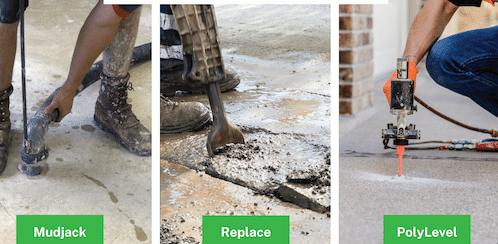
So when you’re frustrated from tripping on your uneven concrete one too many times and you’re ready to fix it, choose the option that makes the most sense for you and your family. And if you’re ready to lift and level your concrete with PolyLevel, call us for your free concrete repair estimate today!
Choosing the Right Solution for Your Oklahoma Home
When is Concrete Leveling a Good Option?
Concrete leveling is an excellent choice when you’re dealing with settled or uneven concrete slabs. Think about your sinking driveway, that cracked patio you’ve been avoiding, or the uneven sidewalk that’s become a trip hazard. These are all perfect candidates for a modern lifting technique. For Oklahoma homeowners, achieving a permanent fix is possible with PolyLevel. This method uses a specialized two-part foam that is engineered to expand right after it’s injected beneath the settled slab. It effectively lifts the concrete back into place without adding significant weight, which is crucial for our local soil conditions. This approach addresses the immediate problem and provides a long-lasting solution for your property’s concrete surfaces.
The Importance of a Professional Inspection
Before you commit to any solution, it’s essential to understand what’s causing the concrete to sink in the first place. Is it simple soil settlement, or could it be a sign of a more significant underlying issue with your foundation? This is where a professional assessment becomes invaluable. An expert has the specialized equipment and knowledge to diagnose the root cause correctly and recommend the right approach. Attempting a DIY fix or guessing the problem can lead to more issues down the road. A thorough inspection ensures the solution you choose will actually last. That’s why we always recommend you request a free inspection to get a clear picture of your property’s health.
How Vesta Foundation Solutions Can Help
Once our team has assessed your property, we can determine if our concrete leveling solution is the right fit. We use an advanced polyurethane foam injection called PolyLevel to lift and stabilize sinking slabs. This material is designed to expand to many times its original volume, which gently and precisely forces the sunken concrete back to its original position. The process is incredibly efficient. Within just a few minutes, the expanded polymer hardens and reaches over 90% of its final strength. This means you can walk or even drive on the repaired surface almost immediately, restoring safety and function to your home with a lasting foundation solution.
Frequently Asked Questions
How do I know if my concrete can be lifted instead of completely replaced? Most of the time, if your concrete slab is still in one piece and not severely crumbled or broken, it’s a great candidate for lifting. The best way to know for sure is to have a professional take a look. An expert can assess the condition of the concrete and, more importantly, diagnose the underlying soil issue to determine if our polyurethane foam injection will provide a stable, long-term solution for your property.
How long does the polyurethane foam leveling process actually take? The process is surprisingly fast. For a standard project like a driveway or patio section, the injection and lifting can often be completed in just a few hours. What’s even better is that the foam cures very quickly. You can typically walk on the repaired surface immediately, and it’s ready for heavy use, like parking a car, in less than half an hour after we finish.
Is the polyurethane foam waterproof? Yes, it is. The high-density polymer we use is a closed-cell material, which means it will not absorb water or allow it to pass through. This is a critical feature because it creates a stable, waterproof barrier between the soil and your concrete slab. This helps prevent the soil erosion and washout that likely caused the concrete to sink in the first place, making it a truly durable repair.
Will the repaired area look different from the rest of my concrete? Our goal is to make the repair as unnoticeable as possible. The injection process requires drilling a few small, dime-sized holes in the concrete. After we lift the slab, we patch these small holes with a cement mixture that we blend to match your existing concrete as closely as possible. The result is a far cleaner and less obvious repair compared to the large, mismatched patches left by older methods.
What happens during the professional inspection you offer? During our free inspection, one of our specialists will visit your home to thoroughly examine the affected concrete areas. We will identify the extent of the sinking, look for the root causes like poor drainage or soil settlement, and take measurements. Afterward, we will explain our findings, answer all of your questions, and provide a clear, detailed proposal on how we can best solve the problem for you.
Key Takeaways
- Look Beneath the Surface: Sinking concrete is a clear sign that the soil supporting it has become unstable. Addressing this underlying issue, often caused by soil settlement or water erosion, is the only way to achieve a permanent repair.
- Choose a Lightweight, Durable Repair: Modern polyurethane foam offers a superior solution because it lifts and stabilizes concrete without adding heavy materials to already weak soil. This creates a waterproof, long-lasting fix with minimal disruption.
- Start with a Professional Assessment: Before deciding on a repair, have an expert inspect your property. A professional diagnosis identifies the root cause of the problem, which is the first step toward choosing an effective, lasting solution for your home.
Related Articles
- Why Mudjacking Isn’t the Best Fix for Sunken Concrete | Foundation Repair & Basement Waterproofing
- Concrete Repair Options – Foundation Repair & Basement Waterproofing
- Polyurethane Concrete Raising: A Better Choice?
- Polylevel vs. Mudjacking | Foundation Repair & Basement Waterproofing
- PolyLevel® – Modern Concrete Leveling Without the Mess | Foundation Repair & Basement Waterproofing