Foundation problems do not wait for a convenient time, and neither should the repair. If you have noticed signs of foundation damage, schedule your free inspection with Vesta Foundation Solutions today to find out exactly what your home needs.
Foundation repair is one of those non-negotiable investments for your home. When your foundation is compromised, it impacts everything from structural safety to your property value. And let’s be honest, waiting only makes the problem more complex and expensive to fix. For many homeowners in Oklahoma and Arkansas, the real question isn’t if you should act, but how to handle the cost. That’s where understanding your options for foundation repair financing comes in. It’s the key to moving forward confidently and protecting your biggest asset without delay.
The good news is that several financing options exist to make foundation repair manageable. From in-house payment plans offered by your repair company to home equity products and government-backed loans, there is a path forward for nearly every budget. In this guide, we will walk through the most common foundation repair financing options, explain how each one works, and help you determine which approach makes the most sense for your situation.
Why You Shouldn’t Wait on Foundation Repair
Before exploring financing options, it is important to understand why acting quickly matters. Foundation damage is progressive. What starts as a minor crack or a slightly uneven floor can develop into a serious structural issue over time. Oklahoma’s expansive clay soils make this especially true in our region. As clay absorbs moisture, it swells and pushes against foundation walls. When it dries out, it shrinks and pulls away. This constant cycle creates ongoing stress on your foundation.
Delaying repairs often means:
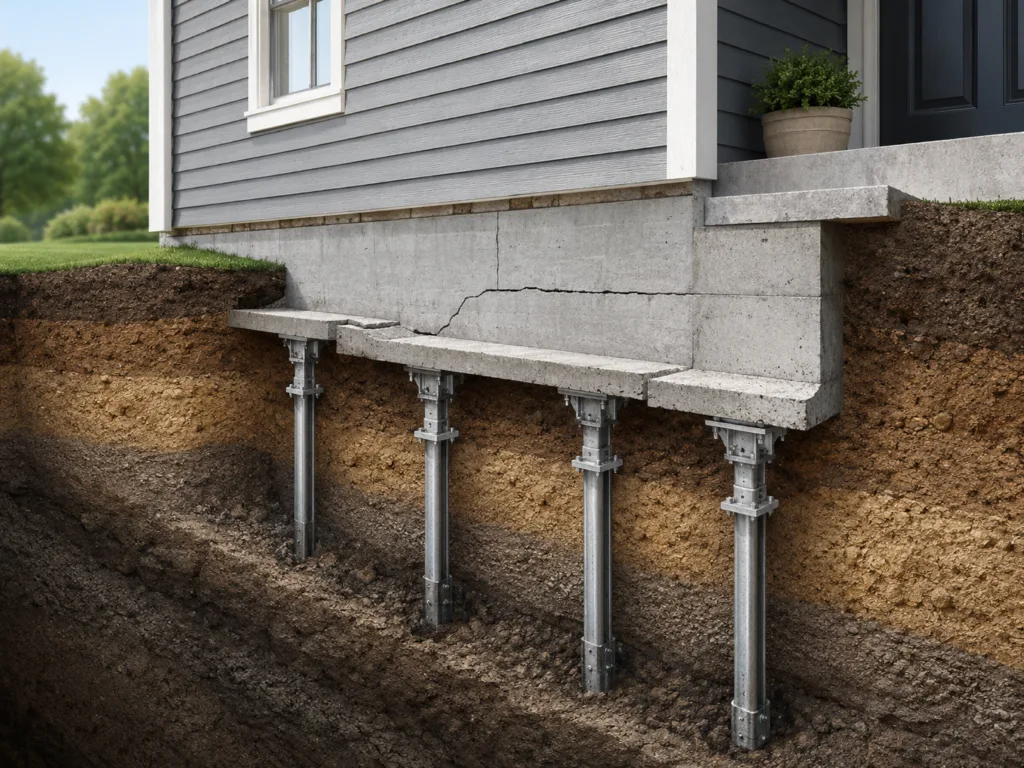
- More extensive work is needed later. A small settlement issue that could be addressed with a few piers today may require a larger system if left unchecked.
- Secondary damage develops. Foundation movement can lead to plumbing leaks, drywall cracks, sticking doors and windows, and basement waterproofing problems that add to the overall scope of work.
- Property value declines. Unresolved foundation issues are a red flag during home inspections and can significantly reduce your home’s market value or delay a sale.
Understanding these risks helps put the investment in perspective. Foundation repair is not just an expense; it is a way to protect the equity you have already built in your home.
The Rising Cost of Delay
When it comes to your home’s foundation, time is not on your side. Foundation issues are progressive, meaning they worsen the longer they are left unaddressed. A small crack or minor settlement might seem insignificant now, but it’s a sign of underlying instability. Over time, that small problem can require a much more extensive solution. What could be fixed with a straightforward foundation repair today might demand a more complex system down the road if the soil continues to shift and the damage spreads. Acting quickly not only contains the problem but also prevents it from escalating into a major structural crisis that affects your entire home.
Disclosure Laws When Selling Your Home
If you’re thinking about selling your home, a known foundation problem can create significant hurdles. Legally, you are required to disclose any known defects to potential buyers. Hiding the issue is not an option and can lead to serious legal consequences after the sale. This disclosure often makes buyers hesitant, leading to low offers or causing them to walk away entirely. By addressing the foundation problem before listing your property, you maintain control of the situation. You can ensure the work is done correctly and present your home with confidence, avoiding last-minute negotiations or a failed sale due to a bad inspection report.
Impact on Your Property’s Market Value
A compromised foundation directly impacts your home’s market value. During a pre-purchase inspection, any signs of foundation trouble are a major red flag for buyers and their lenders. Unresolved issues can drastically lower your property’s appraised value and make it difficult to sell. On the other hand, a professionally repaired foundation protects your investment. It shows potential buyers that the home is stable and has been well-maintained. Taking proactive steps to resolve foundation damage is one of the most effective ways to preserve your home’s equity. The first step is always understanding the full scope of the problem, which you can do by scheduling a free, no-obligation inspection.
Strategic Steps Before Seeking Financing
Get an Unbiased Opinion from a Structural Engineer
Before you start looking at financing, your first step is to get a clear and honest assessment of the situation. Some homeowners choose to hire a residential structural engineer to get an impartial report on the extent of the damage. An engineer’s role is to evaluate the structure and determine if a repair is necessary, and they can provide a detailed overview of your home’s condition. Alternatively, a trustworthy and experienced foundation repair company can provide a thorough evaluation. At Vesta, our specialists conduct a comprehensive inspection to identify the root cause of the problem and explain exactly what’s happening with your home. The most important thing is to have a professional opinion you can rely on before making any decisions. You can schedule a free inspection with one of our experts to get a complete picture of your home’s needs.
Balancing Urgency with Financial Planning
Understanding the progressive nature of foundation issues is key to smart financial planning. What seems like a small crack today can evolve due to the constant pressure from Oklahoma’s expansive clay soil, potentially leading to more extensive foundation repair down the road. This ongoing movement can also cause secondary issues, such as sticking doors and windows, sloped floors, or even plumbing problems. While it might feel tempting to wait for a better financial moment, delaying the work often allows the problem to grow. By addressing the root cause now, even if it involves financing, you are making a strategic decision to protect your home’s value and prevent the need for more complex and widespread repairs later on.
Ask Your Contractor About In-House Payment Plans
One of the most accessible financing options is a payment plan offered directly by your foundation repair provider. Many reputable companies understand that foundation work is an unexpected expense for most homeowners, and they offer structured plans to help spread the cost over time.
In-house financing typically offers several advantages:
- Convenient application process. You can often discuss financing options during your inspection appointment, eliminating the need to apply separately through a bank or lender.
- Flexible qualification. Because the financing is managed by the repair company or their financing partner, qualification requirements may be more accommodating than traditional bank loans.
- Quick approval. Many in-house plans can be set up the same day as your inspection, so there is no delay in scheduling your repair.
- No collateral required. Unlike home equity products, in-house payment plans typically do not use your home as collateral.
At Vesta Foundation Solutions, we offer flexible financing options because we believe foundation problems should not go unrepaired due to budget concerns. During your free inspection, our team will walk you through the available plans and help you find a payment structure that fits your situation.
Understanding Your Options
We understand that foundation repair is a significant investment in your home’s long-term health and safety. That’s why many professional repair companies, including our team at Vesta, partner with lenders to provide accessible financing. We want to ensure you have flexible options so you can protect your property without delay. The good news is that several paths exist to make the process manageable, from specialized loans to structured payment plans. When you speak with a foundation specialist, they can walk you through the choices available, helping you find a solution that aligns with your circumstances and allows you to move forward with confidence.
“Same-as-Cash” Loans
You’ve likely seen “same-as-cash” offers for other large purchases, and this option is also available for home repairs through lending partners. These loans typically feature a 0% interest promotional period, giving you a window of time to pay off the balance without any interest charges. This is an excellent choice if you can pay off the loan within that timeframe, as it allows you to complete the necessary foundation repair work right away. It provides the breathing room to get the job done immediately, securing your home’s structural integrity while you arrange your finances without the added pressure of accumulating interest.
Deferred Payment Plans
Sometimes, the most critical factor is getting the repair started now, even if you need a few months before payments can begin. Deferred payment plans are designed for exactly this situation. Offered through lending partners, these plans allow you to schedule and complete the work right away while postponing your first payment for a set period. This option is incredibly helpful for managing your cash flow, as it separates the timing of the repair from the timing of the payments. It ensures an urgent problem, like a settling foundation or a damp crawl space, doesn’t have to wait and potentially worsen.
Reduced-Interest Loans
For more extensive projects, a reduced-interest loan can offer a predictable and manageable payment schedule over a longer term. These specialized home improvement loans generally come with a fixed interest rate, so your monthly payment remains the same for the life of the loan. With terms that can extend for several years, you can spread out the investment into smaller payments that fit more comfortably into your household budget. This structure provides stability and clarity, allowing you to address significant basement waterproofing or foundation issues comprehensively without feeling financially overwhelmed. It’s a straightforward approach to financing the complete, long-term solution your home deserves.
Completing Repairs in Stages
If the full scope of a project feels like too much at once, you might wonder if the work can be broken down into smaller, more manageable phases. In some cases, this can be a viable strategy, but it’s an approach that requires careful consideration and expert guidance. While staging the work can make the initial investment smaller, it’s important to understand the potential downsides. Foundation problems are progressive, and a partial fix may not stop underlying issues from worsening, which could lead to more complex and involved work later on. The best first step is to discuss this possibility during a free inspection to determine if it’s a safe and effective plan for your property.
Using Your Home’s Equity for Foundation Repair
If you have built up equity in your home, a home equity loan or home equity line of credit (HELOC) can be an effective way to finance foundation repairs. These products use your home’s value as collateral, which often means more favorable interest rates compared to unsecured lending options.
How a Home Equity Loan Works
A home equity loan provides a lump sum that you repay over a fixed term with a fixed interest rate. This predictability makes budgeting straightforward. Home equity loans work well for foundation repair because you typically know the full project scope after your inspection, so you can borrow the specific amount needed.
How a Home Equity Line of Credit (HELOC) Works
A HELOC works more like a credit card. You receive a credit line you can draw from as needed, and you only pay interest on the amount you use. This flexibility can be helpful if your foundation repair is part of a larger home improvement plan, or if you want a financial cushion for any unexpected findings during the repair process.
Things to consider with home equity products:
- Approval typically takes two to four weeks due to the appraisal and underwriting process
- Your home serves as collateral, so timely payments are essential
- Interest may be tax-deductible in some cases (consult your tax advisor for guidance specific to your situation)
- You need sufficient equity in your home to qualify
Contact your bank or credit union to explore current home equity rates in your area. Having a pre-approval in hand before your foundation inspection can help you move forward quickly once you know the scope of work.
How Cash-Out Refinancing Works
Another way to tap into your home’s equity is through a cash-out refinance. With this option, you take out a new mortgage that’s larger than what you currently owe. The difference between the two loans is given to you as a lump sum of cash, which you can then use for major home improvements. This makes it a practical choice for homeowners who need to fund a comprehensive foundation repair project. One of the main benefits is that you can roll the expense into a single, streamlined mortgage payment. However, since this involves taking on a new, larger loan, it’s a significant financial step. You’ll want to speak with a mortgage lender to fully understand the long-term implications and see if it’s the right fit for you.
Should You Use a Personal Loan for Foundation Repair?
A personal loan from a bank, credit union, or online lender is another common way to finance foundation repair. Personal loans are unsecured, meaning they do not require your home as collateral.
Key features of personal loans for foundation repair:
- Fixed interest rates and monthly payments make it easy to plan your budget
- Approval is typically faster than home equity products, often within one to three business days
- No home appraisal required, which simplifies and speeds up the process
- Loan amounts vary by lender, but many offer amounts sufficient for common foundation repair projects
Personal loans are a strong option if you want to keep your home equity untouched, prefer a faster approval timeline, or do not have enough equity to qualify for a home equity product.
When comparing personal loan offers, pay attention to the interest rate, loan term, origination fees, and any prepayment penalties. Getting quotes from multiple lenders helps you find the most competitive terms.
The Benefit of Receiving Funds Directly
Some lenders, especially those that focus on home improvement financing, deposit the loan funds directly into your bank account. This approach puts you in the driver’s seat of your project. Instead of the lender paying the contractor on your behalf, you manage the payments according to the schedule you’ve agreed upon. This is a significant benefit, as it gives you complete control over the financial side of your foundation repair. You can release funds as different stages of the work are completed to your satisfaction, ensuring the project stays on track and meets your standards. This direct funding model empowers you as the homeowner, providing transparency and peace of mind from start to finish.
Understanding Loan Terms and Interest Rates
When you start looking at personal loan offers, it’s important to look at the whole picture, not just the monthly payment. Your credit history and steady employment will heavily influence the interest rates you are offered. To find the best option, you’ll want to compare the annual percentage rate (APR), the length of the loan (the term), and any potential origination fees or prepayment penalties. It’s also a smart move to make sure you borrow enough to cover the entire project, including any related costs like restoring your landscaping afterward. Getting a detailed proposal from a professional inspection will give you a clear understanding of the total amount you’ll need to secure.
Government-Backed Loans for Home Repairs
Several government programs can help Oklahoma homeowners pay for essential home repairs, including foundation work.
FHA Title I Loans: What You Need to Know
The Federal Housing Administration’s Title I program offers loans specifically for home improvements, including structural repairs. These loans are issued by approved lenders and insured by the federal government, which can make qualification easier for borrowers who might not meet conventional lending standards.
Title I loans do not require equity in your home, making them accessible to homeowners who have recently purchased their property or who have limited equity built up.
USDA Loans for Rural Homeowners
If your home is in an eligible rural area of Oklahoma or Arkansas, the USDA offers repair loan and grant programs for qualifying homeowners. These programs are designed to help rural homeowners address health and safety concerns, and structural foundation issues can fall within that scope.
The Section 504 Home Repair Program
For homeowners in rural parts of Oklahoma, the USDA offers a program that can be a huge help for critical repairs. The Section 504 Home Repair program provides loans and grants to help very low-income homeowners address health and safety issues in their homes. Because a failing foundation is a significant safety concern, this type of structural work often qualifies for funding. The program can provide loans with favorable terms, and for homeowners aged 62 or older who meet the income requirements, grants are also available. It is a valuable resource to explore if you need to make your home safe and secure.
Finding State and Local Assistance Programs
Some Oklahoma municipalities and housing agencies offer home repair grants or low-interest loan programs for qualifying homeowners. Eligibility often depends on factors like household income, location, and the nature of the repair. Check with your local housing authority or visit the HUD website to explore what may be available in your area.
Will Homeowner’s Insurance Cover Foundation Repair?
A common question homeowners ask is whether their insurance policy will cover foundation repair. In most cases, standard homeowner’s insurance does not cover foundation damage caused by settling, soil movement, or normal wear and aging. These are considered maintenance issues rather than sudden events.
However, there are exceptions. If your foundation damage was caused by a sudden, covered event, such as a burst plumbing pipe or a fallen tree, your policy may provide coverage for the resulting damage. The key distinction is between gradual deterioration and sudden, accidental damage.
If you suspect your foundation damage may be related to a covered event:
- Review your policy’s coverage details and exclusions
- Document the damage thoroughly with photos and notes
- Contact your insurance agent to discuss your specific situation
- Get a professional foundation inspection to determine the root cause
For a deeper look at this topic, read our guide on whether homeowner’s insurance covers foundation repair.
Using a Credit Card: Is It a Good Idea?
While not typically the first choice for larger projects, a credit card can be a viable option for smaller foundation repairs, especially if you have a card with a promotional low or zero-percent interest rate. If you choose this route, plan to pay off the balance within the promotional period to avoid high interest charges.
Credit cards can also serve as a supplemental funding source. For example, you might finance the majority of your repair through an in-house payment plan or personal loan and use a credit card for a smaller remaining portion.

Other Financing Avenues to Consider
Beyond traditional bank loans and in-house financing, a few other paths can help you manage the investment in your home’s structural integrity. These options might not be the first ones that come to mind, but for some homeowners, they provide the perfect solution for getting necessary repairs done without delay. While they require careful consideration, they can be effective ways to protect your property. Let’s look at one of the most personal financing avenues: turning to family for support.
Borrowing from a Relative
When facing an urgent need for foundation work, borrowing from a relative can be a practical and accessible option. This approach often comes with more flexible terms than a traditional loan; a family member may be willing to agree to a lower interest rate or a more relaxed repayment schedule. The process is also significantly faster, allowing you to get the funds you need quickly to address foundation issues before they escalate. This can be a huge relief when you’ve received a professional diagnosis and want to schedule the repair promptly. However, it’s crucial to handle this arrangement with care to protect your relationship. Treat it like a formal agreement by putting the terms in writing, including the loan amount and a clear repayment plan. This simple step ensures everyone is on the same page and prevents future misunderstandings.
How to Choose the Right Foundation Repair Financing for You
Selecting the best foundation repair payment plan or financing method depends on your specific circumstances. Here are the key factors to consider:
| Factor | What to Consider |
|---|---|
| Project scope | A larger project may benefit from a home equity loan or in-house financing, while a smaller repair might work well with a personal loan or credit card |
| Timeline | In-house payment plans and personal loans typically have faster approval than home equity products |
| Collateral | Home equity loans require your home as collateral; personal loans and in-house plans usually do not |
| Repayment terms | Consider what monthly payment fits your budget and how long you want to take to pay it off |
| Interest rates | Compare rates from multiple sources before committing to any financing option |
| Qualification | Some options have more flexible requirements than others; in-house plans and FHA Title I loans may be more accessible |
There is no single best financing option for every homeowner. The right choice depends on your equity position, credit profile, budget, and how quickly you need to move forward with the repair.
Your Next Steps for Foundation Repair Financing
Getting your foundation repaired does not have to be complicated. Here is a straightforward process to follow:
- Schedule a free inspection. Contact Vesta Foundation Solutions to have a foundation expert evaluate your home at no charge. You will receive a detailed assessment and repair recommendation.
- Understand the scope of your repair. Once you know what your home needs, you can determine the right financing approach. Your Vesta inspector will walk you through the recommended solution and answer any questions about the process.
- Explore your financing options. Review the options covered in this guide and determine which one aligns best with your situation. Ask Vesta about our flexible financing plans during your appointment.
- Get pre-approved if applicable. For home equity loans or personal loans, getting pre-approved before scheduling your repair helps avoid delays once the project is ready to begin.
- Move forward with confidence. With your financing in place, you can proceed with repairs knowing your home is being protected by the right solution.
Frequently Asked Questions About Foundation Repair Financing
What is the most common way to finance foundation repair?
In-house payment plans offered by foundation repair companies are among the most popular options because they are convenient and do not require a separate lending application. Home equity loans and personal loans are also widely used.
Does homeowner’s insurance cover foundation repair?
In most cases, standard homeowner’s insurance does not cover foundation damage caused by settling or soil movement. If the damage resulted from a sudden, covered event like a burst pipe, your policy may provide some coverage. Learn more about insurance and foundation repair.
Can I finance foundation repair with less-than-perfect credit?
Yes, there are options available. Some foundation repair companies offer in-house financing with flexible qualification requirements. FHA Title I loans are another option, as they are federally insured and may have more accommodating credit standards. Discuss your situation with your repair provider to explore what is available.
Should I get multiple quotes before choosing how to finance?
It is always smart to compare options. Get assessments from reputable foundation repair companies and compare financing terms from different sources. At Vesta Foundation Solutions, we provide free inspections and transparent recommendations so you can make the best decision for your home.
How quickly can financing be arranged?
In-house payment plans can often be set up the same day as your inspection. Personal loans may take one to three business days for approval. Home equity loans typically require two to four weeks due to the appraisal and underwriting process.
Will foundation repair increase my home’s value?
Addressing foundation issues protects and can enhance your home’s value. A structurally sound foundation gives buyers confidence, and completed repairs with a transferable warranty remove a major concern that often arises during home inspections. Learn more in our foundation settlement repair guide.
Ready to Secure Your Oklahoma Home?
Foundation problems will not resolve on their own, and the longer you wait, the more involved the repair can become. The right financing option makes it possible to address foundation issues now and protect your home for years to come.
Vesta Foundation Solutions offers free inspections and flexible financing so you can get the foundation repair your home needs without delay. Our team serves homeowners throughout Oklahoma and Arkansas with expert assessments, proven repair solutions, and payment options designed to work with your budget.
Schedule your free foundation inspection today and take the first step toward a stronger, safer home.
Key Takeaways
- Act Quickly to Protect Your Investment: Foundation damage gets worse over time, so addressing it now is a strategic decision. Prompt repairs prevent the problem from escalating, which protects your home’s value and avoids more complex work later.
- You Have Several Financing Paths: You can manage the repair through various options, including convenient in-house payment plans, home equity products like loans or lines of credit, and unsecured personal loans.
- A Professional Inspection Is Your First Step: Before deciding on financing, get a clear diagnosis of the problem. A thorough inspection gives you a detailed repair plan, which is the information you need to choose the right solution for your home and budget.
Related Articles
- Financing | Foundation Repair & Basement Waterproofing
- Repair Foundation Cracks: A Complete Cost Breakdown
- Understanding the Financial Cost of Home Damage – Foundation Repair & Basement Waterproofing
- 5 Tips to Find a Trusted Foundation Company
- Concrete Repair Options – Foundation Repair & Basement Waterproofing