
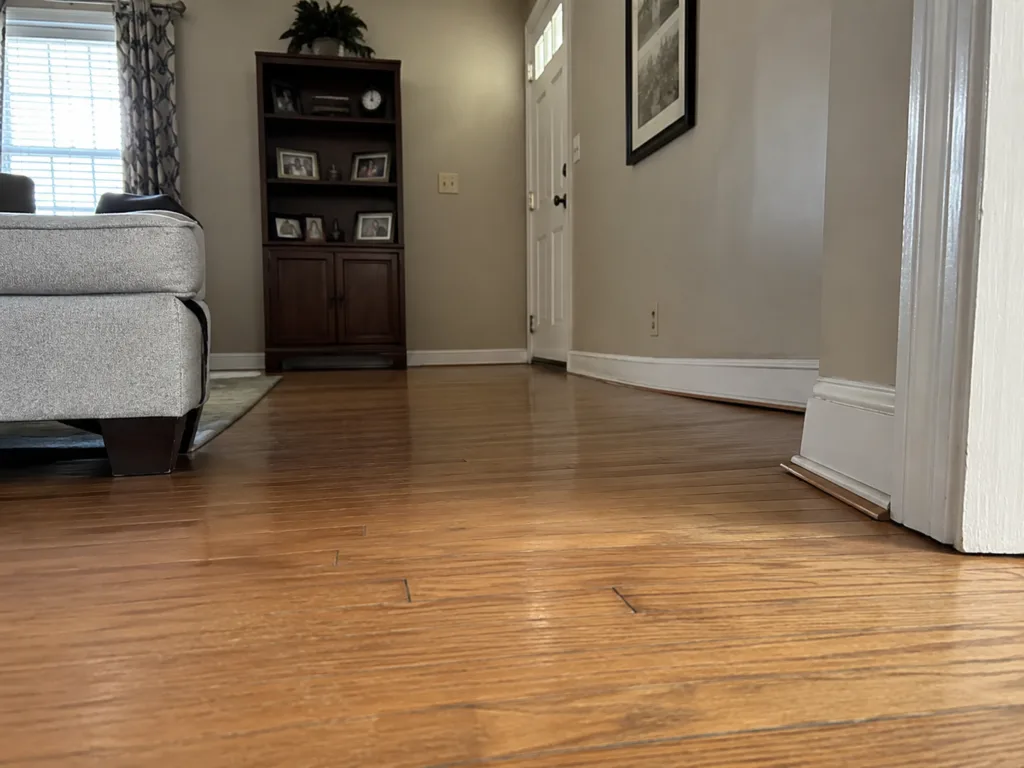
Have you noticed gaps between your floors and baseboards, uneven surfaces, or a noticeable bounce when you walk across a room? These changes may seem minor, but they can indicate serious problems beneath your home. Recognizing the early signs of sagging floors can help you identify weakened floor supports, foundation settlement, or moisture damage before the problems worsen. At Vesta Foundation Solutions, we help homeowners in Oklahoma and Arkansas identify structural concerns and restore stability with professional foundation and crawl space repairs. If your floors feel uneven or unstable, schedule your FREE inspection with Vesta today!
What Are the Common Signs of Sagging Floors?
Your home may show several warning signs when its floor support system begins to weaken.
- Uneven or sloping floors: Floors may tilt toward one side of a room or dip in certain areas.
- Bouncy floors: Weak floor joists or support beams may cause noticeable movement when someone walks across the room.
- Gaps near baseboards: As floors settle, spaces may develop between the flooring and walls.
- Cracks in interior walls: Structural movement can create cracks in drywall, especially around doors and windows.
- Sticking doors: Shifting floors and walls may affect door frames and prevent doors from closing properly.
These warning signs often indicate problems with the structural components beneath your home.
What Causes Sagging Floors?
Several conditions can weaken your home’s floor support system, particularly in homes with crawl spaces.
Settling Crawl Space Supports
Support columns help distribute your home’s weight across the crawl space.
Over time, unstable soil may allow these columns to sink or shift. As the supports settle, the beams and floors above them can begin to sag.
Improperly Spaced Support Columns
Some crawl spaces lack sufficient support beneath their floor beams.
When builders place support columns too far apart, the beams must carry more weight across longer distances. This can cause bending, sagging, and uneven floors.
Moisture Damage and Wood Rot
Excess moisture in a crawl space can damage wooden beams, floor joists, and support posts.
As wood absorbs moisture, it may weaken or develop rot, reducing its ability to support the structure above.
Without proper moisture control, these problems can continue to worsen.
Foundation Settlement
Oklahoma’s expansive clay soil expands during wet conditions and shrinks during dry periods.
These changes can contribute to foundation movement and affect the stability of your home’s floor system.
Can Sagging Floors Get Worse Over Time?
Yes. When structural supports continue to settle or deteriorate, floors may become increasingly uneven.
Homeowners may also notice additional drywall cracks, sticking doors, or larger gaps around baseboards.
Ignoring these changes can allow the underlying problem to progress and increase the complexity of future repairs.
A professional inspection can help identify the cause before more extensive damage develops.
How Does Vesta Foundation Solutions Repair Sagging Floors?
At Vesta Foundation Solutions, we evaluate the condition of your crawl space, support beams, and foundation before recommending a repair plan.
Depending on the problem, our team may recommend installing crawl space support posts to reinforce weakened floor systems.
Installing Adjustable Steel Supports
Our specialists can install engineered steel support posts beneath affected beams to provide additional structural support.
These adjustable supports help stabilize weakened floor systems and may allow technicians to lift sagging areas toward their original position when conditions permit.
Addressing Crawl Space Moisture
If moisture contributes to deteriorating wooden supports, we may also recommend crawl space repair and moisture control solutions.
Addressing excess moisture can help protect structural materials from additional deterioration.
Reinforcing the Floor Support System
When existing beams or joists lack adequate support, our team can recommend reinforcement or additional support locations based on the home’s structural needs.
The goal is to stabilize the affected areas and reduce further movement.
When Should You Schedule a Professional Inspection?
You should schedule an inspection when you notice persistent floor movement, visible sagging, gaps along baseboards, or other signs of structural problems.
During an inspection, a foundation specialist evaluates the affected areas, identifies potential causes, and explains the available repair options.
An early assessment can help you understand your home’s condition and determine the appropriate next steps.
Restore Your Home’s Stability with Vesta Foundation Solutions
Recognizing the signs of sagging floors early can help you address weakened supports, moisture damage, and foundation settlement before they create additional problems. Whether your floors bounce when you walk, slope toward one side, or develop gaps near the walls, identifying the underlying cause is essential. At Vesta Foundation Solutions, we provide professional crawl space and foundation repair solutions to help homeowners restore structural stability. Contact Vesta today to schedule your FREE inspection and take the first step toward stronger, more stable floors!
Frequently Asked Questions
Are slightly bouncy or uneven floors a serious problem?
Bouncy or uneven floors can indicate weakened joists, settling supports, or foundation movement. A professional inspection can determine whether the problem requires structural repairs.
Can a crawl space cause floors to sag?
Yes. Settling support columns, improperly spaced beams, and moisture-damaged wood can weaken a crawl space’s support system and cause floors to sag.
What happens if I ignore sagging floors?
The underlying structural problem may worsen, causing additional floor movement, drywall cracks, sticking doors, and more extensive damage.
How do professionals fix sagging floors?
Depending on the cause, professionals may install adjustable steel support posts, reinforce weakened beams, or address moisture problems in the crawl space.
What happens during a foundation inspection?
A specialist examines the foundation and crawl space, identifies potential structural problems, and recommends appropriate repairs based on the home’s condition.