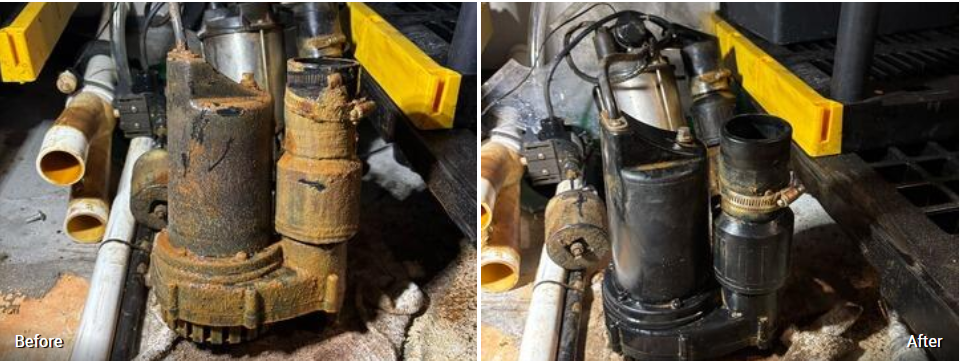
That feeling of dread when heavy rain starts to fall is something no homeowner wants. You find yourself wondering if your basement will stay dry this time. A sump pump is your home’s first line of defense, working silently in the corner to prevent a watery disaster. But trusting this little device is easier when you understand its job. This guide is here to pull back the curtain on this essential piece of equipment. We’ll explain exactly how does a sump pump work, what the different types are, and how to choose the right one to protect your foundation and give you peace of mind during the next Oklahoma downpour.
Key Takeaways
- A sump pump is an automated defense system: It sits in a pit in your basement, detects rising groundwater, and pumps it safely away from your foundation before it can cause damage.
- Regular maintenance is key to reliability: Simple checks, like clearing debris from the pit and testing the float switch, ensure your pump works when needed; a battery backup is also critical for protection during power outages.
- Know the pump’s limitations: A sump pump manages water entry, but it doesn’t stop it at the source. If you still have dampness, you may need a complete waterproofing system to fix underlying foundation issues.
What Is a Sump Pump and Why Does Your Basement Need One?
If you’ve ever worried about water in your basement, a sump pump is a solution you need to know about. Think of it as a small, automated bodyguard for your home’s foundation. In simple terms, a sump pump is a submersible device installed in a specially constructed pit, called a sump pit, in the lowest part of your basement or crawl space. Its main job is to pump out water that collects in the pit, sending it safely away from your house. This prevents groundwater from seeping in and causing a flood, keeping your lower level dry and protected.
Your First Line of Defense Against Flooding
During Oklahoma’s heavy rains or when the ground becomes saturated, water pressure builds up against your foundation. A sump pump is your home’s key defense against this pressure, preventing water from getting in. By actively removing water before it can accumulate, it protects your home from much bigger problems. A dry basement means you don’t have to worry about water damage to your belongings, structural issues like foundation cracks, or the growth of unhealthy mold and mildew. It’s a critical component of a complete basement waterproofing strategy that safeguards your home’s value and your family’s health.
Clearing Up Common Sump Pump Myths
A couple of common myths can cause confusion for homeowners. The first is that sump pumps are maintenance-free. While they are reliable, they need regular check-ups to ensure they’ll work when you need them most. Another misconception is that all sump pumps are the same. In reality, they come in different sizes and power levels, and choosing the right one depends on your home’s specific needs. Not all pumps can handle the same volume of water. Understanding these differences is key to getting the right protection, which is why getting a professional opinion during a free inspection can help you make the best choice for your property.
How Does a Sump Pump Work?
A sump pump might seem complex, but its job is simple: to act as your home’s personal bodyguard against basement flooding. It works automatically to detect and remove groundwater before it has a chance to cause problems for your foundation. The whole process happens in three key stages: sensing rising water, pumping it out, and safely sending it on its way. This clever system is your first line of defense, especially during Oklahoma’s heavy rains, working behind the scenes to keep your home dry and protected.
How It Knows When to Turn On
Your sump pump sits inside a basin, or pit, which is installed in the lowest part of your basement or crawl space. As groundwater levels rise around your foundation, this pit starts to fill with water. Most sump pumps have a float switch, which works a lot like the float inside your toilet tank. When the water lifts the float to a certain level, it triggers the pump to turn on. Some newer models use a pressure sensor instead, but the idea is the same. It’s a completely automatic system designed to react to rising water so you don’t have to worry every time it storms.
The Pumping Process: Getting Water Out
Once the float switch gives the signal, the pump’s motor springs into action. This motor powers an impeller, a small part that spins rapidly, much like a fan. The spinning impeller creates pressure that forces the water from the pit up into a discharge pipe. This process efficiently moves a large volume of water out of the sump basin and away from your foundation. It’s the core function of any effective basement waterproofing system, working tirelessly to keep the area dry. The pump will continue to run until the float switch drops back down, signaling that the water level is safely back to normal and shutting the system off until it’s needed again.
Where the Water Goes: The Discharge System
The discharge pipe is the exit route that carries water from your basement up and out of your home. It’s crucial that this pipe extends far enough from your foundation, usually to a storm drain or a sloped part of your yard, so the water can’t just seep back toward your house. To prevent this, the system includes a check valve. Think of it as a one-way gate inside the pipe. It allows water to be pushed out but automatically closes to stop any from flowing back into the pit once the pump turns off. A properly installed discharge system is just as important as the pump itself, which is why you should always request a free inspection to ensure your entire system is working correctly.
What Are the Main Types of Sump Pumps?
When you start looking at sump pumps, you’ll quickly realize they aren’t all the same. The right one for your home depends on your basement’s specific needs, your budget, and even how much noise you’re willing to tolerate. Think of it like choosing any other major home appliance; different models are built for different jobs. Making an informed choice is your first step toward picking a pump that will reliably keep your basement dry and give you lasting peace of mind.
Most sump pump systems fall into one of three categories: submersible pumps, pedestal pumps, and battery backup systems. Each type has a unique design with its own set of pros and cons. A submersible pump sits quietly inside the sump pit, while a pedestal pump keeps its motor above the water. A battery backup, on the other hand, isn’t a primary pump but rather a crucial safety net that ensures your basement stays protected even when the power goes out. Understanding how each one works will help you decide which setup is the perfect fit for protecting your home from water damage.
Submersible Pumps: The Undercover Option
As the name suggests, a submersible pump is designed to sit directly inside the sump pit, fully submerged in water. This design has a major advantage: it’s much quieter during operation since the water helps muffle the motor’s sound. Because they are sealed and protected from debris, they also tend to have a longer lifespan. Submersible pumps are typically more powerful and can move larger volumes of water, making them a great choice for homes in areas with heavy rainfall or high water tables. The main trade-off is that they can be more expensive and slightly harder to access for maintenance, but for many homeowners, the quiet performance and robust power make it the preferred option.
Pedestal Pumps: The Above-Ground Choice
A pedestal pump works a bit differently. Its motor sits on a pedestal above the sump pit, out of the water, while a long pipe extends down into the pit to draw water out. This design makes them very easy to access for repairs and maintenance, since you don’t have to pull the entire unit out of the pit. Pedestal pumps are also generally less expensive than their submersible counterparts, which can be a deciding factor if you’re on a tight budget. The downside? Because the motor is exposed, they tend to be noticeably louder. If your sump pit is located in a finished basement or near a living area, the noise might be a significant drawback.
Battery Backups: Your Plan B for Power Outages
A battery backup system is your home’s best defense when the power goes out during a storm, which is exactly when you need your sump pump the most. These systems are essential for ensuring your pump can operate during power outages, kicking in automatically when the main power fails. A backup system can be a separate, smaller pump that sits next to your primary one or a battery pack connected directly to your main pump. It provides hours of protection, preventing a water-logged disaster when you’re most vulnerable. Including a battery backup is a critical part of any complete basement waterproofing strategy, giving you total confidence that your home is protected no matter what.
The Key Parts of a Sump Pump System
A sump pump might seem like a single device, but it’s actually a coordinated system with several key parts working together to protect your home. Understanding how these components function can help you spot potential issues before they turn into a basement flood. Think of it as knowing the basics of your car; you don’t have to be a mechanic, but knowing what the battery does is pretty helpful. Each part has a specific job, from collecting the water to pumping it far away from your foundation. When every piece is in good working order, you can have peace of mind, even during the heaviest Oklahoma downpours. Let’s look at the main players that make up your home’s defense against water damage.
The Sump Pit: Where It All Begins
The sump pit, also called a sump basin, is the starting point for the entire process. It’s a specially designed basin installed in the lowest part of your basement or crawl space, acting as a collection point for excess water. As groundwater levels rise around your foundation, the water is directed into this pit. A properly installed pit is essential for an effective basement waterproofing system. It’s the reservoir that holds the water until the pump is ready to kick on and do its job. Without the pit, water would have nowhere to gather, leaving it to seep into your home.
The Float Switch: The On/Off Trigger
The float switch is the brain of the operation. It’s a simple but crucial sensor that tells the pump when to turn on and off. Much like the float in your toilet tank, this switch rises with the water level in the sump pit. Once the water reaches a preset level, the float activates the pump. As the pump expels water and the level drops, the float lowers and shuts the pump off. This automatic function is what makes the system so reliable. A stuck or malfunctioning float switch is one of the most common reasons for pump failure, which is why checking it regularly is a key part of maintenance.
The Discharge Pipe & Check Valve: The Exit Route
Once the pump is activated, it needs a way to get the water out of your house. That’s the job of the discharge pipe. This pipe carries the water from the sump pit up and out of your home, releasing it a safe distance away from your foundation. To prevent the water from flowing back into the pit when the pump shuts off, a special one-way valve called a check valve is installed on the pipe. This valve ensures that water only moves in one direction: out. It’s a small but mighty component that prevents the pump from having to pump the same water twice, saving wear and tear on the motor.
The Motor & Impeller: The Heart of the Pump
The motor and impeller are the powerhouse of your sump pump system. The electric motor provides the energy needed to run the pump. It drives a spinning, fan-like component called an impeller. As the impeller rotates at high speed, it uses centrifugal force to push water towards the sides of the pipe, creating a low-pressure area at its center. This action forces water from the pit into the pipe and sends it on its way out. The motor’s power, measured in horsepower, determines how quickly and forcefully the pump can move water, making it the true workhorse that keeps your basement dry.
How to Choose the Right Sump Pump for Your Home
Picking a sump pump isn’t a one-size-fits-all decision. The right one for your home depends on several factors, and getting this choice right is a huge step in protecting your home from water damage. A pump that’s too weak won’t keep up during a heavy storm, while one that’s too powerful might cycle on and off too frequently, wearing out the motor. It’s all about matching the pump’s capabilities to your home’s specific needs. Let’s walk through the key things to consider so you can feel confident in your choice.
Finding the Right Power and Size
A sump pump’s power is measured in horsepower (HP), with common options like 1/3 or 1/2 HP. For most homes in areas with average rainfall, a 1/3 HP pump is usually sufficient. However, if your home is in a low-lying area or has a high water table, a 1/2 HP or stronger pump is a safer bet. The goal is to choose a motor that can handle the volume of water your home receives without being overworked. A properly sized pump is a critical part of a complete basement waterproofing strategy.
Understanding Pumping Height (Head Pressure)
“Head pressure” might sound technical, but it’s just the vertical distance the pump has to push water to get it out of your basement. You measure from the pump at the bottom of the pit to where the discharge pipe exits your house. Every pump has a maximum head pressure rating. If your home requires the water to be lifted 10 feet, but your pump is only rated for 8 feet, it won’t be able to do its job. The water will struggle to get out, potentially flowing right back into the pit.
Automatic vs. Manual: Which Is Better for You?
Sump pumps come in two main types: manual and automatic. A manual pump requires you to turn it on and off yourself, while an automatic pump uses a float switch to turn on when water levels rise. While a manual pump might seem simpler, it’s only effective if you’re home to operate it during a storm. For this reason, an automatic pump is almost always the better choice for homeowners. It provides peace of mind, kicking into action exactly when it’s needed. For a truly reliable system, you can have an expert assess your needs during a free inspection.
How to Maintain Your Sump Pump
A sump pump is one of those things you don’t think about until you desperately need it. A little bit of regular maintenance can be the difference between a dry basement and a major headache. Think of it like changing the oil in your car; it’s a simple step that prevents much bigger problems. Taking a few minutes every few months to check on your system ensures it will be ready when the next storm rolls through. If you’re ever unsure about your pump’s condition, you can always schedule a free inspection for a professional opinion.
Your Simple Sump Pump Maintenance Checklist
Keeping your sump pump in top shape doesn’t require a lot of time. A quick check every few months can make all the difference. First, head down to your basement and make sure the pump is plugged into a working ground fault circuit interrupter (GFCI) outlet. Sometimes these outlets can trip, cutting power to the pump without you realizing it. Next, confirm the pump is sitting level and upright in the sump pit. If it’s tilted, the float switch might not work correctly, which means your pump won’t turn on when it needs to. These simple steps are your first line of defense.
Quick Cleaning and Upkeep Tips
Debris is a sump pump’s worst enemy. Dirt, gravel, and other gunk can get into the sump pit and clog the pump, preventing it from working. Take a moment to clear out any visible debris from the pit. It’s especially important to make sure nothing is blocking the float or the arm switch, as this is what tells the pump to turn on. For submersible pumps, wipe down the grate on the bottom to clear away small stones. To test it, slowly pour a bucket of water into the pit. The pump should start automatically, drain the water quickly, and then shut off.
Getting Ready for Storm Season
Oklahoma storms can bring heavy rain and power outages, a combination that puts any basement at risk. Before storm season arrives, it’s the perfect time to double-check your system. Beyond the usual cleaning and testing, consider what happens if the power goes out. A standard sump pump won’t run without electricity, leaving your basement vulnerable. This is why a battery backup system is a smart investment. It can keep your pump running for hours during an outage, giving you peace of mind. A reliable sump pump is a key part of a complete basement waterproofing strategy, ensuring you’re protected no matter the weather.
Common Sump Pump Problems to Watch For
Even the most reliable sump pump can run into issues. Knowing what to look for can help you catch a small problem before it turns into a major flood. Here are a few of the most common sump pump troubles homeowners face.
When the Float Switch Fails
Your sump pump’s float switch is its trigger. As water fills the pit, the float rises, and once it hits a certain level, it signals the pump to turn on. It’s a simple but crucial mechanism, and it’s often the first part to cause trouble. The switch can get stuck or tangled, preventing it from rising with the water. If this happens, your pump won’t know it’s time to get to work, leaving your basement vulnerable. On the flip side, it can also get stuck in the “on” position, causing the motor to run nonstop and burn itself out. Since most sump pumps have a lifespan of about 10 years, an aging unit is more likely to experience this kind of mechanical failure.
Clogs, Power Outages, and Other Issues
Beyond the switch, a few other common culprits can stop your sump pump in its tracks. Over time, dirt, gravel, and other debris can find their way into the sump pit, clogging the pump’s intake screen or even the discharge line. This is why a quick check-up and cleaning are so important. Another major issue is a power outage. Most sump pumps run on electricity, so if a storm knocks out your power, your pump goes down too, right when you need it most. This is where having a battery backup system can be a real lifesaver. Regular maintenance and inspections can help you catch these problems before they lead to a flooded basement and expensive repairs.
Signs It’s Time for a New Sump Pump
Sometimes, the problem isn’t a single part but the pump itself. If your basement still feels damp, you notice water trickling down the walls, or you’re dealing with puddles after every heavy rain, your current pump might not be up to the task. These are clear signs that your home’s defense against water is falling short. An undersized or aging pump simply can’t keep up with the amount of water coming in. Ignoring these warnings can lead to serious issues like structural damage and mold growth. If you’re seeing these signs, it’s time to consider a more robust solution as part of a complete basement waterproofing system to keep your home safe and dry.
When a Sump Pump Isn’t Enough
A sump pump is an incredible tool for protecting your basement, but it’s not a magic wand. It’s designed to handle groundwater that seeps into the sump pit, but it can’t solve every water problem. Understanding its limitations is key to keeping your home truly dry and safe. For instance, a standard sump pump won’t protect you from a sewer backup, and it can’t do much about moisture seeping through foundation walls far from the pit.
The biggest vulnerability for most sump pumps is a power outage. Storms that bring heavy rain are often the same ones that knock out the electricity, leaving your pump useless when you need it most. While a battery backup is a great solution for this specific problem, it’s important to see your sump pump as just one component of a complete water management strategy, not the entire solution itself.
Understanding a Sump Pump’s Limits
Think of your sump pump as a dedicated specialist. Its job is to pump out water that collects in the sump pit. It does this job very well, but it can’t address the root cause of why water is getting into your basement in the first place. If you have cracks in your foundation, poor exterior drainage, or intense hydrostatic pressure pushing against your walls, a pump can only manage the symptoms. It won’t stop the water from entering. Even a small amount of water that gets past your pump can lead to expensive damage and create the damp conditions perfect for mold and mildew growth.
When to Call in the Waterproofing Pros
If your basement still feels damp, smells musty, or you see water stains on the walls or floor even with a working sump pump, it’s a clear sign that the pump is fighting a losing battle. These issues often require a complete basement waterproofing system to address the problem at its source. A professional can identify where and why water is getting in and recommend solutions like interior drainage systems, vapor barriers, or foundation crack repair. If you’re unsure whether your sump pump is enough, the best next step is to schedule a free inspection with a professional who can assess your home’s specific needs.
Related Articles
- Sump Pump Backups | Foundation Repair & Basement Waterproofing
- Managing Crawl Space Water with Sump Pump Systems | Foundation Repair & Basement Waterproofing
- Sump Pump Installation | Foundation Repair & Basement Waterproofing
- Basement Waterproofing Products | Foundation Repair & Basement Waterproofing
- Water Guard- An Advanced Interior Drainage System | Foundation Repair & Basement Waterproofing
Frequently Asked Questions
How often should I actually test my sump pump? A good rule of thumb is to test your sump pump at least once every three to four months, and always before the start of the rainy season. The easiest way to do this is by slowly pouring a bucket of water into the sump pit. The float should rise and trigger the pump to turn on, drain the water, and shut off automatically. This quick test gives you confidence that it’s ready to work when you need it.
My sump pump runs constantly, even when it’s not raining. Is that normal? No, a sump pump that runs all the time is a sign of a problem. It could be something simple, like a float switch that is stuck in the “on” position. It might also indicate a more serious issue, such as a missing or broken check valve that allows water to flow back into the pit, or a pump that is too small to handle the amount of groundwater around your home. Letting it run continuously will burn out the motor, so it’s best to have it looked at by a professional.
Can I just install a sump pump myself? While it’s technically possible for a skilled DIYer to install a sump pump, it’s a job that leaves little room for error. Proper installation involves digging the pit in the correct location, ensuring the pump is the right size for your home’s needs, and correctly setting up the discharge line to carry water far from your foundation. A mistake in any of these steps can lead to the system failing. For a job this critical to protecting your home, professional installation is almost always the better choice.
My basement has a sump pump, but it still feels damp and smells musty. What’s wrong? This is a common issue, and it usually means the sump pump is only solving part of the problem. A sump pump is designed to remove liquid water that collects in the pit, but it can’t stop moisture from seeping through porous concrete walls or control high humidity. That damp feeling and musty smell are often signs that you need a more complete waterproofing solution, like an interior drainage system or a vapor barrier, to manage all sources of moisture.
What is the most important feature to look for in a sump pump system? While having a powerful and reliable primary pump is essential, the single most important feature for total peace of mind is a battery backup system. Oklahoma storms often cause power outages, which is precisely when groundwater levels are at their highest. A standard pump is useless without electricity. A battery backup ensures your system keeps running for hours during an outage, protecting your basement from flooding when it’s most vulnerable.