
Finding basement wall water can feel like a simple waterproofing problem, but the real source isn’t always so clear. It’s tempting to grab a sealant and call it a day. But what if that’s just a band-aid? In Oklahoma, our homes contend with a tricky combination of moisture, expansive clay soil, and foundation pressure. These issues often overlap. This means some homes need basement waterproofing, some need foundation repair, and many need a bit of both. Knowing the difference is key to a real, long-term solution.
Not sure what your home needs? Schedule a free inspection with Vesta Foundation Solutions and get a professional assessment before the problem spreads.
This guide explains how to tell the difference between basement waterproofing and foundation repair, what symptoms point to each service, when the two problems overlap, and why a whole-home inspection is the safest first step.
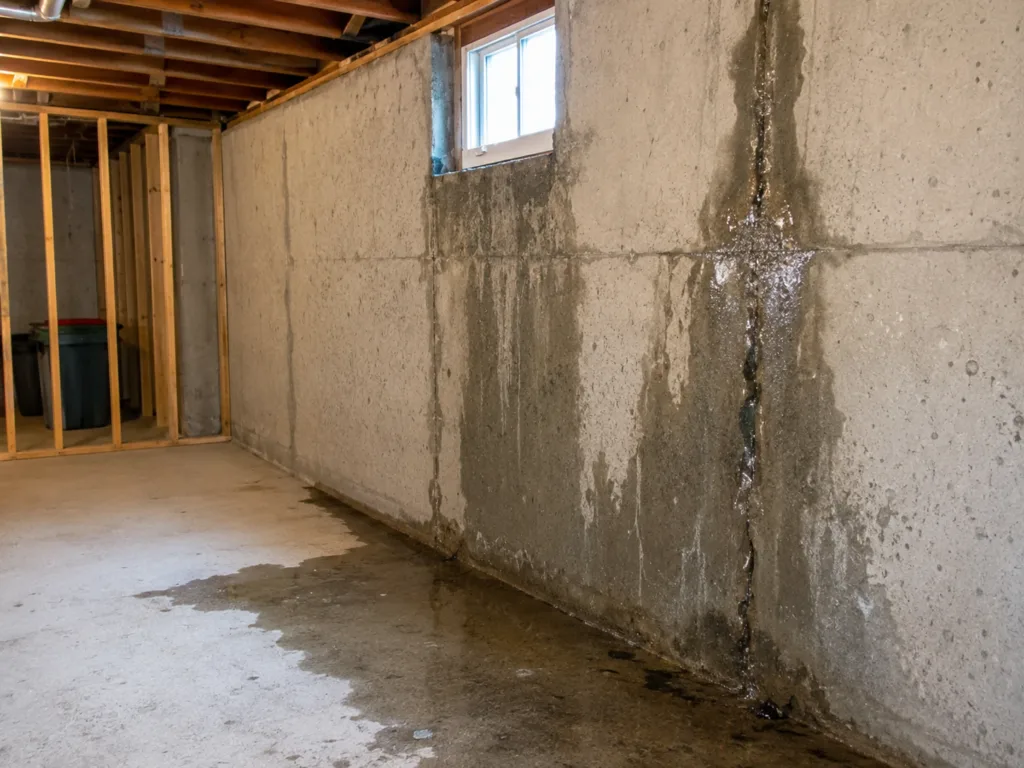
Found Water in Your Basement? Here’s What to Do First
Discovering water in your basement can be alarming. Your first instinct might be to figure out where it’s coming from, but before you play detective, you need to manage the immediate situation safely. Taking a few key steps right away can protect you, your family, and your belongings from further damage. Once the area is secure and the water is gone, you can focus on finding a permanent solution to keep your basement dry for good. Here’s what to do the moment you find water.
Prioritize Safety
Before you do anything else, think about safety. Water and electricity are a dangerous combination. Never step into standing water without first turning off the power to your basement at the breaker box, and avoid touching any wet electrical devices or cords. If you must enter the flooded area, always wear rubber boots to protect yourself from potential electric shock. Your well-being is the top priority, and everything else—from moving furniture to cleaning up—can wait until you know the space is safe to enter. If you are unsure about how to safely turn off the power, call a qualified electrician for assistance.
Remove Water and Protect Your Belongings
Once the area is safe, your next goal is to get everything dry. For small puddles, a wet-dry vacuum is a great tool. If you’re dealing with a significant amount of water, you may need to call a water removal specialist to pump it out. After the standing water is gone, use fans and a dehumidifier to dry out the air and surfaces. It’s also crucial to move any waterlogged belongings out of the basement, especially items like paper, fabric, wood, and cardboard. These materials can develop mold in as little as 24 to 48 hours if they remain damp, so try to dry what you can and discard anything that is too damaged. Addressing the immediate water is the first step toward effective basement waterproofing.
Waterproofing vs. Foundation Repair: What’s the Difference?
Basement waterproofing focuses on controlling water, humidity, seepage, drainage, and moisture damage around the basement or below-grade space. Foundation repair focuses on stabilizing structural movement, settlement, bowing walls, cracked walls, uneven floors, and shifting footings.
If you see damp walls, water seepage, musty air, efflorescence, or humidity, basement waterproofing may be the right solution. If you see stair-step cracks, widening wall cracks, sticking doors, sloping floors, bowing basement walls, or gaps around windows and trim, foundation repair may be needed.
The hard part is that water pressure and foundation movement often show up together. A basement wall can leak because water is entering through cracks, but those cracks may exist because the wall is moving. That is why basement foundation waterproofing should never be guessed from one symptom alone.
What Problems Does Basement Waterproofing Actually Fix?
Basement waterproofing is a moisture-control service. Its job is to collect, redirect, drain, or manage water before it damages the home. For many homeowners, waterproofing starts with visible water after rain. But moisture problems can begin long before standing water appears.
Common signs you may need basement waterproofing include:
- Water seepage where the wall meets the floor
- Damp basement walls or floors
- Musty odors in the lower level
- High indoor humidity
- White, chalky efflorescence on masonry
- Condensation on cold surfaces
- Mold-like growth in damp areas
- Peeling paint or bubbling wall finishes
- Water stains after heavy rain
- A sump pump that cannot keep up or is not present
These symptoms usually point to a water management issue. The basement may need an interior drainage system, sump pump system, wall vapor barrier, dehumidification, or related drainage improvements.
Vesta provides basement waterproofing systems such as interior drainage, sump pump installation, wall vapor barriers, and dehumidification solutions. These systems are designed to help keep below-grade spaces drier and more usable while reducing the conditions that create odors, humidity, and moisture damage.
Understanding the Root Causes of Basement Leaks
Finding water in your basement is frustrating, but understanding where it’s coming from is the first step toward a real solution. Water is persistent, and it will always follow the path of least resistance into your home. Most basement leaks in Oklahoma can be traced back to a few common culprits related to the soil and construction around your foundation. When you know what you’re up against, you can make a much more informed decision about how to fix it for good. Let’s walk through the main reasons your basement might be taking on water.
The “Clay Bowl Effect” Around Your Foundation
When your house was built, contractors dug a large hole for the foundation. After the foundation was poured and set, they pushed some of that excavated soil back into the gap. This backfilled soil is much looser and more porous than the dense, undisturbed soil around it. When it rains, water soaks into this loose soil, creating what’s known as the “clay bowl effect.” The area around your foundation fills with water like a bowl, holding moisture directly against your basement walls and creating a constant source of pressure that can lead to leaks.
Lateral Pressure from Saturated Soil
Once that “clay bowl” fills up, the saturated soil exerts immense pressure against your basement walls. This is called hydrostatic or lateral pressure. Think of it like the pressure you feel at the deep end of a swimming pool. All that heavy, waterlogged soil pushes against your foundation, forcing moisture through any tiny crack, gap, or porous spot in the concrete. Over time, this constant pressure can even create new cracks or widen existing ones, making the problem worse with every storm. This is a primary reason why effective basement waterproofing is so critical for long-term protection.
Leaky Basement Windows and Window Wells
Basement windows are a common entry point for water. If the ground outside doesn’t slope away from your home, rainwater will naturally pool around the foundation and against your windows. Clogged or poorly designed window wells can fill up like bathtubs, submerging the window frame. Over time, the seals around the window can degrade, allowing water to seep inside. Even a perfectly sealed window can’t hold back water if the pressure from a full window well becomes too great, leading to leaks that can damage both the window and your basement interior.
Other Water Sources to Check
While pressure from the soil is a major factor, water can also find its way in through other weak points. The cove joint, which is the seam where your basement walls meet the floor, is a frequent spot for seepage. Water can also come directly through porous concrete walls or floor cracks. Don’t forget to check for internal sources, too. A leaking pipe, a faulty water heater, or a backed-up floor drain can all lead to a wet basement. Identifying the exact entry point is key to finding the right solution for your home.
Your First Line of Defense: Exterior Water Management
Before you can address the water that’s already inside, it’s smart to manage the water on the outside. Many basement moisture issues can be significantly reduced by simply controlling how rainwater behaves around your property. Think of your yard, gutters, and downspouts as the first line of defense against a wet basement. By making sure water is directed away from your foundation, you can take a lot of pressure off your home’s waterproofing systems. These simple maintenance tasks are easy for any homeowner to tackle and can make a surprising difference in keeping your lower level dry.
Clean Your Gutters
Your gutters have one job: to collect rainwater from your roof and guide it away. When they get clogged with leaves, twigs, and other debris, they can’t do that job effectively. Instead, water overflows and pours down right next to your foundation, saturating the soil in the exact area you want to keep dry. Make it a habit to clean your gutters at least twice a year, in the spring and fall. This simple chore ensures water flows where it’s supposed to—into the downspouts and away from your home, reducing the load on your foundation.
Extend Your Downspouts
Even with clean gutters, your efforts can be wasted if your downspouts are too short. A standard downspout often deposits water just a few feet from the foundation, which is not nearly far enough. This water can easily find its way back into the loose soil around your basement. You can buy simple, inexpensive extensions at any hardware store to add to your downspouts. Aim to discharge water at least ten feet away from your foundation to ensure it doesn’t contribute to hydrostatic pressure against your basement walls and create unnecessary problems.
Fix the Ground Slope (Grading)
The ground immediately surrounding your foundation should gently slope away from the house. This is called “grading.” A proper grade ensures that rainwater and snowmelt naturally flow away from your home rather than toward it. Over time, soil can settle and create low spots or a negative slope that directs water right at your basement. You can often fix minor grading issues by adding dense, compacted soil (like clay) to build up the ground against your foundation, creating a slope of at least one inch per foot for the first six feet.
Observe Your Home During a Rainstorm
One of the best ways to diagnose your water management issues is to see them in action. The next time you get a steady rain, put on a raincoat and walk around your house. Watch how the water behaves. Are your gutters overflowing? Where are your downspouts emptying? Do you see puddles forming near the foundation? This firsthand observation is invaluable. It can help you pinpoint exactly where your exterior water management is failing, so you know precisely what needs to be fixed to protect your home from excess moisture.
Common DIY Fixes and Their Limitations
When you find water in your basement, the first instinct is often to find a quick, do-it-yourself fix. Head to any home improvement store, and you’ll find shelves of waterproof paints, sealants, and patching compounds promising a dry basement. While some of these products can offer a temporary patch for a very minor issue, they rarely address the underlying cause of the leak. In many cases, these quick fixes can actually hide the problem or even make it worse in the long run by trapping water inside your foundation walls, leading to more significant issues down the road.
Applying Waterproofing Paint
Waterproof paint seems like an easy solution. You just roll a thick coating onto your basement walls, and the water stops coming through, right? Unfortunately, it’s not that simple. These paints create a surface barrier, but they do nothing to stop the hydrostatic pressure from the outside. Water will still saturate the concrete behind the paint. This can cause the paint to bubble and peel, but more importantly, it traps moisture inside the wall. This can lead to the concrete itself deteriorating over time, hidden behind a layer of paint and potentially fostering mold growth.
Using Hydraulic Cement for Patches
For active leaks coming through a specific crack or hole, hydraulic cement can be an effective patch. This material expands as it cures, and it can even be applied to wet surfaces to plug a leak quickly. It’s certainly a better option than a silicone-based caulk for masonry repairs. However, it’s still just a patch. If the crack was caused by foundation movement, the wall will continue to shift, and a new crack will likely form right next to your patch. It stops the symptom but doesn’t cure the disease causing the water intrusion.
The Risk of Trapping Water with Interior Seals
The biggest danger with most interior-only DIY fixes is that they only hide the problem. By sealing the inside of your basement walls, you’re preventing water from entering your living space, but you’re not stopping it from entering your foundation. The water is still there, saturating your concrete and masonry from the outside. This trapped moisture can accelerate the deterioration of your foundation. A comprehensive solution requires managing the water, not just blocking its final exit. If you’re seeing signs of water, it’s always best to get a professional opinion. A thorough, no-obligation free inspection can identify the true source of the problem.
What Problems Does Foundation Repair Actually Fix?
Foundation repair is a structural service. Its job is to stabilize movement and address the underlying forces that are causing the home to shift, settle, crack, bow, or separate.
Common signs you may need foundation repair include:
- Stair-step cracks in brick or block walls
- Horizontal cracks in basement walls
- Bowing or buckling foundation walls
- Cracks that widen over time
- Doors and windows that stick or do not close properly
- Uneven, sloping, or sagging floors
- Gaps between walls, ceilings, floors, or trim
- A leaning chimney
- Cracks around window or door frames
- Foundation settlement on one side of the home
These symptoms can indicate soil movement, foundation settlement, wall pressure, or structural weakness. In Oklahoma, expansive clay soils can shrink during dry periods and swell during wet periods. That repeated movement puts stress on foundations and below-grade walls.
Vesta’s foundation repair solutions include helical piers, push piers, wall anchors, carbon fiber reinforcement, PowerBrace systems, EverBrace wall restoration, and crawl space support systems. The right system depends on the home, soil conditions, movement pattern, and structural findings from the inspection.
How Water and Foundation Problems Are Connected
Many homeowners search for foundation & waterproofing help because the symptoms are mixed. That makes sense. Water and structure are closely connected.
A basement wall can leak because water pressure is pushing moisture through joints or cracks. But if the wall is bowing inward, waterproofing alone will not stabilize the wall. Likewise, a foundation crack can let water enter the basement, but sealing the visible crack may not solve the movement that created it.
Overlap cases often include:
- Bowing basement walls with water seepage
- Horizontal wall cracks that leak after rain
- Wall-floor joint seepage plus visible wall movement
- Basement dampness with stair-step exterior cracks
- Repeated seepage near a settling corner of the home
- Musty odors plus uneven floors above the basement
- Water entry around cracks that continue to widen
When symptoms overlap, the solution may need both water management and structural stabilization. For example, a home may need wall reinforcement to stabilize a bowing wall and a drainage system to manage incoming water. The order and scope depend on what the inspection finds.
If your basement has both moisture and cracking, start with a free inspection instead of choosing one service based on symptoms alone.
Is It a Water Problem or a Foundation Problem?
Use this comparison as a starting point, not a final diagnosis.
| Symptom | More Likely Waterproofing | More Likely Foundation Repair | Could Be Both |
|---|---|---|---|
| Water at wall-floor joint | Yes | No | Sometimes |
| Musty odor | Yes | No | Sometimes |
| High humidity | Yes | No | Sometimes |
| Efflorescence | Yes | No | Sometimes |
| Sump pump issues | Yes | No | No |
| Stair-step cracks | No | Yes | Sometimes |
| Bowing walls | No | Yes | Yes |
| Horizontal wall cracks | No | Yes | Yes |
| Sticking doors/windows | No | Yes | Sometimes |
| Uneven floors | No | Yes | Sometimes |
| Leaking wall cracks | Yes | Yes | Yes |
The most important takeaway is simple: water symptoms usually point toward waterproofing, structural symptoms usually point toward foundation repair, and leaking structural cracks may need both.
Why Oklahoma’s Soil Causes Unique Foundation Issues
Oklahoma’s soil and weather patterns make basement foundation repair and waterproofing decisions more complicated than they might be in a milder climate. Expansive clay soil can swell after heavy rain and shrink during drought. That movement can stress footings, walls, slabs, and crawl space supports.
Heavy rain can also raise hydrostatic pressure around basement walls. Hydrostatic pressure is the force created when water builds up in the soil around the foundation. That pressure can push water through joints, cracks, and porous materials. Over time, it can also contribute to wall movement if the structure is already vulnerable.
That is why a single visible symptom does not always tell the whole story. A wet basement might be a drainage issue. It might be a crack issue. It might be pressure against a moving wall. Or it might be a combination.
Can Waterproofing Fix Foundation Cracks?
Waterproofing can manage water entering through some cracks, but it does not automatically fix the structural reason a crack formed. If a crack is stable and the main concern is water entry, a waterproofing solution may be part of the answer. If the crack is widening, horizontal, stair-stepped, or connected to wall movement, foundation repair should be evaluated.
This is where homeowners can make the wrong call. A dry basement is good, but a dry basement with an unstable wall is still a structural concern. The goal is not just to stop visible water. The goal is to protect the home with the right combination of moisture control and structural support.
Can Foundation Repair Stop Basement Wall Water?
Foundation repair can address structural cracks, wall movement, or settlement that may be creating water entry points. But stabilizing the structure does not always manage groundwater, humidity, or seepage at the wall-floor joint. In many cases, water control still requires a drainage or sump pump system.
Think of foundation repair as stabilizing the home and waterproofing as managing moisture. If the problem involves both movement and water, both parts may need attention.
What to Expect During Your Foundation Inspection
A professional inspection should identify the source of the symptoms before recommending a solution. Vesta’s inspection process is designed to evaluate the visible problems and the conditions behind them.
During a typical inspection, a system design specialist may review:
- Interior and exterior foundation cracks
- Basement wall movement or bowing
- Water entry points and staining
- Humidity and moisture indicators
- Floor slope or sagging areas
- Door and window operation issues
- Soil and drainage conditions around the home
- Sump pump condition if present
- Crawl space or basement structural supports where accessible
The inspection should lead to a custom recommendation, not a one-size-fits-all answer. That matters because two homes with similar basement water may need different solutions depending on wall condition, soil pressure, drainage patterns, and structural movement.
Our Approach to a Dry, Stable Foundation
Vesta Foundation Solutions handles both foundation repair and basement waterproofing, which is important for homeowners who are unsure which service they need. A single-service contractor may only look through the lens of the service they provide. Vesta can evaluate both the water side and the structural side of the problem.
For basement waterproofing, Vesta can recommend systems such as interior drainage, sump pump solutions, wall vapor barriers, and dehumidification. For foundation repair, Vesta can recommend piering systems, wall stabilization systems, wall restoration systems, and structural support products.
That comprehensive approach is especially useful for cross-over symptoms like bowing walls with seepage, leaking wall cracks, or basement moisture paired with settlement signs.
Which Service Should You Start With?
Start with the symptom category that is most obvious, then verify it with an inspection.
Choose basement waterproofing evaluation if your main symptoms are:
- Water after rain
- Damp basement air
- Musty odors
- Efflorescence
- Wall-floor joint seepage
- Sump pump concerns
Choose foundation repair evaluation if your main symptoms are:
- Bowing walls
- Horizontal cracks
- Stair-step cracks
- Sticking doors or windows
- Uneven floors
- Gaps around trim, floors, ceilings, or openings
Choose a combined foundation and waterproofing evaluation if your symptoms include both water and structural movement. That is the safest route when you see cracks that leak, bowing walls with dampness, or water entry near a settling area.
For Oklahoma homeowners, the best first step is a free inspection from a team that can evaluate both basement waterproofing and foundation repair.
Will Insurance Cover Water Damage in Your Basement?
Discovering water in your basement is stressful enough without adding the confusion of insurance policies. The question of whether your homeowners insurance will cover the damage is a common one, and the answer isn’t always straightforward. Coverage almost always depends on the source of the water. A sudden and accidental event, like a burst pipe, might be covered. However, damage from gradual seepage, poor maintenance, or external flooding often is not. Understanding these distinctions is the first step in knowing where you stand and what to do next. Before you can even file a claim, you need to identify the source of the water, which is why a professional inspection is so important.
What Standard Homeowners Insurance Typically Covers
Your standard homeowners insurance policy is designed to protect you from sudden and accidental damage. When it comes to water in your basement, think of events like a failed water heater or a washing machine hose that suddenly breaks and floods the area. According to insurance experts, damage from this type of abrupt plumbing failure is often covered. However, the key words are “sudden and accidental.” If water is seeping in through foundation cracks over time or from a slow leak you haven’t addressed, your provider will likely deny the claim, attributing it to a maintenance issue. This is why proactively addressing issues with basement waterproofing is so critical for protecting your home’s structure and value.
When You Might Need Separate Flood Insurance
Here’s a distinction that surprises many homeowners: standard insurance policies do not cover water damage caused by flooding from outside your home. If your basement gets wet because of heavy rainfall, an overflowing creek, or general ground saturation, it’s typically considered “flood damage.” As Neptune Flood explains, this kind of damage requires a separate flood insurance policy, which is often available through the National Flood Insurance Program (NFIP) or private insurers. For homeowners in Oklahoma, where intense storms can quickly saturate the ground, understanding this gap in coverage is essential for making sure your property is fully protected from the elements.
Understanding Water Backup Coverage
Another common exclusion in standard homeowners policies is damage from water that backs up through sewers or drains. If a municipal sewer line gets overwhelmed and forces water back into your home, or if your sump pump fails to handle the influx of water it’s supposed to be draining, your standard policy probably won’t cover the cleanup. To protect against this, you can usually purchase a specific add-on, or “endorsement,” for water backup coverage. While this insurance can help with the aftermath, the best strategy is prevention. A professionally installed and maintained sump pump system is your first line of defense, and a free inspection can determine if your current system is up to the task.
Ask These Questions Before Choosing a Contractor
Before deciding between waterproofing and foundation repair, ask these questions:
- Does water appear only after rain, or is the space always damp?
- Are cracks vertical, horizontal, stair-stepped, or widening?
- Do doors or windows stick in the same area as the basement problem?
- Is the wall flat, or is it bowing inward?
- Are floors above the basement level or sagging?
- Is water entering through a crack, joint, window well, or floor area?
- Has the symptom changed over time?
- Are there exterior drainage issues near the affected wall?
- Is there a sump pump, and is it working properly?
- Has a previous repair failed to solve the problem?
The answers help separate moisture problems from structural problems. They also help identify when both are active.
Common Mistakes to Avoid with Your Foundation
The biggest mistake is assuming every wet basement only needs waterproofing. Water may be the symptom that gets your attention, but structural movement may be the reason water is entering.
Another mistake is assuming every crack is a foundation emergency. Some cracks are cosmetic or moisture-related. Others are structural. The pattern, direction, size, movement, and surrounding symptoms matter.
Avoid these common missteps:
- Covering stains without finding the water source
- Ignoring bowing walls because the basement is currently dry
- Treating a leaking crack without checking for movement
- Waiting until seasonal soil changes make symptoms worse
- Comparing homes without considering soil, drainage, and structure
- Choosing a one-service answer before a full inspection
FAQ
Is basement waterproofing the same as foundation repair?
No. Basement waterproofing manages water, humidity, seepage, and drainage. Foundation repair stabilizes structural movement, settlement, bowing walls, and foundation cracks. Some homes need one service, while others need both.
How do I know if a basement crack is structural?
A crack may be structural if it is horizontal, stair-stepped, widening, paired with bowing, or connected to sticking doors, uneven floors, or gaps around openings. A professional inspection can determine whether the crack is stable or related to movement.
Can a wet basement be caused by foundation settlement?
Yes. Foundation settlement or wall movement can create cracks and gaps that allow water to enter. However, water can also enter because of drainage pressure, humidity, or seepage. The cause should be verified before choosing a solution.
Do I call a waterproofing company or a foundation repair company first?
If you only see moisture symptoms, a basement waterproofing evaluation is a reasonable start. If you see structural symptoms, start with foundation repair. If you see both, call a company like Vesta that can inspect both foundation and waterproofing issues.
What is basement foundation waterproofing?
Basement foundation waterproofing refers to water management around below-grade foundation areas. It may include drainage systems, sump pumps, vapor barriers, and dehumidification, depending on how water is entering and how the foundation is performing.
Your Next Step to a Healthy Foundation
Basement waterproofing and foundation repair solve different problems, but Oklahoma homes often show symptoms from both categories. Waterproofing manages moisture. Foundation repair stabilizes movement. When water and structure overlap, the right answer may be a combined plan.
If your basement is wet, cracked, humid, or showing signs of wall movement, do not guess. Vesta Foundation Solutions can inspect the home, explain what is happening, and recommend the right path forward.
Ready to find out which service your home needs? Schedule your free inspection with Vesta Foundation Solutions today.
Key Takeaways
- Waterproofing Manages Water; Foundation Repair Stabilizes Structure: Waterproofing focuses on keeping your basement dry from seepage and humidity, while foundation repair addresses the root causes of movement like bowing walls and major cracks.
- Symptoms Often Overlap, Especially in Oklahoma: A leaking crack might seem like a simple water issue, but it could be a sign of structural movement. Because our clay soil causes both problems, it’s important not to assume one issue isn’t related to the other.
- Don’t Settle for a Temporary Patch: Interior sealants and DIY paints often trap water inside your foundation walls, which can hide the problem and lead to more damage over time. A true solution requires identifying the source of the issue, not just covering the symptom.
Related Articles
- Our Waterproofing Methods in Oklahoma | Foundation Repair & Basement Waterproofing
- Basement Waterproofing Oklahoma | Guaranteed Dry Basements
- Basement Waterproofing Near Me in Oklahoma City | Vesta Foundation Solutions
- Basement Waterproofing | Foundation Repair & Basement Waterproofing
- Basement Waterproofing Products – Foundation Repair & Basement Waterproofing